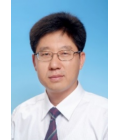
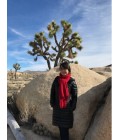
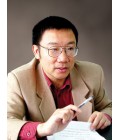
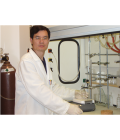
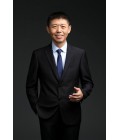
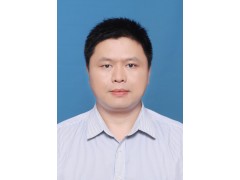
史俊峰, 湖南大学生命医学交叉研究院教授/博士生导师、国家高层次青年人才、湖南省杰青、芙蓉青年学者。博士毕业于Brandeis University 化学系(2009-2015),毕业后进入美国国立癌症研究所(NCI,NIH)从事博士后工作。2019年9月加入湖南大学。长期从事多肽医药工程的研究工作,在Nat. Nanotechnol.、J. Am. Chem. Soc.、Angew. Chem. In. Ed.等国际高水平杂志上发表论文70篇,引用次数过6000次,H-index为37(Google Scholar),成果多次被国家媒体C@EN、科学网报道,并参与1部英文专著撰写。专利方面,申请及获批的专利14个,其中PCT专利2个,获授权美国专利1个。目前主持包括国家自科基金、湖南省科技创新人才计划、生物医药公司横向项目10余项。
教育经历:
2009.08-2015.08 美国布兰迪斯(Brandeis)大学,博士,Ph.D导师:Bing Xu
2007.09-2009.06 中山大学,高分子化学与物理,硕士,导师:张黎明
2003.09-2007.06 湘潭大学,学士,导师:王先友
工作经历:
2021.09-至今 湖南大学生命医学交叉研究院,教授
2019.09-2021.09 湖南大学生物学院,教授
2015.11-2018.11美国国立癌症研究所(NCI,NIH),博士后,导师:Dr. Joel Schneider
2015.08-2015.10美国布兰迪斯大学,博士后,导师:Dr. Bing Xu
学术兼职:
1、国际材料研究学会(MRS)会员。
2、美国化学学会(ACS)会员。
3、美国多肽学会(APS)会员。
4、中国化学会(CCS)会员。
5、国家自然科学基金评审人。
招生招聘信息:
长期招收博士研究生(2-3名)和硕士研究生(4-6名)(招生专业可为基础医学、药学、生物学、生物医学工程)
每年计划招聘博士后1-2名(20-40万,用沿海工资,享长沙生活,表现优秀者可留校)
欢迎有志于从事多肽药物研究的青年才俊加入团队(助理教授、副教授学校提供事业编制、配套启动经费)
1)原创多肽药物的开发
2)穿透肽的机制研究及在递送上应用
3)多肽自组装\凝胶化及其生物医学应用
承担科研项目情况:
1.国家人才特殊支持计划青年人才,2022-2025年,主持。
2.国家自然科学基金面上项目,2020-2023,主持。
3.国家自然科学基金青年项目,2020-2022,主持。
4.湖南省自然科学基金-杰出青年,2022-2024,主持。
5.湖南省面上自然科学基金-面上项目,2020/01-2022/12。
6.湖南省科技计划项目,湖湘高层次人才聚集工程-创新人才,2019-2022,主持。
7.湖南省科技计划项目,湖湘青年英才,2020-2023,主持。
8.深圳市基础研究面上项目,2021-2024年,主持。
9.湖南大学优 青培育计划,2021年,主持。
横向课题
10.皮肤病治疗多肽制剂的开发,2021-2022年,主持。
11.多肽药物开发及制剂研究,2021-2026年,主持。
12.多肽药物与疫苗的研制与应用,2022-2025年,主持。
代表论文:
55.Lopez-Silva, T. L.; Samdin, T. D.; Anderson, C. F.; Bell, D. R.; Suarez Alvarez, E.; Kasprzak, W. K.; Shi, J. *; Schneider, J*. P. Impact of glycosylation on self-assembled peptide hydrogels. Chem. Mater. 2024, DOI: 10.1021/acs.chemmater.4c00291.
54.Deng, T.; Xie, W.; Huang, X.; Wu, X.; Shen, X.; Shi, J*.; Yuan, D*. A dual-responsive peptide hydrogel protects normal cells from anticancer drug treatments. ACS Applied Nano Materials 2024, 7(5), 5124-5131, DOI: 10.1021/acsanm.3c05815.
53.Chen, W.; Li, Z.; Zhao, C.; Zha, L.; Shi, J*.; Yuan, D*. Enzyme-modulate conformational changes in amphiphile peptide for selectively cell delivery. Chinese Chem. Lett. 2024, 109628, DOI: https://doi.org/10.1016/j.cclet.2024.109628.
52.Zhou, J.; Cai, Y.; Li, T.; Zhou, H.; Dong, H.; Wu, X.; Li, Z.; Wang, W.; Yuan, D*.; Li, Y*.; Shi, J*. Aflibercept loaded eye-drop hydrogel mediated with cell-penetrating peptide for corneal neovascularization treatment. Small 2024, 20(2), 2302765, DOI: https://doi.org/10.1002/smll.202302765.
51.Zhu, C.; Li, T.; Wang, Z.; Li, Z.; Wei, J.; Han, H.; Yuan, D.; Cai, M.; Shi, J.*, MC1R peptide agonist self-assemblyes into a hydrogel that promotes skin pigmentation for treating vitiligo, ACS Nano,2023, 17 (9), 8723-8733
50.Li, T.; Zhu, C.; Liang, C.; Deng, T.; Wu, X.; Wen, K.; Feng, X.; Yuan, D.; Xu, B.*; Shi, J.*, Surface-induced peptide nanofibers for selective bacteria trapping, ACS Appl. Nano Mater. 2023, 6 (9), 7785-7793
49.Chen, S. #; Li, Z. #; Zhang C. #; Wu, X.; Wang, X.; Chen, W.; Shi, J.*; Yuan, D.* Cation-π interaction trigger Supramolecular Hydrogelation of Peptide Amphiphiles. Small, 2023;19:e2301063.
48.Zhou J, Cai Y, Li T, Zhou H, Dong H, Wu X, Li Z, Wang W, Yuan D, Li Y, * Shi J.*. Aflibercept Loaded Eye-Drop Hydrogel Mediated with Cell-Penetrating Peptide for Corneal Neovascularization Treatment. Small. 2023:e2302765.
47.Zenghui Li, Yuqing Feng, Hong Han, Xingyue Jiang, Weiyu Chen, Xuezhen Ma, View ORCID ProfileYang Mei, Xuhui Yan, Ping Yin, Dan Yuan, Dingxiao Zhang, *Junfeng Shi*.A Stapled Peptide Inhibitor of METTL3-METTL14 for Cancer Therapy. DOI: 10.1101/2023.09.04.556216.(In Press)
46. Dong H., Wang M., Fan S., Wu C., Zhang, C. Wu X., Xue B., Cao Y., Deng J., Yuan D.,* Shi J.F.*, Redox-Regulated Conformational Change of Disulfide-Rich Assembling Peptides. Angew. Chem. Int. Ed., 2022, e202212829
45. Jian, K.#, Yang, C.#, Li, T., Wu, X., Shen, J., Wei, J., Yang, Z., Yuan, D.*, Zhao, M.*, Shi, J.F.*, PDGF-BB-Derived Supramolecular Hydrogel for Promoting Skin Wound Healing. J. Nanobiotechnology, 2022, 20, 201.
44.Zou, C.; Wan, Y.; He, L.; Zheng, J. H.; Mei, Y.; Shi, J.; Zhang, M.; Dong, Z.; Zhang, D., RBM38 in cancer: role and mechanism. Cell Mol Life Sci 2021, 78 (1), 117-128.
43.Chen, Y.; Liu, X.; Guo, Y.; Wang, J.; Zhang, D.; Mei, Y.; Shi, J.; Tan, W.; Zheng, J. H., Genetically engineered oncolytic bacteria as drug delivery systems for targeted cancer theranostics. Acta Biomater 2021, 124, 72-87.
42. Poulami, M.; Anand, S.; Ziqiu, W.; Kingshuk, D.; Roma, P.; Chen, L.; Caroline, A.; L, P. N.; Shi J.F.; Natalia, d. V.; R, W. S. T.; Byungyun, J. A.; Baktiar, K.; D, H. C.; P, S. J., Surface-fill hydrogel attenuates the oncogenic signature of complex anatomical surface cancer in a single application. Nat. Nanotechnol., 2021, 16 (11) :1251-1259.
41.Shy, A. N.; Li, J.; Shi, J.; Zhou, N.; Xu, B., Enzyme-instructed self-assembly of the stereoisomers of pentapeptides to form biocompatible supramolecular hydrogels. J Drug Target 2020, 28 (7-8), 760-765.
40. Shi, J.F.; Schneider J.P.*, De novo design of selective membrane-active peptides via enzymatic control of their conformational bias on the cell surface. Angew. Chem. Int. Ed., 2019, 58, 13706-13710.(热点文章,封面文章)
39. Shi, J.F.; Fichman G.; Schneider J.P.*, Enzymatic Control of the Conformational Landscape of Supramolecular Assembling Peptides. Angew. Chem. Int. Ed., 2018, 57, 11188-11192.
38. Haburcak, R.#; Shi, J.F.#; Du, X.; Yuan, D.; Xu, B.*, Ligand-Receptor Interaction Modulates the Energy Landscape of Enzyme-Instructed Self-Assembly of Small Molecules. J. Am. Chem. Soc., 2016, 138,47, 1539715404. (#共同一作)
37. Shi, J.F.; Du, X.; Huang, Y.; Zhou, J.; Yuan, D.; Wu, D.; Zhang, Y.; Haburcak, R.; Epstein, I. R.; Xu, B.*, Ligand-Receptor Interaction Catalyzes the Aggregation of Small Molecules to Induce Cell Necroptosis. J Am Chem Soc, 2015,137, 1, 26-29.
36. Shi, J.F.; Xu, B.*, Nanoscale assemblies of small molecules control the fate of cells. Nano Today, 2015, 10 (5), 615-630. (IF=17)
35. Yuan, D.#; Shi, J. F.#; Du, X. W.; Zhou, N.; Xu, B.*, Supramolecular Glycosylation Accelerates Proteolytic Degradation of Peptide Nanofibrils. J Am Chem Soc, 2015, 137 (32), 10092-10095. (#共同一作, 亮点文章)
34. Shi, J.F.; Du, X.; Yuan, D.; Haburcak, R.; Wu, D.; Zhou, N.; Xu, B.*, Enzyme transformation to modulate the ligand–receptor interactions between small molecules. Chem Commun, 2015, 51 (23), 4899-4901.
33. Shi, J. F.; Du, X. W.; Yuan, D.; Haburcak, R.; Zhou, N.; Xu, B.*, Supramolecular Detoxification of Neurotoxic Nanofibrils of Small Molecules via Morphological Switch. Bioconj. Chem., 2015, 26 (9), 1879-1883.
32. Shi, J.F.; Du, X.; Yuan, D.; Zhou, J.; Zhou, N.; Huang, Y.; Xu, B.*, d-Amino Acids Modulate the Cellular Response of Enzymatic-Instructed Supramolecular Nanofibers of Small Peptides. Biomacromolecules, 2014, 15 (10), 3559-3568.
31. Shi, J.F.; Yuan, D.; Haburcak, R.; Zhang, Q.; Zhao, C.; Zhang, X.; Xu, B.*, Enzymatic Dissolution of Biocomposite Solids Consisting of Phosphopeptides to Form Supramolecular Hydrogels. Chemistry – A European Journal, 2015, 21 (50), 18047-18051.
30.Shi, J.F.; Gao, Y.; Yang, Z.; Xu, B.*, Exceptionally small supramolecular hydrogelators based on aromatic–aromatic interactions. Beilstein J. Org. Chem., 2011, 7 (1), 167-172.
29.Shi, J.F.; Gao, Y.; Zhang, Y.; Pan, Y.; Xu, B.*, Calcium ions to cross-link supramolecular nanofibers to tune the elasticity of hydrogels over orders of magnitude. Langmuir, 2011, 27 (23), 14425-14431.
28.Huang, Y.#; Shi, J.#; Yuan, D.; Zhou, N.; Xu, B.*, Length‐dependent proteolytic cleavage of short oligopeptides catalyzed by matrix metalloprotease‐9. Pept. Sci. 2013, 100 (6), 790-795. (#共同一作)
27.Wang, H.; Shi, J.F.; Feng, Z.; Zhou, R.; Wang, S.; Rodal, A. A.; Xu, B.*, An in-situ Dynamic Continuum of Supramolecular Phosphoglycopeptides Enables Formation of 3D Cell Spheroids. Angew. Chem. Int. Ed., 2017, 56 (51), 16297-16301. (VIP, 5%)
26.Kuang, Y.; Shi, J.F.; Li, J.; Yuan, D.; Alberti, K. A.; Xu, Q.; Xu, B.*, Pericellular Hydrogel/Nanonets Inhibit Cancer Cells. Angew. Chem. Int. Ed. 2014, 53 (31), 8104-8107. (高被引文章, C&EN 报道)
25.Gao, Y.; Shi, J.F.; Yuan, D.; Xu, B.*, Imaging enzyme-triggered self-assembly of small molecules inside live cells. Nat. Commun., 2012, 3, 1033. (高被引文章)
24.Du, X.; Zhou, J.; Shi, J.F.; Xu, B.*, Supramolecular Hydrogelators and Hydrogels: From Soft Matter to Molecular Biomaterials. Chem. Rev., 2015, 115, 24, 13165-13307. (高被引文章, IF=52.61)
23.Li, J.; Kuang, Y.; Shi, J. F.; Zhou, J.; Medina, J. E.; Zhou, R.; Yuan, D.; Yang, C. H.; Wang, H. M.; Yang, Z. M.; Liu, J. F.; Dinulescu, D. M.; Xu, B.*. Enzyme-Instructed Intracellular Molecular Self-Assembly to Boost Activity of Cisplatin against Drug-Resistant Ovarian Cancer Cells. Angew Chem Int Ed., 2015, 54 (45), 13307-13311.
22.Zhang, Y.; Zhou, N.; Shi, J.F.; Pochapsky, S. S.; Pochapsky, T. C.; Zhang, B.; Zhang, X.; Xu, B.*, Unfolding a molecular trefoil derived from a zwitterionic metallopeptide to form self-assembled nanostructures. Nat commun., 2015, 6, 6165.
21. Shi, J.; Pan, Y.; Gao, Y.; Xu, B.*, Evaluation of the effects of phenylalanine and carboxylate on the rheological behaviors of small molecule hydrogelators containing naphthalene. MRS Proceedings 2012, 1418, mrsf11-1418-ll06-03.
20. Hu, X. R.; Shi, J. F.; Thomas, S. W.*, Photolabile ROMP gels using ortho-nitrobenzyl functionalized crosslinkers. Polym. Chem. 2015, 6 (27), 4966-4971
19. Yuan, D.; Shi, J.F.; Du, X.; Huang, Y.; Gao, Y.; Baoum, A. A.; Xu, B*., The enzyme-instructed assembly of the core of yeast prion Sup35 to form supramolecular hydrogels. J. Mater. Chem. B 2016, 4 (7), 1318-1323
18. Li, J.; Shi, J.F; Medina, J. E.; Zhou, J.; Du, X.; Wang, H.; Yang, C.; Liu, J.; Yang, Z.; Dinulescu, D. M.; Xu, B.*, Selectively Inducing Cancer Cell Death by Intracellular Enzyme-Instructed Self-Assembly (EISA) of Dipeptide Derivatives. Adv Healthc Mater 2017, 6 (15), 1601400.
17. Du, X.; Zhou, J.; Wang, H.; Shi, J.; Kuang, Y.; Zeng, W.; Yang, Z.; Xu, B.*, In situ generated D-peptidic nanofibrils as multifaceted apoptotic inducers to target cancer cells. Cell Death Dis. 2017, 8, e2614
16. J. Zhou, X. Du, C. Berciu, H. He, J. Shi, D. Nicastro and B. Xu*, Enzyme-Instructed Self-Assembly for Spatiotemporal Profiling of the Activities of Alkaline Phosphatases on Live Cells, Chem, 2016, 1, 246-263.
15. Z. Feng, H. Wang, X. Du, J. Shi, J. Li and B. Xu*, Minimal C-terminal modification boosts peptide self-assembling ability for necroptosis of cancer cells, Chem. Commun., 2016, 52, 6332-6335.
14. Du, X.; Zhou, J.; Shi, J.F.; Xu, B.*, Supramolecular Hydrogelators and Hydrogels: From Soft Matter to Molecular Biomaterials. Chem. Rev., 2015, 115, 24, 13165-13307. (高被引文章, IF=52.61)
13. Li, J.; Kuang, Y.; Shi, J. F.; Zhou, J.; Medina, J. E.; Zhou, R.; Yuan, D.; Yang, C. H.; Wang, H. M.; Yang, Z. M.; Liu, J. F.; Dinulescu, D. M.; Xu, B.*, Enzyme-Instructed Intracellular Molecular Self-Assembly to Boost Activity of Cisplatin against Drug-Resistant Ovarian Cancer Cells. Angew Chem Int Ed., 2015, 54 (45), 13307-13311.
12. Zhang, Y.; Zhou, N.; Shi, J.; Pochapsky, S. S.; Pochapsky, T. C.; Zhang, B.; Zhang, X.; Xu, B.*, Unfolding a molecular trefoil derived from a zwitterionic metallopeptide to form self-assembled nanostructures. Nat commun. 2015, 6, 6165
11. Yuan, D.; Du, X.; Shi, J.; Zhou, N.; Zhou, J.; Xu, B.*, Mixing Biomimetic Heterodimers of Nucleopeptides to Generate Biocompatible and Biostable Supramolecular Hydrogels. Angew. Chem. Int. Ed. 2015, 54, 5705-5708
11. Wu, D.; Du, X.; Shi, J.; Zhou, J.; Zhou, N.; Xu, B.*, The first CD73-instructed supramolecular hydrogel. J Colloid Interf Sci, 2015, 447, 269-272
10. Wu, D.; Zhou, J.; Shi, J.; Du, X.; Xu, B.*, A naphthalene-containing amino acid enables hydrogelation of a conjugate of nucleobase–saccharide–amino acids. Chem Commun 2014, 50 (16), 1992-1994.
9. Zhao, F.; Li, J.; Zhou, N.; Sakai, J.; Gao, Y.; Shi, J.; Goldman, B.; Browdy, H. M.; Luo, H. R.; Xu, B.*, De Novo Chemoattractants Form Supramolecular Hydrogels for Immunomodulating Neutrophils In Vivo. Bioconj. Chem. 2014, 25 (12), 2116-2122.
8. Zhang, Y.; Zhang, B.; Kuang, Y.; Gao, Y.; Shi, J.; Zhang, X. X.; Xu, B.*, A Redox Responsive, Fluorescent Supramolecular Metallohydrogel Consists of Nanofibers with Single-Molecule Width. J Am Chem Soc, 2013, 135(13), 5008-5011.
7. Li, J.; Kuang, Y.; Gao, Y.; Du, X.; Shi, J.; Xu, B.*, D-Amino acids boost the selectivity and confer supramolecular hydrogels of a nonsteroidal anti-inflammatory drug (NSAID). J Am Chem Soc, 2012, 135 (2), 542-545. (高被引文章, C&EN 报道)
6. Pan, Y.; Gao, Y.; Shi, J.; Wang, L.; Xu, B.*, A versatile supramolecular hydrogel of nitrilotriacetic acid (NTA) for binding metal ions and magnetorheological response. J. Mater. Chem. 2011, 21 (19), 6804-6806.
5. Li, X.; Kuang, Y.; Lin, H. C.; Gao, Y.; Shi, J.; Xu, B.*, Supramolecular nanofibers and hydrogels of nucleopeptides. Angew. Chem. Int. Ed. 2011, 50 (40), 9365-9369.
4. Kuang, Y.; Gao, Y.; Shi, J.; Lin, H.-C.; Xu, B.*, Supramolecular hydrogels based on the epitope of potassium ion channels. Chem Commun 2011, 47 (31), 8772-8774.
3. Li, X.; Kuang, Y.; Shi, J.; Gao, Y.; Lin, H.-C.; Xu, B.*, Multifunctional, biocompatible supramolecular hydrogelators consist only of nucleobase, amino acid, and glycoside. J Am Chem Soc, 2011, 133 (43), 17513-17518.
2. Huang, Y.; Qiu, Z.; Xu, Y.; Shi, J.; Lin, H.; Zhang, Y.*, Supramolecular hydrogels based on short peptides linked with conformational switch. Org. Biomol. Chem. 2011, 9 (7), 2149-2155.
1. Song, F.; Zhang, L.-M.*; Li, N.-N.; Shi, J.-F., In situ crosslinkable hydrogel formed from a polysaccharide-based hydrogelator. Biomacromolecules 2009, 10 (4), 959-965.
奖励与荣誉:
1、2019年 湖南大学“岳麓学者” 。
2、2019年 湖湘高层次人才聚集工程-创新人才。
3、2020年 芙蓉青年学者。
4、2020年 湖湘青年英才。
5、2022年 湖南省杰出青年基金。
6、2022年 国家**计划“青年拔尖人才”。
——记湖南大学生命医学交叉研究院教授史俊峰
2024-02-01
在过去的一个世纪,多肽药物经历了从无到有的发展。第一个多肽药物胰岛素被用于糖尿病治疗;第一份化学合成的多肽药物催产素被用于孕妇催产。如今,多肽凭借极强的生理活性和多样性,已成为世界生物学界、医学界、药学界的研发热点。
史俊峰是湖南大学生命医学交叉研究院的教授,他在过去十余年专注于多肽药物及其成药关键技术的研发。在最近的成果中,他带领团队发现了一种类似“乐高”的多肽分子,能够自动组装形成如果冻般的凝胶,大大提高其在人体内的停留时间。这种多肽能够成功激活黑色素生成通路,有效治疗白癜风。对于我国目前3000万白癜风病人来说,这无疑是一个巨大的福音。
留学海外进入多肽殿堂
史俊峰是湖南人。他本科就读于湘潭大学,硕士求学于中山大学,2009年又前往美国布兰迪斯大学攻读博士学位。从山间到沿海,再到跨越大洋出国留学,史俊峰用勤奋和聪慧为自己蹚出了一条迈向科研殿堂的道路。
正是在布兰迪斯大学,史俊峰遇到了一位天马行空、创新思维活跃的博士生导师,在他的指导下接触了多肽,并开启了多肽医药研究。2015年博士毕业后,史俊峰申请了美国国立卫生研究院下属的癌症研究所的博士后职位。在那里,博士后导师细致入微、严谨规范的科研风格,给他留下了深刻印象。2009年到2019年,海外科研十年,史俊峰在两位风格迥异的导师指引下,积累了丰富的多肽设计、药剂制备和药效评价方面的经验。基于相关成果发表的70篇高水平学术论文被世界各地学者广泛引用,引用次数超过5600次,H指数为36,研究工作多次受到美国化学会旗下的《化学与工程新闻》(C&EN)、科学网和搜狐等媒体报道。
回乡科研创新药物研发
2019年,在家乡学府湖南大学的邀请下,史俊峰回国工作。同年,他入选湖南省人才计划“湖湘高层次人才聚集工程”,2020年入选湖南省的“湖湘青年英才计划”和“芙蓉学者奖励计划”。2022年入选国家高层次青年人才和“湖南省杰青”。在诗情画意、底蕴深厚的校园中,在湖南大学生命医学交叉研究院、湖南大学粤港澳大湾区创新研究院等多方支持下,史俊峰组建了一支药物研究创新团队。团队以严谨细致、交叉融合、协同创新为科研文化,并在此精神指导下不断壮大,成为一个致力于多肽药物研发的创新团队。
据悉,团队在《美国化学协会·纳米》(ACS Nano)上发表的成果首次系统性研究了通过调控MC1R基因的功能来治疗白癜风,为白癜风治疗提供潜在的候选新药。相较于以前的多肽药物不到半小时就被降解,史俊峰团队的多肽凝胶制剂在牛血清蛋白中48小时依然有50%存留。团队还计划进一步开发涂抹制剂,以便在患处涂抹治疗。这将为患者提供更方便的治疗方式。为更好地服务临床,史俊峰将继续带领团队加强与学术界和企业界的交流合作,不断创新研发多肽药物,为更多患者带来福音。
来源:科学中国人 2024年第1期
中国科技创新人物云平台暨“互联网+”科技创新人物开放共享平台(简称:中国科技创新人物云平台)免责声明:
1、中国科技创新人物云平台是:“互联网+科技创新人物”的大型云平台,平台主要发挥互联网在生产要素配置中的优化和集成作用,将互联网与科技创新人物的创新成果深度融合于经济社会各领域之中,提升实体经济的创新力和生产力,形成更广泛的以互联网为基础设施和实现工具的经济发展新形态,实现融合创新,为大众创业,万众创新提供智力支持,为产业智能化提供支撑,加快形成经济发展新动能,促进国民经济提质增效升级。
2、中国科技创新人物云平台暨“互联网+”科技创新人物开放共享平台内容来源于互联网,信息都是采用计算机手段与相关数据库信息自动匹配提取数据生成,并不意味着赞同其观点或证实其内容的真实性,如果发现信息存在错误或者偏差,欢迎随时与我们联系,以便进行更新完善。
3、如果您认为本词条还有待完善,请编辑词条。
4、如果发现中国科技创新人物云平台提供的内容有误或转载稿涉及版权等问题,请及时向本站反馈,网站编辑部邮箱:kjcxac@126.com。
5、中国科技创新人物云平台建设中尽最大努力保证数据的真实可靠,但由于一些信息难于确认不可避免产生错误。因此,平台信息仅供参考,对于使用平台信息而引起的任何争议,平台概不承担任何责任。


 点击图片查看原图