 刘起勇,男,1963年4月9日出生于山东。博士,研究员,博士生导师,现为山东第二医科大学公共卫生学院教授,中国疾病预防控制中心病媒生物首席专家,传染病溯源预警与智能决策全国重点实验室PI,WHO媒介生物监测与管理合作中心主任,全国公共卫生与预防医学名词审定委员会媒介生物控制学分委会主任。长期从事媒介生物控制学、气候变化与健康研究,为病媒生物控制和传染病防控作出了突出贡献。发起并连续举办10届媒介生物可持续控制国际论坛,建成了WHO媒介生物监测与管理合作中心,参与了多次公共卫生国际救援,并为发展中国家培养了骨干人才。作为首席科学家,牵头完成气候变化健康领域首个国家973项目,负责起草《国家适应气候变化战略2035》健康与公共卫生部分,参与完成IPCC第五、六次全球评估。主持完成国家973、重点研发、国家自然基金等20余项重大项目课题。主编、副主编10余部专著,发表学术论文600余篇, 其中在Lancet、PNAS、EID、PLOS NTD、Parasites & Vectors、VBZ等国际知名杂志发表SCI论文300余篇(被引1.8万余次,H指数68)。获得国家发明专利8项,多项部级成果。荣获全国消除疟疾工作先进个人、全国优秀科技工作者、第二十四届吴阶平-保罗·杨森医学药学奖、国务院政府特贴等,入选全球前10万名顶尖科学家等。
Qiyong Liu is a leading expert and scientist for vector surveillance and control and leads national research on health and climate change in China. Qiyong Liu heads the World Health Organization (WHO) Collaborating Centre for Vector Surveillance and Management (WHOCCVSM) and has been awarded over 20 national and international prestigious grants including the following: National Basic Research Program of China (973 Program), the National Natural Science Foundation of China (NSFC), National Programs for Science and Technology Development, Australian Agency for International Development (AusAID), China Prosperity Strategic Programme Fund (SPF), and Wellcome Trust. His ability to build collaborations between influential multidisciplinary partners has yielded strong results and has led to his recognition with the Australia China Alumni of the Year Award 2019.
刘启勇是矢量监测与控制领域的领先专家和科学家,领导着中国关于健康与气候变化的国家级研究。刘启勇领导着世界卫生组织(WHO)矢量监测与管理合作中心(WHOCCVSM),并获得了20多项国家和国际知名资助,包括:中国国家基础研究计划(973计划)、中国国家自然科学基金(NSFC)、国家科技发展计划、澳大利亚国际开发署(AusAID)、中国繁荣战略计划基金(SPF)以及惠康信托基金。他建立具有影响力的多学科合作伙伴之间合作的能力取得了丰硕成果,并因此荣获2019年澳大利亚中国校友年度奖。
Qiyong Liu completed his undergraduate study at the Department of Biology of Shandong University in 1985, one of China’s top universities, before continuing to Beijing to start work at the Department of Vector Biology and Control (DVBC), Institute of Epidemiology and Microbiology (IEM), Chinese Academy of Preventive Medicine (CAPM). Following the establishment of China CDC in 2002, this institution was renamed the National Institute for Communicable Disease Control and Prevention of China CDC. During this time, Qiyong Liu went abroad to Griffith University in Australia where he obtained a Master of Sciences in Public Health from 2004–2006 and a PhD from 2013 to 2014 in climate change and mosquito-borne disease. Combined, Qiyong Liu has more than 35 years of experience in public health and research.
刘启勇于1985年在中国顶尖学府之一的山东大学生物学系完成本科学习,随后前往北京,在中国预防医学科学院(CAPM)流行病学与微生物研究所(IEM)媒介生物学与控制系(DVBC)开始工作。2002年中国疾控中心成立后,该机构更名为中国疾控中心国家传染病防控所。在此期间,刘启勇前往澳大利亚格里菲斯大学深造,于2004年至2006年获得公共卫生理学硕士学位,并于2013年至2014年获得气候变化与蚊媒疾病博士学位。综合来看,刘启勇在公共卫生和研究领域拥有超过35年的经验值。
With expertise in zoology, ecology, epidemiology, microbiology, and immunology, Qiyong Liu has dedicated himself to public health research with a focus on the control of disease vectors and vector-borne diseases and assessing climate-change-related health risks and adaptation. He has already become a renowned influential public health leader of global significance through his important roles and appointments in various international affairs and projects such as the 8th Communication for Leadership and Management Program, WHO Western Pacific Regional Office (WPRO; 2001–2002) in the Philippines, and the WHO consultant for vector control — responsible for risk assessment and control planning of vector borne disease in tsunami-affected area in Sri Lanka (2005) — a Medical Officer (STP) of the Communicable Disease Surveillance and Response, WHO WPRO (2007–2008), a Member of the Global Vector Control Standing Committee (GVCS) of the WHO, a Trustee of Innovative Vector Control Consortium (IVCC), and the Executive Chair of International Forum for Sustainable Vector Management (IFSVM) since 2006.
凭借在动物学、生态学、流行病学、微生物学和免疫学方面的专业知识,刘启勇致力于公共卫生研究,重点关注疾病媒介和媒介传播疾病的控制,以及评估气候变化相关的健康风险与适应措施。通过在各种国际事务和项目中的重要角色与任命,他已成为具有全球影响力的知名公共卫生领袖,例如8沟通领导力与管理项目、世界卫生组织西太平洋区域办事处(WPRO;2001–2002年在菲律宾,以及世界卫生组织媒介控制顾问——负责斯里兰卡海啸灾区媒介传播疾病的风险评估与控制规划(2005年)——世界卫生组织西太平洋区域办事处(WPRO)传染病监测与响应部门的医疗官员(STP)(2007–2008年),世界卫生组织全球媒介控制常设委员会(GVCS)成员,创新媒介控制联盟(IVCC)受托人,以及自2006年起担任可持续媒介管理国际论坛(IFSVM)执行主席。
Prof. Cordia Chu, Director of the Centre for Environment and Population Health at Griffith University, supervised Qiyong Liu’s Master and PhD research programs. Prof. Chu has highly recognized Liu’s scientific achievements, especially his great efforts in the response to public health threats due to rapid changes in the transmission patterns and trends of vector-borne diseases (e.g., dengue, Zika, Chikungunya, Yellow fever) under the climate change scenarios. She described that “His innovative, comprehensive, and ecological approach has greatly facilitated the sustainable management of vector-borne diseases, from effective surveillance for early warnings, to risk assessments, development of appropriate response strategies, community education, and mobilizing community participation. His expertise and contributions in public health-related policy making are far-reaching, and his research has provided important evidence to national and local governments in the development and improvement of public health systems and the prevention and control of vector-borne disease outbreaks, particularly during and after natural disasters.”
格里菲斯大学环境与人口健康中心主任Cordia Chu教授指导了刘启勇的硕士和博士研究项目。Chu教授高度认可刘启勇的科学成就,特别是他在应对气候变化情景下,因媒介传播疾病(如登革热、寨卡病毒、基孔肯雅热、黄热病)传播模式和趋势快速变化所带来的公共卫生威胁方面所做出的巨大努力。她表示:“他创新、全面且生态的方法极大地促进了媒介传播疾病的可持续管理,从有效的预警监测,到风险评估、制定适当的应对策略、社区教育,以及动员社区参与。”他在公共卫生相关政策制定方面的专业知识和贡献影响深远,其研究为国家和地方政府在公共卫生体系建设与完善,以及媒介传播疾病爆发的防控方面提供了重要依据,尤其是在自然灾害期间和灾后。
Given that vector surveillance is the key basis of vector-borne diseases control, Qiyong Liu has worked hard to promote the development of China’s vector surveillance system from the manual recording and printing of reports to the current national surveillance systems that use the internet and big data. The manual paper-based system in 1985 was based on 4 pests nationwide, and recognizing the challenges and gaps that arrived with the 21st century, Qiyong Liu developed the current system and put forward a sustainable vector management (SVM) strategy in 2004. The SVM innovations lie in the strategic transition from outbreak response to outbreak risk reduction for dengue in China. However, vector control for disease prevention requires broad international collaboration, and Qiyong Liu saw this need and established the IFSVM in 2006 to facilitate international communication and exchange. To lead and coordinate the global community and collaborative efforts, Qiyong Liu was then designated the head of the WHOCCVSM in October 2012. Since then, he has continued to develop constructive policies, guidelines, and innovative inventions to prevent and control vectors and vector-borne diseases. These works have been continuously referenced and recirculated by the WHO headquarters and the WHO WPRO.
鉴于媒介监测是媒介传染病防控的关键基础,刘启勇致力于推动中国媒介监测系统从手工记录和打印报告向当前利用互联网和大数据技术的国家监测系统发展。1985年的手工纸质系统基于全国4种害虫,在意识到21世纪带来的挑战和差距后,刘启勇开发了当前系统,并在2004年提出了可持续媒介管理(SVM)策略。SVM的创新在于将中国登革热防控的策略从疫情应对转向疫情风险降低。然而,疾病预防的媒介控制需要广泛的国际合作,刘启勇意识到了这一需求,并于2006年成立了IFSVM以促进国际交流。为了领导和协调全球社区及合作努力,刘启勇于2012年10月被任命为WHOCCVSM负责人。自那时起,他继续制定建设性的政策、指南和创新发明,以预防和控制媒介及媒介传播疾病。这些成果被世卫组织总部和世卫组织西太平洋区域办事处不断引用和传阅。
Filling gaps in knowledge for the prevention and control of vectors and vector-borne diseases requires not only sophisticated quantitative modeling, precise scientific laboratory testing and assessments, and fieldwork in challenging conditions. To address these issues, Qiyong Liu has conducted research in hazardous and extreme environmental conditions and locations to collect and study disease-carrying vectors such as mosquitoes, ticks, and rodents. His research work in Southeast Asia, parts of Africa, and North America exposed him to multiple infectious agents, and his continued risk-taking reflects his commitment and passion to the field.
填补病媒及其传播疾病防控领域的知识空白,不仅需要复杂的定量建模、精确的科学实验室检测与评估,还需要在艰苦环境下的实地考察。为了解决这些问题,刘启勇在危险和极端环境条件下开展研究,收集并研究蚊子、蜱虫和啮齿动物等携带疾病的病媒。他在东南亚、非洲部分地区和北美洲的研究工作使他接触到了多种感染性病原体,而他持续的冒险行为体现了他对该领域的投入与热情。
Qiyong Liu has frequently been deployed by the Chinese national government to provide expert advice to guide local governments, healthcare practitioners, and epidemiologists in the aftermath of natural disasters within in China and also as a WHO consultant to help countries to respond to emergencies or outbreaks to develop prevention strategies and control measures. So far, Qiyong Liu has helped over 40 countries in their responses including vector control and infectious disease prevention in tsunami-affected areas in Sri Lanka, dengue and Zika control in Southeast Asia and South America, infectious disease prevention after the Sichuan Province Earthquake, malaria reductions in Sierra Leone, and Chikungunya fever in Mauritius.
刘启勇经常被中国政府派遣,为地方政府、医疗从业人员和流行病学家提供专家建议,指导中国国内自然灾害发生后的应对工作,并作为世界卫生组织顾问,帮助各国应对突发事件或疫情,制定预防策略和控制措施。迄今为止,刘启勇已协助40多个国家开展应对工作,包括斯里兰卡海啸灾区的媒介控制和传染病预防、东南亚和南美洲的登革热和寨卡病毒控制、四川省地震后的传染病预防、塞拉利昂的疟疾减量以及毛里求斯的基孔肯雅热。
Qiyong Liu’s pioneering and persistent work has been repeatedly recognized throughout the world. His integrative, innovative model for SVM, for instance, has been known in the international research community as “the Chinese Model” for control strategies for Plasmodium vivax malaria and dengue in varying scenarios. Qiyong Liu continues to work on improving existing strategies and developing new strategies as the chief expert in vector surveillance and control at China CDC.
刘启勇的开创性与坚持不懈的工作得到了全世界的广泛认可。例如,他针对不同场景下间日疟原虫疟疾和登革热控制策略的综合创新SVM模型,在国际研究界被称为“中国模式”。作为中国疾控中心媒介监测与控制首席专家,刘启勇继续致力于改进现有策略并开发新策略。
 教育及工作经历:
1988.09—1991.09,在原中国预防医学科学院流行病学微生物学研究所(现中国疾病预防控制中心传染病预防控制所)在职研究生班学习。
2001.05—2002.03,世界卫生组织西太区领导与管理项目理事。
2004.01—2005.06,Griffith university,MPH。
2007.05—2008.04,世界卫生组织西太区传染病监测与应急反应处医学官员。
社会兼职:
1.中华预防医学会媒介生物学及控制分会主任委员。
2.卫生部自然疫源性疾病专家咨询委员会委员。
3.卫生部病媒生物控制专业标准委员会委员。
4.中国卫生检疫专家委员会委员。
5.中国昆虫学会常务理事兼医昆委员会副主任委员。
6.中国媒介生物学及控制杂志主编。
7.寄生虫与医学昆虫学报编委。
培养研究生情况:
培养硕士、博士、博士后50余名。
 研究方向:
研究方向:
主要从事媒介生物控制学、媒介生物传染病监测、预警、智能决策及控制策略和技术研究;气候变化健康适应策略研究;巴尔通体生态、人群感染风险和控制研究。
承担科研项目情况:
1、寄生生物对鼠类种群发生的调控作用和制约机制(32090023),国家自然科学基金重大项目,2021.01-2025.12,第一位,131.0万元。
2、重要外来入侵媒介和病原生物可视化甄别及其入侵风险(2020YFC1200101),国家重点研发计划,2020.06-2023.06,第一位,112.5万元。
3、中国-东盟公共卫生科技合作中心建设, 科技部项目,2021.12-2024.12,第一位,35.0万元。
4、气候变化对人类健康的影响与适应机制研究(2012CB955500),科技部项目,2012-2016,第一位,2276.0万元。
5、不同区域气候敏感疾病响应和适应机制研究(2012CB955504),科技部项目,2012-2016,第一位,765.0万元。
6、主持完成国家和部级课题:鼠类驱避剂评估方法研究、远洋运输舰船灭蟑新技术研究、洪涝灾害区流行性出血热防治研究、媒介生物监测等。
7、科技部社会公益重大专项分题:鼠疫应对技术-蚤类控制新技术研究。
8、国家十五攻关:主要病媒生物突发事件应急处理技术规范。
9、国家十五攻关:传入性新发传染病的媒介生物研究。
10、科技技术平台重大专项:中毒与疾病应急技术研究分题——重要传染病媒介生物监测数据库研究。
11、国家自然科学基金:中国巴尔通体感染率调查等10余项课题研究。
科研成果:
1 媒介生物及相关传染病监测预警防控技术体系构建与应用 刘起勇;孙继民;栗冬梅;刘小波;李群;许磊;吴海霞;孟凤霞;鲁亮;郭玉红;任东升;李建平;曹丽娜;刘可可;赵帆 中国疾病预防控制中心传染病预防控制所 2022
2 不同气象因素对手足口病发病的滞后及交互效应研究 李京;刘起勇;胥欣;刘本先;王春平;郭雪艳;乔宗雷;薛海斌;李进 潍坊医学院 2019
3 柴达木盆地啮齿动物及体表寄生蚤遗传多样性研究 晁生玉;鲁亮;刘起勇;王启菊;李贵昌;刘东升;志更本;张卫忠;马志杰;红荣;苏贵军;王启辉;徐文兄;金花;谢银禄 海西州动物疫病预防控制中心 2017
4 发热伴血小板减少综合征新发传染病的病原学和传播机制研究 王建跃;仝振东;严剑波;唐安;李科峰;王虹玲;戴亚欣;李鹏;邬辉;傅纪波;吴文杰;李世波;叶凌;张世宏;刘起勇 舟山市疾病预防控制中心 2017
5 舟山市发热伴血小板减少综合征新发传染病的病原学和传播机制研究 王建跃;严剑波;李科峰;戴亚欣;虞吉寅;任宜;仝振东;邬辉;唐安;傅纪波;吴文杰;李世波;王海;王达特;张世宏;刘起勇 舟山市疾病预防控制中心 2016
6 农田鼠害种群动态及鼠传播出血热疾病检测研究 侯祥;刘起勇 陕西省动物研究所 2016
7 浙江省巴尔通体在人和动物中的感染研究 傅桂明;孙继民;刘起勇;杨天赐;斯国静;任樟尧;鲁亮;庞卫龙;丁钢强;任东升;杨章女 浙江省疾病预防控制中心 2009
8 三峡库区以生物媒介传播疾病为重点的人群健康监测与评估(1997-2009) 杨维中;张静;白呼群;苏崇鳌;汪诚信;冯子健;王子军;武桂珍;常昭瑞;黄玉英;李培龙;王豫林;贾庆良;汪新丽;毛德强;冯连贵;万时学;罗超;颜朝阳;崔小平;石国生;廖和平;江斌;徐勇;杨小兵;潘会明;贺圆圆;梁国栋;刘起勇;鲁亮;郭玉红 中国疾病预防控制中心 2009
9 青藏铁路沿线鼠疫生态与控制研究 丛显斌;西绕若登;王祖郧;刘起勇;王玉山;张春华;海荣;徐成;马跟东;洛桑群增;王虎;鲁亮;马勇;张贵军;李景中;陈虹舰;孟凤霞;李义明;吕景生 吉林省地方病第一防治研究所 2007
10 以生态学方法为主对城镇居民区家鼠的综合防治法研究 岳木生;刘起勇;李建;王谷生;郑连光;刘文;张震中;李镜辉;肖尊清;何胜利;余运来;石韦民;张孝珍 湖北省预防医学科学院 2003
制定标准:
1 病媒生物密度监测方法 鼠类 现行 GB/T 23798-2009 2010-02-12 国家标准
2 病媒生物应急监测与控制 通则 现行 GB/T 27774-2011 2012-05-08 国家标准
3 病媒生物应急监测与控制 水灾 现行 GB/T 28944-2012 2013-05-15 国家标准
4 病媒生物应急监测与控制 震灾 现行 GB/T 33413-2016 2017-08-31 国家标准
5 病媒生物密度控制水平 鼠类 现行 GB/T 27770-2011 2012-05-08 国家标准
6 病媒生物危害风险评估原则与指南 鼠类 现行 GB/T 28943-2012 2013-05-15 国家标准
7 杀鼠剂安全使用准则 抗凝血类 现行 GB/T 27777-2011 2012-05-08 国家标准
8 病媒生物综合管理技术规范 城镇 现行 GB/T 27775-2011 2012-05-08 国家标准
9 卫生杀虫剂现场药效测定及评价 总则 现行 GB/T 27784-2011 2012-09-10 国家标准
10 病媒生物综合管理技术规范 医院 现行 GB/T 36786-2018 2019-04-15 国家标准
11 病媒生物密度监测方法 蜱类 现行 GB/T 36788-2018 2019-04-15 国家标准
发明公开:
[1]陈石磊, 黄裕玮, 杨利娅, 刘起勇, 郭玉红, 滕一. 病媒生物监测方法、装置、计算机设备及可读存储介质[P]. 广东省: CN121746742A, 2026-03-27.
[2]张知彬, 刘明, 刘起勇, 郑爱华, 任东升, 赵超越, 王玉杰. 一种鼠虫消杀组合物以及消杀鼠虫的方法[P]. 北京市: CN115886017A, 2023-04-04.
[3]肖迪, 孟凤霞, 刘起勇, 母群征, 赵欣, 张泽惠, 张依. 用于检测白纹伊蚊对拟除虫菊酯类杀虫剂抗性的引物探针组、试剂盒和方法[P]. 北京市: CN115851978A, 2023-03-28.
[4]张知彬, 刘明, 刘起勇, 郑爱华, 任东升, 赵超越, 王玉杰. 一种鼠虫消杀组合物以及消杀鼠虫的方法[P]. 北京市: CN113545358A, 2021-10-26.
[5]栗冬梅, 刘起勇, 徐爱玲, 宋秀平, 杜小莉, 崔志刚. 一种巴尔通体菌株MALDI-TOF MS的数据库建立方法和鉴定方法[P]. 北京市: CN111239235A, 2020-06-05.
[6]刘起勇, 秦伟, 宋秀平, 栗冬梅. 快速检测汉赛巴尔通体抗体的胶体金检测卡及其试剂盒[P]. 北京市: CN110596395A, 2019-12-20.
[7]栗冬梅, 刘起勇, 张燕君, 宋秀平, 康央. 针对人鼠共患病病原微生物的PCR引物对、试剂盒及其用途[P]. 北京市: CN110218803A, 2019-09-10.
[8]郭玉红, 刘起勇, 刘小波, 任东升, 宋秀平, 王君, 赵宁. 一种集蚊装置[P]. 北京市: CN110036994A, 2019-07-23.
[9]任东升, 刘起勇, 苏明照, 王君, 宋秀平, 黄汝婷, 吴海霞, 郭玉红, 鲁亮, 孟凤霞, 李贵昌, 栗冬梅, 刘小波, 岳玉娟, 赵宁, 王雪霜. 自动喷雾灭蚊系统[P]. 北京市: CN109717173A, 2019-05-07.
[10]任东升, 刘起勇, 卢金星, 吴海霞, 黄春文, 郭玉红, 刘小波. 一种登革热防控方法及系统[P]. 北京: CN108711455A, 2018-10-26.
[11]王渊, 王雪平, 刘起勇, 卢金星, 王毅, 程璟俠, 孟凤霞, 李兴, 任东生, 徐海军, 张永光, 冯帅, 刘小波. 一种食品级灭蚊幼制剂及其制备方法和应用[P]. 山西: CN108684699A, 2018-10-23.
[12]任东升, 刘起勇, 吴海霞, 宋秀平, 栗冬梅, 李贵昌, 孟凤霞, 鲁亮. 一种登革热媒介伊蚊监测方法及系统[P]. 北京: CN108632141A, 2018-10-09.
[13]蒋国民, 郑健宁, 刘起勇, 黄清臻. 一种高效、低碳、微毒复配熏蒸剂混配方法及创新使用技术[P]. 上海: CN108142433A, 2018-06-12.
[14]栗冬梅, 刘起勇, 陈忠科, 刘云彦, 宋秀平. 双重实时荧光定量PCR检测引发心内膜炎的巴尔通体的方法[P]. 北京: CN104975084A, 2015-10-14.
[15]刘起勇, 任东升, 郭玉红, 孟凤霞, 刘小波, 石守改, 甘朝生. 一种二氧化碳发生器、含有其的蚊虫捕杀装置及应用[P]. 北京: CN104855355A, 2015-08-26.
[16]栗冬梅, 刘起勇, 宋秀平. TaqMan实时荧光定量PCR检测伊丽莎白巴尔通体的方法[P]. 北京: CN104789657A, 2015-07-22.
[17]栗冬梅, 刘起勇, 陈忠科, 刘云彦, 王震, 杜鹏程, 宋秀平. 应用双重高分辨率熔解曲线技术检测巴尔通体的方法[P]. 北京: CN104774960A, 2015-07-15.
[18]栗冬梅, 刘云彦, 杜鹏程, 宋秀平, 刘起勇. TaqMan实时荧光定量PCR检测杆菌样巴尔通体的方法[P]. 北京: CN104087661A, 2014-10-08.
[19]刘小闪, 阮志刚, 李峰光, 刘起勇, 邱永祥, 李谊, 宋雅辉, 黄慧隆, 马世伟. 铁路站车灭蟑药物[P]. 北京: CN103444774A, 2013-12-18.
[20]栗冬梅, 刘起勇. 用于检测文森巴尔通体博格霍夫亚种的靶基因及试剂盒[P]. 北京: CN103074427A, 2013-05-01.
[21]任东升, 刘起勇. 连续微量点滴仪[P]. 北京: CN102526839A, 2012-07-04.
[22]栗冬梅, 刘起勇, 张建中. 汉赛巴尔通体的PCR鉴定方法[P]. 北京: CN102312006A, 2012-01-11.
发明授权:
[1]肖迪, 孟凤霞, 刘起勇, 母群征, 赵欣, 张泽惠, 张依. 用于检测白纹伊蚊对拟除虫菊酯类杀虫剂抗性的引物探针组、试剂盒和方法[P]. 北京市: CN115851978B, 2024-12-20.
[2]张知彬, 刘明, 刘起勇, 郑爱华, 任东升, 赵超越, 王玉杰. 一种鼠虫消杀组合物以及消杀鼠虫的方法[P]. 北京市: CN115886017B, 2024-05-14.
[3]任东升, 刘起勇, 苏明照, 王君, 宋秀平, 黄汝婷, 吴海霞, 郭玉红, 鲁亮, 孟凤霞, 李贵昌, 栗冬梅, 刘小波, 岳玉娟, 赵宁, 王雪霜. 用于病媒媒介伊蚊的自动喷雾灭蚊系统[P]. 北京市: CN109717173B, 2024-03-01.
[4]郭玉红, 刘起勇, 刘小波, 任东升, 宋秀平, 王君, 赵宁. 一种集蚊装置[P]. 北京市: CN110036994B, 2024-02-27.
[5]任东升, 刘起勇, 卢金星, 吴海霞, 黄春文, 郭玉红, 刘小波. 一种登革热防控方法及系统[P]. 北京市: CN108711455B, 2021-06-11.
[6]栗冬梅, 刘起勇, 张燕君, 宋秀平, 康央. 针对人鼠共患病病原微生物的PCR引物对、试剂盒及其用途[P]. 北京市: CN110218803B, 2021-03-16.
[7]刘起勇, 任东升, 郭玉红, 孟凤霞, 刘小波, 石新改, 甘朝生. 一种二氧化碳发生器、含有其的蚊虫捕杀装置及应用[P]. 北京市: CN104855355B, 2018-05-18.
[8]栗冬梅, 刘起勇, 陈忠科, 刘云彦, 宋秀平. 双重实时荧光定量PCR检测引发心内膜炎的巴尔通体的试剂盒[P]. 北京市: CN104975084B, 2018-01-23.
[9]栗冬梅, 刘云彦, 杜鹏程, 宋秀平, 刘起勇. TaqMan实时荧光定量PCR检测杆菌样巴尔通体的方法[P]. 北京市: CN104087661B, 2015-12-02.
[10]栗冬梅, 刘起勇. 用于检测文森巴尔通体博格霍夫亚种的靶基因及试剂盒[P]. 北京市: CN103074427B, 2014-10-08.
[11]任东升, 刘起勇. 连续微量点滴仪[P]. 北京市: CN102526839B, 2013-07-03.
[12]栗冬梅, 刘起勇, 张建中. 汉赛巴尔通体的PCR鉴定方法[P]. 北京市: CN102312006B, 2013-01-09.
实用新型:
[1]张磊, 刘起勇, 任东升, 胡雷, 汪杨铭. 蚊虫诱捕机[P]. 山东省: CN223585098U, 2025-11-25.
[2]王佳琳, 刘起勇. 小型啮齿动物体表寄生虫梳离箱[P]. 北京市: CN222442716U, 2025-02-11.
[3]郭玉红, 赵宝晶, 任东升, 鲁亮, 刘小波, 赵宁, 梁莹, 孟凤霞, 李贵昌, 岳玉娟, 王雪霜, 王超, 邹心宇, 谢桂林, 刘起勇. 高安全性昆虫标本盒[P]. 北京市: CN220000572U, 2023-11-14.
[4]任东升, 杜进平, 刘起勇, 从涛, 吴海霞, 宋秀平, 王君, 郭玉红, 喻明, 刘洪安. 自动计数蚊虫监测装置[P]. 北京市: CN212014190U, 2020-11-27.
[5]郭玉红, 刘起勇, 刘小波, 任东升, 宋秀平, 王君, 赵宁. 一种集蚊装置[P]. 北京市: CN209983378U, 2020-01-24.
[6]任东升, 刘起勇, 苏明照, 王君, 宋秀平, 黄汝婷, 吴海霞, 郭玉红, 鲁亮, 孟凤霞, 李贵昌, 栗冬梅, 刘小波, 岳玉娟, 赵宁, 王雪霜. 自动喷雾灭蚊系统[P]. 北京市: CN209898058U, 2020-01-07.
[7]郭玉红, 刘起勇, 任东升, 孙文锴. 蚊虫诱捕器以及电动蚊虫转移器[P]. 北京市: CN209185473U, 2019-08-02.
[8]郭玉红, 刘京利, 刘起勇, 刘小波, 任东升, 孟凤霞, 李贵昌. 一种伞状双层叠帐[P]. 北京: CN204762943U, 2015-11-18.
[9]刘起勇, 任东升, 郭玉红, 孟凤霞, 刘小波, 石守改, 甘朝生. 一种设有二氧化碳发生器的蚊虫捕杀装置[P]. 北京: CN204670193U, 2015-09-30.
[10]任东升, 刘起勇. 连续微量点滴仪[P]. 北京: CN202404080U, 2012-08-29.
出版专著: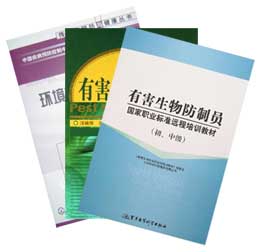
1、《家庭防虫灭鼠》 化学工业出版社 1997
2、《环境有害生物防治》 化学工业出版社 2004
3、《有害生物治理》 化学工业出版社 2005
4、《传染病预防与健康丛书--环境有害生物防治》 化学工业出版社 2006
5、《有害生物防制员国家职业标准远程培训教材》 军事医学科学 2007
6、《中国自然保护区》
英文部分论文:
[1]Yelin Sun,Weihang Liu,Qinmei Han,Haoqiang Ji,Meng Shang,Wang Xiaoxu,Zhenxu Wang,Wenqin Liang,Qi-Yong Liu.Urbanization development characteristics coincide with elevated Anopheles stephensi habitat suitability.Communications Earth & Environment.DOI:10.1038/s43247-026-03833-0
[1]Pei Yuan,Ning Wang,Qi-Yong Liu,Huaiping Zhu*.Climate variability and COVID-19 non-pharmaceutical interventions shaped dengue transmission in Guangdong: an integrated modeling study.Scientific Reports(2026).DOI:10.1038/s41598-026-59584-7
[3]Hansen Xiao,Qi-Yong Liu,Kun Su,Zheng Wang,Taotian Tu,Jing Wei,Haoqiang Ji,Meng Shang,Hengqing Ji,Spatiotemporal dynamics of the capture rate of Rattus tanezumi and its implications for rodent-borne diseases in the Three Gorges Reservoir Area, China.Environmental Monitoring and Assessment.2026,198:733. https://doi.org/10.1007/s10661-026-15506-8
[4]XiaoMing Shi*,Tiantian Li,Yu Wang,Qi-Yong Liu,Jiao Wang,Jie Ban,Patrick L Kinney,Shilu Tong,Climate change and infectious diseases: translating evidence into action.Infectious Diseases of Poverty,2026.15:66. https://doi.org/10.1186/s40249-026-01468-z
[5]Chao Wang,Thomas Pape,Weibing Zhu,Li Dai,Qi-Yong Liu,Dong Zhang.Catalogue of type specimens of Sarcophaga Meigen deposited in Shanghai Entomological Museum (Diptera, Sarcophagidae).ZooKeys.June 20261281:321-361.DOI:10.3897/zookeys.1281.182881
[6]Yu Chen,Meng Shang,Shengping Dou,Wang Xiaoxu,Haoqiang Ji,Qi-Yong Liu.Global Genomic Epidemiology of Chikungunya Virus: E1-Based Phylodynamics, Recombination Screening, and Structural Variation in Chinese Isolates.2026. International Journal of Infectious Diseases。DOI:10.1016/j.ijid.2026.108908
[7]L Feng,Meng Shang,J Ren,X Wang,H Ji,X Hao,J Li,Qi-Yong Liu.Spatiotemporal distribution characteristics of and trends in disease burden of dengue fever in China from 2005 to 2024.Chinese Journal of Schistosomiasis Control.2026,38(2):137-147 .DOI:10.16250/j.32.1915.2025196
[8]Dijun Chen,Jingzhu Zhou,Qing Ma,Xuexue Kong,Shijun Li,Qi-Yong Liu,Wenqin Liang.Multi-Organ RNA Virome Profiling of Edible Rodents Reveals Potential Zoonotic Viral Exposure at the Wildlife–Livestock–Human Interface in Southwest China.Pathogens,May 202615(5):558.DOI:10.3390/pathogens15050558
[9]Yu Chen,Meng Shang,Shengping Dou,Wang Xiaoxu,Haoqiang Ji,Xiuping Song,Jun Wang,Qi-Yong Liu.Incidence of acute pancreatitis among hospitalized patients with dengue: A systematic review and meta-analysis.PLOS Neglected Tropical Diseases.May 202620(5):e0014304.DOI:10.1371/journal.pntd.0014304
[10]Wenzhe Yan,Wenzhe Yan,Jinyu Li,Xinchang Lun,Pengbo Liu,Xiuping Song,Yuhong Guo,Xiao-Bo Liu,Yujuan Yue,Qi-Yong Liu,Ning Zhao.Liang Lu.Epidemiological and Genomic Characterization of Japanese Encephalitis Virus in Mosquitoes in China.May 2026Journal of Medical Virology 98(5):e70950.DOI:10.1002/jmv.70950
[11]Wenyu Li,Madelong Ma,Chunchun Zhao,Qunzheng Mu,Xinxin Zhou,Dongdong Hua,Wenjun Ge,Qi-Yong Liu,Ying Liang,Feng-Xia Meng.Genetic diversity of Culex pipiens complex populations from different geographic regions of China based on mtDNA-COI.May 2026Acta Tropica 279:108128.DOI:10.1016/j.actatropica.2026.108128
[12]Chao Wang,Taotian Tu,Xiaojuan Ma,Xiaojing Shen,Hong Tao,Yujuan Fan,Kaiwang Li,Xiaomei Zhou,Shoujiang Li,Wuhan Liu,Qi-Yong Liu.Comparative Efficacy of Different Attractants for Surveillance of Synanthropic Flies Across Seven Zoogeographical Regions of China.Insects.April 202617(4):421.DOI:10.3390/insects17040421
[13]Wang Xiaoxu,Meng Shang,Chunchun Zhao,Yelin Sun,Qi-Yong Liu.Assessing plague risk across seven decades of environmental change in Inner Mongolia, China: An interpretable machine learning.April 2026iScience 29(5):115611. DOI:10.1016/j.isci.2026.115611
[14]Guoao Li,Peng Lu,Philip Weinstein,Aleš Urban,Shilu Tong,Niilo Ryti,Francesco Sera,Michelle L. Bell,Dominic Royé,Kristie L Ebi,Alistair Woodward,Mengjie Geng,Taiyuan Zhang,Wen Li,Yu Yan,Xiaochi Zhang,Qi-Yong Liu,Wei Ma,Bo Lu,Qi Zhao.The burden of El Niño–Southern Oscillation-related dengue attributable to anthropogenic climate change: a multicountry modelling study.April 2026The Lancet Planetary Health 10(4):101454. DOI:10.1016/j.lanplh.2026.101454
[15]Qi-Yong Liu,Jian Gu,Guang-Hua Yin,Wei-Shu Wang,Ning-Ning Ma,Hang Li,Hang Li,Shi-Jun Sun.Synergistic improvement strategy of spring maize yield and water use efficiency under shallow buried drip irrigation in semi-arid areas. The journal of applied ecology.March 2026,37(3):825-835.DOI:10.13287/j.1001-9332.202603.016
[16]Chen Min,Han Na,Zhang Wen,Qiang Yujun,Qi-Yong Liu,Li Dongmei.Comparative Transcriptome Analysis of Bartonella Species from Diverse Hosts Reveals Evolutionary Insights — Global, 2023–2025Comparative Transcriptome Analysis of Bartonella Species from Diverse Hosts Reveals Evolutionary Insights — Global, 2023–2025.February 2026China CDC Weekly 8(9):246-250. DOI:10.46234/ccdcw2026.039
[17]Jichen Niu, Jun Ma, Yibin Zhu , Gang Wang, Xiang Xu, Mao Wang, Zhaoyang Wang, Xinhui Bao, Jianying Liu, Enhao Ma, Xianwen Zhang, Long Liu, Ying Zhang, Qiyong Liu, Chunxiao Li, Hang Yin, Ye Xiang, Penghua Wang & Gong Cheng.Mosquito–capsid interactions contribute to flavivirus vector specificity.February 2026Nature 651(8107):1039-1050.DOI:10.1038/s41586-026-10100-x
[18]Senzhong Huang,Xinyan Zhang,Xi Chen,Fengying Wei,Jianguo Xu,Yao Bai,Zhen Jin,Qi-Yong Liu,Yamin Sun,Jinjie Wang,Zhaojun Wang,Jun Xu,Xianming Xu,Lei Xu.New Methods for the Assessment and Prediction of Vector-Borne Infectious Diseases.Journal of Biosafety and Biosecurity.2026, (8):39-44.DOI:10.1016/j.jobb.2026.01.003
[19]Chao Wang, Thomas Pape, Weibing Zhu, Li Dai, Qiyong Liu, Dong Zhang.Catalogue of type specimens of Sarcophaga Meigen deposited in Shanghai Entomological Museum (Diptera, Sarcophagidae).Preprint.DOI:10.3897/arphapreprints.e184693
[20]Ruobing Zhou,Panjun Gao,Jacopo G. Cecere,Diego Rubolini,Marion Koopmans,Elisa Mancuso,Henk van der Jeugd,Reina S. Sikkema,Sara Epis,Federica Monaco,Simona Imperio,Qi-Yong Liu,Hein Sprong,Thomas Krafft.A systematic review of the occurrence of Hyalommaticks associated with birds migrating between Africa and the Northern Hemisphere.Parasites & Vectors.January 2026,19:73. DOI:10.1186/s13071-025-07222-y
[21]Ji-Min Sun,Hai-Xia Wu,Liang Lu,Ying Liu,Jiang-Ping Ren,Wen-Wu Yao,Hong-Hua Qu,Qi-Yong Liu.Editor's Note to “Factors associated with spatial distribution of severe fever with thrombocytopenia syndrome” [Sci. Total Environ. 750 (2021), 141522].January 2026The Science of The Total Environment 1014:181423.DOI:10.1016/j.scitotenv.2026.181423
[22]Hui Zhang,Wan-Ying Zhao,Yan-Qing Yang,Xue-Yan Guo,Yi-Han Shi,Qi-Yong Liu,Jing Li.Analysis of factors influencing hemorrhagic fever with renal syndrome and its prediction in Weifang, China from 2013 to 2021。December 2025Osong Public Health and Research Perspectives 16(6):575-585.DOI:10.24171/j.phrp.2025.0367
[23]Xinning Hao,Xinning Hao,Lianfang Feng,Zihang Wang,Haoqiang Ji,Shengping Dou,Ning Zhao,Qi-Yong Liu.Predicting the global potential distribution of tow major vectors of scrub typhus under future climate scenarios.December 2025.Parasitology Research 124(12):155. DOI:10.1007/s00436-025-08602-0
[24]Guangju Mo,Xiyuan Huo,Meshack Kipkogei Biwott,Nan Chang,Haoqiang Ji,Lianfang Feng,Huaiping Zhu,Qi-Yong Liu.The effect of meteorological factors on severe fever with thrombocytopenia syndrome: Evidence from 34 Chinese cities.December 2025One Health 22:101295.DOI:10.1016/j.onehlt.2025.101295
[25]Lianfang Feng,Guangju Mo,Zihao Liu,Qi-Yong Liu.Global, regional, national burden, trends and health inequality of neglected tropical diseases and malaria from 1990 to 2021. BMC Infectious Diseases (2025) 25:1649. https://doi.org/10.1186/s12879-025-12068-x
[26]Jian Ma,Lei xu,Qian Han,Jing Gao,Huihui Yuan,Kaixing Dong,Cunrui Huang,Cui Zhou,John Ji,Chutian Zhang,Huatang Zeng,Yongman Guo,Lexuan Luo,Xiangliang Zhang,Yong Luo,Qi-Yong Liu,Nils Chr Stenseth,Wannian Liang.The Indian Ocean Dipole drives imported-dominated dengue outbreaks in China: Mechanisms and predictions.PNAS Nexus ,November 2025,4(11):l350. DOI:10.1093/pnasnexus/pgaf350
[27]injian Chen,Maigeng Zhou,Qihong Deng,Shilu Tong,Tianjun Zhou,Tianjun Zhou*,Bixia Li,De Li Liu,Qi-Yong Liu,Jun Yang.Human-induced climate change and population aging scenarios will amplify the heatwave-related mortality burden in China.mortality burden in China.November 2025Environment International 207:109939.DOI:10.1016/j.envint.2025.109939
[28] Hansen Xiao,Qi-Yong Liu,Kun Su,Zheng Wang,Taotian Tu,Jing Wei,Haoqiang Ji,Meng Shang,Hengqing Ji.Spatiotemporal dynamics of Rattus tanezumi density and its implications for rodent-borne diseases in the Three Gorges Reservoir Area, China.Preprint.October 2025.DOI:10.21203/rs.3.rs-7896124/v1
[29]Pei Yuan,Ning Wang,Qi-Yong Liu,Huaiping Zhu.A Hybrid Deep Learning-Mechanistic Modeling Framework for Dengue Transmission Dynamics in Guangdong, China.Preprint.October 2025.DOI:10.1101/2025.10.04.25337267
[30]Wenjia Cai,Chi Zhang,Shihui Zhang,Yuqi Bai,Bin Chen,Jifei Chen,Liangliang Cheng,Weicheng Fan,Lianfang Feng,Dabo Guan,Congkai Hong,Yixin Hu,Junyi Hua,Cunrui Huang,Hong Huang,Jianbin Huang,Xiaomeng Huang,John Ji,Qiaolei Chloris Jiang,Xiaopeng Jiang,Haidong Kan,Jun Kang,Gregor Kiesewetter,Bo Li,Guoao Li,,Tiantian LiWeiyi Liao,Borong Lin,Hualiang Lin,Huan Liu,Qi-Yong Liu,Xinghan Liu,Yanxiang Liu,Zehua Liu,Zhao Liu,,Zhu Liu,Shuhan Lou,Bo Lu,Chenxi Lu,Wei Ma,Zhifu Mi,Yanqing Miao,Guangju Mo,Tim Repke,Chao Ren,Marina Romanello,Jianxiang Shen,Jing Su,Rui Su,Yuze Sun,Xu Tang,Maria Walawender,Can Wang,Hui Wang,Qing Wang,Qiong Wang,Yongyue Wang,Wangyu Wei,Sanmei Wen,Hui Xiong,Bing Xu,Xiu Yang,Yuren Yang,Fanghong Yao,Mingjun Yin,Le Yu,Zhaowu Yu,Jing Zhang,Rui Zhang,Shangchen Zhang,Shaohui Zhang,Zhenyu Zhang,Mengzhen Zhao,Qiang Zhao,Dashan Zheng,Hao Zhou,Jingbo Zhou,Yuye Zhou,Yong Luo.ProfPhD Peng GongThe 2025 China report of the Lancet Countdown on health and climate change: empowering cities for synergistic action.October 2025The Lancet Public Health 10(12).DOI:10.1016/S2468-2667(25)00230-0
[31]Chi Zhang,Wenjia Cai,Shihui Zhang,Yuqi Bai,Max Callaghan,Nan Chang,Bin Chen,Huiqi Chen,Liangliang Cheng,Hancheng Dai,Weicheng Fan,Dabo Guan,Yixin Hu,Yifan Hu,Junyi Hua,Cunrui Huang,Hong Huang,Jianbin Huang,Xiaomeng Huang,Sihan Ji,Qiaolei Chloris Jiang,Xiaopeng Jiang,Gregor Kiesewetter,Tiantian Li,Bo Li,Lu Liang,Borong Lin,Hualiang Lin,Huan Liu,Qi-Yong Liu,Zhao Liu,Zhu Liu,Yanxiang Liu,Shuhan Lou,Bo Lu,Chenxi Lu,Zhenyu Luo,Zhifu Mi,Yanqing Miao,Chao Ren,Marina Romanello,Jianxiang Shen,Jing Su,Rui Su,Yuze Sun,Xinlu Sun,Maria Walawender,Can Wang,Qing Wang,Qiong Wang,,Laura Wieser,Wangyu Wei,Xiaohui Wei,Sanmei Wen,Yang Xie,Hui Xiong,Bing Xu,Xiu Yang,Yuren Yang,Fanghong Yao,Le Yu,Wenhao Yu,Jiacan Yuan,Yiping Ceng,Jing Zhang,Rui Zhang,Shangchen Zhang,Shaohui Zhang,Mengzhen Zhao,Qi Zhao,Qiang Zhao,Hao Zhou,Jingbo Zhou,Ziqiao Zhou,Yong Luo.Peng Gong.Launching a new low-carbon, healthy journey.Chinese Science Bulletin.Chinese Science Bulletin.2025, 70 (32): 5417-5423.DOI:10.1360/CSB-2025-0525
[32]Xinning Hao.Lianfang Feng.Zihang Wang.Haoqiang Ji.Shengping Dou.Ning Zhao.Qi-Yong Liu.Predicting the Global Potential Distribution of Tow Major Vectors of Scrub Typhus Under Future Climate Scenarios.Preprint.September 2025.1-18DOI:10.21203/rs.3.rs-7592864/v1
[33]Ying Ma,Ziyan Li,Pengbo Liu,Youwen Wei,Ke Jiang,Yujuan Yue,Aiping Zhang,Wenlong Wang,Lingwen Li,Penghui Zhang,Xingyue Gu,Qi-Yong Liu,Liang Lu.Metagenomics research on the gut microbiota of the Marmota himalayana of the Sanjiangyuan National Nature Reserve in Qinghai Province.September 2025Biosafety and Health 7(5).DOI:10.1016/j.bsheal.2025.09.003
[34]Qunzheng Mu,Fengfeng Li,Wenyu Li,Xiaoxia Wang,Mingyuan Tang,Kehan Chen,Yihao Jiang,Jingqi Liu,Shirong Zhang,Qi-Yong Liu,Chuan Wang*.Predicting the potential distribution areas of Leptotrombidium rubellum under current and future climate change.Frontiers in Public HealthAugust 2025 13. DOI:10.3389/fpubh.2025.1638468
[35]Meng Shang,Haoqiang Ji,Zhenxu Wang,Wang Xiaoxu,Pengbo Liu,Ke Li,Chenran Guo,Wanjun Jiang,Lu Wang,Ying Liang,Qi-Yong Liu.Analysis of the Effects of Hydrometeorological Conditions on Flea Indices of Two Rodent Species in Inner Mongolia.August 2025Integrative Zoology 21(1):168-177.DOI:10.1111/1749-4877.13025
[36]Wenhao Yu,Chuanxi Li,Dominic Royé,Francesco Sera,Niilo Ryti,Michelle L. Bell,Kristie L Ebi,Alistair Woodward,Hilario Paulo,Micheline S. Z. S. Coelho.,Haitao Wang,Wei Ma,Qi-Yong Liu,Jie Yan,Qi Zhao.Anthropogenic climate change contributed to excess dengue risk related to hydrometeorological conditions in Brazil and China.July 2025One Earth 8(101388).DOI:10.1016/j.oneear.2025.101388
[37]Han Xia,Shunlong Wang,Ying Huang,Xiaoyu Wang,Qun Wu,Wahid Zaman,Nanjie Ren,Fei Wang,Qian Han,Qi-Yong Liu,Xiaotian Tang,Yingjun Cui,Zhi-ming Yuan.Midgut cell atlas and virome of four important mosquito species and immune landscapes of dengue virus infectionPreprint.July 2025.DOI:10.21203/rs.3.rs-7214530/v1
[38]Xiaoyu Wang,Ying Huang,Fei Wang,Qianyun Hu,Qianyun Hu,Doudou Huang,Haixia Ma,Yi Liu.Qi-Yong Liu,Bo Zhang,Zhi-ming Yuan,Han Xia.DENV-2 3′UTR dumbbell structure is a critical factor for viral infection and dissemination in Aedes mosquito.Jul 2025.Journal of Virology 2025,99(8) :1-18. DOI:10.1128/jvi.00758-25
[39]Qi-Yong Liu,Haoqiang Ji,Meng Shang.Notified Vector-Borne Diseases — China, 2005–2024.July 2025China CDC Weekly 7(29):961-966.DOI:10.46234/ccdcw2025.162
[40]Xinchang Lun,Yujuan Yue,Yiguan Wang,Guichang Li,Ning Zhao,Feng-Xia Meng,Qi-Yong Liu,Pengbo Liu,Zihao Wang,Zhenxu Wang,Xiuping Song,Jun Wang,Ying Liang,Liang Lu.Cell surface TLR polymorphisms influence Bartonella and ectoparasite infections in striped hamsters.June 2025 Science 28(7):112883.DOI:10.1016/j.isci.2025.112883
[41]Pengbo Liu,Dongsheng Ren,Guichang Li,Xiaoming Xu,Luca Presotto,Wei Liu,Ning Zhao,Dongmei Li,Min Chen,Jun Wang,Xiao-Bo Liu,Chunchun Zhao,Liang Lu,Qi-Yong Liu.Ectoparasites enhance survival by suppressing host exploration and limiting dispersal.Nature Communications.May 2025,16(1):4318.DOI:10.1038/s41467-025-59601-9
[42]Ziyan Liu,Oliver J Brady,Guangze Wang,Yapin Li,Nils Chr Stenseth,Christopher Dye,Qi-Yong Liu,Huaiyu Tian.Long term monitoring and adaptive strategies: lessons from Hainan’s malaria elimination and prevention efforts.April 2025The BMJ 389:e080657.DOI:10.1136/bmj-2024-080657
[43]Yijin ChenYuting ZhengTianyun Su[...]Qi-Yong Liu.Evaluation on activity and efficacy of Bacillus thuringiensis var. israelensis and S-methoprene against the Asian tiger mosquito, Aedes albopictus (Diptera: Culicidae), in discarded tires.April 2025Journal of Medical Entomology 62(4):895-904.DOI:10.1093/jme/tjaf057
[44]Xinyue FangLiping YangDongsheng Ren[...]Qi-Yong Liu.Anopheles larval control deserves a greater priority: lessons in malaria elimination from China.April 2025The BMJ 389:e080662.DOI:10.1136/bmj-2024-080662
[45]Xiao-Bo LiuPi GuoYing Liang[...]Qi-Yong Liu.Lessons from failure to success on malaria elimination in the Huai River Basin in China.April 2025The BMJ 389:e080658.DOI:10.1136/bmj-2024-080658
[46]Qi-Yong Liu,Yiguan Wang,Xiao-Bo Liu[...]Shengjie Lai.Stratified sustainable vector control strategies and measures for malaria control and elimination in China: a 70 year journey.April 2025The BMJ 389:e080656. DOI:10.1136/bmj-2024-080656
[47]Dashan ZhengPeng TianGuiyun Yan[...]Hualiang Lin.Stratified vector control and proactive cross border collaboration for sustaining malaria elimination in Yunnan, China.April 2025The BMJ 389:e082300.DOI:10.1136/bmj-2024-082300
[48]Di LiuJinxiang MaJinjian Chen[...]Jun Yang.PM2.5 constituents and risk of influenza-like illness: A nationwide analysis in 289 Chinese cities.April 2025Journal of Hazardous Materials 492(2):138186.DOI:10.1016/j.jhazmat.2025.138186
[49]Yingying Cao,Wenhao Yu,Chuanxi Li,Zunyan Chu,Bangjie Guo,Haitao Wang,Wei Ma,Xueshui Xu,Qi-Yong Liu,Qi Zhao.Association between greenspace morphology and dengue fever in China.Parasites & Vectors,March 202518(1):115.DOI:10.1186/s13071-025-06727-w
[50]Qi-Yong Liu.The First Imported Case of Lassa Fever in China – Implications for Global Health Surveillance.Biomedical and Environmental Sciences.March 202538(3):277-278.DOI:10.3967/bes2025.029
[51]Ruobing Zhou,Hein Sprong,Qi-Yong Liu[...]Agustín Estrada-Peña.Mapping the potential suitable habitats for Hyalomma rufipes (Acari: Ixodidae) in Africa and Western Eurasia.PLOS Neglected Tropical Diseases.March 2025,19(3):1-13 DOI:10.1371/journal.pntd.0012923
[52]Wang XiaoxuMeng ShangZihao Wang[...]Qi-Yong Liu.Projecting the potential distribution of Rickettsia japonica in China and Asian adjacent regions under climate change using the Maxent model.Frontiers in Public Health,March 202513:1478736,DOI:10.3389/fpubh.2025.1478736
[53].Min ChenNa HanYu Miao[...]Dongmei Li.Differential transcriptome profiling of Bartonella spp. influenced by the species divergence factors.March 2025Hereditas (Beijing) 47(3):366-381.DOI:10.16288/j.yczz.24-201
[54]Zhenxu WangLu WangChenran Guo[...]Qi-Yong Liu.Effects of Different Levels of Flea Infestation on Gut Microbiota of Brandt’s Voles (Lasiopodomys brandtii) in China.Animals.February 202515(5):669.DOI:10.3390/ani15050669
[55]Shilu TongYu WangYonglong Lu[...]XiaoMing Shi.The Impacts of Climate Change on the Environment and Human Health in China: A Call for more Ambitious Action.Biomedical and Environmental Sciences.February 202538(2):127-143. DOI:10.3967/bes2025.016
[56]Guangju MoHongmei ZhuJing Li[...]Qi-Yong Liu.Relationship between meteorological factors and the incidence of severe fever with thrombocytopenia syndrome: a systematic review and meta-analysis.BMC Public Health.January 2025,25(1):340.DOI:10.1186/s12889-025-21527-8
[57]Shaowei Sang,Yiguan Wang,Qi-Yong Liu[...]Anran Zhang.Predicting dengue incidence in high-risk areas of China through the integration of Southeast Asian and local meteorological factors.January 2025Ecotoxicology and Environmental Safety 290:117751.DOI:10.1016/j.ecoenv.2025.117751
[58]Nan ChangWenzhong HuangYanlin Niu[...]Qi-Yong Liu*.Risk of hemorrhagic fever with renal syndrome associated with meteorological factors in diverse epidemic regions: a nationwide longitudinal study in China.Infectious Diseases of Poverty 2025,14(1):3.DOI:10.1186/s40249-024-01272-7
[59]Zhaobin SunLing HanZiming Li[...]Jun Yang.The dividend period of climate change–related mortality in China is coming to an end.January 2025.Fundamental Research.DOI:10.1016/j.fmre.2025.01.007
[60]Chunyue Ai,Yi Teng,Hui Zhang,Guangju Mo,Yucheng Qian,Shiqi Wang,Meshack Kipkogei Biwott,Jing Li,Qi-Yong Liu.Safety and Effectiveness of Dengue Vaccines in Clinical Research: A Systematic Review and Network Meta-Analysis.Preprint.Jan 2025.DOI:10.2139/ssrn.5379892
[61]Xinchang Lun,Yiguan Wang,Ning Zhao,Yujuan Yue,Feng-Xia Meng,Qi-Yong Liu,Xiuping Song,Ying Liang,Liang Lu.Metabolism and immune responses of striped hamsters to ectoparasite challenges: insights from transcriptomic analysis.Frontiers in Immunology,December 202415, DOI:10.3389/fimmu.2024.1516382
[62]Sujuan ChenMaigeng ZhouDe Li Liu[...]Jun Yang.Mortality burden of diabetes attributable to high temperature and heatwave under climate change scenarios in China.Nov 2024.npj Climate and Atmospheric Science.2024 1; 7.
[63]Meng ShangHaoqiang JiKe Li[...]Qi-Yong Liu*.Spatiotemporal Characteristics and Risk Zonation Analysis of Rodents and Surface-Parasitic Fleas — Inner Mongolia Autonomous Region, China, 2013–2021.China CDC Weekly. 2024 Nov 15;6(46):1195-1200.
[64]Wang XiaoxuMeng ShangZihao Wang[...]Qi-Yong Liu.Effects of individual characteristics, seasonality, and interaction on ectoparasite load of Daurian ground squirrels in Inner Mongolia, China.Nov 2024.International Journal for Parasitology Parasites and Wildlife
[65]Wenjia CaiChi ZhangShihui Zhang[...]ProfPhD Peng Gong.The 2024 China report of the Lancet Countdown on health and climate change: launching a new low-carbon, healthy journey.Nov 2024.The Lancet Public Health
[66]Wang Z, Chang N, Lun X, Wang L, Wang Z, Guo C, Wang X, Ji H, Liu P, Liu Q(通讯作者). Impacts of ectoparasite flea infestation on gut microbiota of the Meriones unguiculatus in a rodent-flea system. Parasitol Res. 2024 Oct 25;123(10):361.
[67]Ailing XuLiang LuWen Zhang[...]Dongmei Li.Microevolution of Bartonella grahamii driven by geographic and host factors..mSystems.. 2024 Oct 22;9(10):e0108924.
[68]Haobo NiXiaoyan CaiJiarong Ren[...]Pi Guo.Epidemiological characteristics and transmission dynamics of dengue fever in China. .Nature Communications.2024 Sep 14;15(1):8060.
[69]Shaowei SangPeng ChenChuanxi Li[...]Qi-Yong Liu.The classification, origin, and evolutionary dynamics of severe fever with thrombocytopenia syndrome virus circulating in East Asia.Sep 2024.Virus Evolution
[70]Haoqiang JiKe LiMeng Shang[...]Qi-Yong Liu*.The 2016 Severe Floods and Incidence of Hemorrhagic Fever With Renal Syndrome in the Yangtze River Basin.JAMA Netw Open. 2024 Aug 1;7(8):e2429682.
[71]Yafei GuoPeiran ChenYanxia Xie[...]Qi-Yong Liu.Association of daytime-only, nighttime-only, compound heatwaves with preterm birth by urban-rural and regional socioeconomic status in China.Aug 2024.ISEE Conference Abstracts
[72]Yafei GuoYanxia XieXiaohui Wei[...]Qi-Yong Liu.Disparities of heat wave-related preterm birth in climate types — China, 2012-2019..Aug 2024.ISEE Conference Abstracts
[73]Shihui ZhangChi ZhangWenjia Cai[...]Gong Peng.Taking stock of climate action for a healthy and thriving future.Aug 2024.Chinese Science Bulletin
[74]Zihao WangNan ChangHongyun Li[...]Qi-Yong Liu.Impacts of climate change on the potential distribution of Pulex simulans and Polygenis gwyni.Jul 2024Ecology and Evolution
[75]Lu ZhangZihao WangNan Chang[...]Qi-Yong Liu.Relationship between climatic factors and the flea index of two plague vector hosts in Xilingol League, Inner Mongolia Autonomous Region.Jul 2024.Biosafety and Health
[76]Jun YangMaigeng ZhouCui Guo[...]Qi-Yong Liu.Drivers of associations between daytime-nighttime compound temperature extremes and mortality in China.Jun 2024.Communications Medicine
[77]Zhonghui ZhaoJie ChuJie Ren[...]Jixiang Ma.Effect Modification of Heat-Related Mortality Risk by Air Pollutants in Shandong, China.Jun 2024.The American journal of tropical medicine and hygiene
[78]Xinchang LunYuan ShiYiguan Wang[...]Liang Lu.Transcriptome analysis of Kunming mice responses to the bite of Xenopsylla cheopis.Jun 2024.Parasites & Vectors
[70]Ke LiZhenxu WangXiaohui Wei[...]Qi-Yong Liu*.Relationships Between Meteorological Factors and Mongolian Gerbils and Its Flea Burdens - Xilingol League, Inner Mongolia Autonomous Region, China, 2012-2021.China CDC Weekly.2024 Jun 7;6(23):547-552.
[80]Taotian TuYang JingHansen Xiao[...]Zhichao Li.Spatiotemporal analysis of imported and local dengue virus and cases in a metropolis in Southwestern China, 2013–2022.Jun 2024.Acta Tropica
[81]Siyuan LiuXiaoyu WangFei Wang[...]Han Xia.Evaluating the mosquito vector range for two orthobunyaviruses: Oya virus and Ebinur Lake virus.May 2024.Parasites & Vectors
[82]Liming ZhangDaxi WangPeibo Shi[...]Gong Cheng.science.adn9524_sm Apr 2024.
[83]Liming ZhangDaxi WangPeibo Shi[...]Gong Cheng.A naturally isolated symbiotic bacterium suppresses flavivirus transmission byAedesmosquitoes.Apr 2024.Science
[84]Qiongyu ZhuMaigeng ZhouMohammad Javad[...]Jun Yang.Projecting heat-related cardiovascular mortality burden attributable to human-induced climate change in China.. 2024 May;103:105119.
[85]Wenyu LiMadelong MaQunzheng Mu[...]Feng-Xia Meng.Mutations and intron polymorphisms in voltage-gated sodium channel genes of different geographic populations of Culex pipiens pallens/Culex pipiens quinquefasciatus in China.Apr 2024.Infectious Diseases of Poverty
[86]Yanlin NiuFeng LuXue-Jiao Liu[...]Jun Yang.Global climate change: Effects of future temperatures on emergency department visits for mental disorders in Beijing, China.Apr 2024.Environmental Research
[87]Nanjie RenQianqian JinFei Wang[...]Han Xia.Evaluation of vector susceptibility in Aedes aegypti and Culex pipiens pallens to Tibet orbivirus.Mar 2024.mSphere®
[88]Ying MaPengbo LiuZiyan Li[...]Liang Lu.High genetic diversity of the himalayan marmot relative to plague outbreaks in the Qinghai-Tibet Plateau, China.Mar 2024.BMC Genomics
[89]Yajun ZhangYiguan WangNing Zhao[...]Feng-Xia Meng.Long-term trends in housefly (Musca domestica L.) insecticide resistance in China.Mar 2024.Pesticide Biochemistry and Physiology
[90]Siyuan LiuXiaoyu WangFei Wang[...]Han Xia.Evaluating the mosquito vector range for two orthobunyaviruses: Oya virus and Ebinur Lake Virus。Preprint.Feb 2024.
[91]Wenbo HuYijin ChenYing Liang[...]Xiao-Bo Liu.Laboratory and Semi-Field Evaluation on S-Methoprene Formulations Against Anopheles sinensis (Diptera: Culicidae) - Yuxi City, Yunnan Province, China.Feb 2024.China CDC Weekly
[92]Wang Y, Zhang C, Gao J, Chen Z, Liu Z, Huang J, Chen Y, Li Z, Chang N, Tao Y, Tang H, Gao X, Xu Y, Wang C, Li D, Liu X, Pan J, Cai W, Gong P, Luo Y, Liang W, Liu Q(通讯作者), Stenseth NC, Yang R, Xu L. Spatiotemporal trends of hemorrhagic fever with renal syndrome (HFRS) in China under climate variation. Proc Natl Acad Sci U S A. 2024 Jan 23;121(4):e2312556121.
[93]Haoqiang JiXiaohui WeiMadelong Ma[...]Qi-Yong Liu.Predicting the global potential distribution of two major vectors of Rocky Mountain Spotted Fever under conditions of global climate change.Jan 2024.PLOS Neglected Tropical Diseases
[94]Pengbo LiuGuichang LiNing Zhao[...]Liang Lu.Climate heterogeneity, season variation, and sexual dimorphism modulate the association between MHC II diversity and parasite variation in striped hamster.Dec 2023。Integrative Zoology
[95]Xiaohui WeiNan ChangKe Li[...]Qi-Yong Liu.Projecting the Potential Distribution Areas of Lutzomyia verrucarum and Lutzomyia peruensis using MaxEnt under Climate Change and Predicting the Risk of Carrion’s Disease.Preprint.Dec 2023
[96]Yafei GuoYanxia XieXiaohui Wei[...]Qi-Yong Liu.Disparities of Heatwave-Related Preterm Birth in Climate Types — China, 2012–2019.Dec 2023.China CDC Weekly
[97]oy Shumake-Guillemot,Rosa von Borries,Diarmid Campbell-Lendrum,Juli Trtanj,Jonathan Abrahams,Peter Berry,S. C. Bhan,,Juan Castillo,Yolanda Clewlow,Sally Edwards,David Gikungu,Kenza Khomsi,Qi-Yong Liu,Roché Mahon,Andreas Matzarakis,Marcella Ohira,Judy Omumbo,Kyu Rang Kim,Reija Ruuhela,Ben Ryder,Craig Sinclair,Madeleine Thomson,Coleen Vogel.Good practices: Co-producing integrated climate, environment and health services.PLOS Climate.November 20232(11):e0000304.DOI:10.1371/journal.pclm.0000304
[98]Shihui ZhangChi ZhangWenjia Cai[...]Wen Ms.Countdown The 2023 China report of the Lancet Countdown on health and climate change: taking stock for a thriving future Excellence on Risk Interconnectivity and Governance on Weather/ Climate Extremes Impact and Public.November 2023The Lancet Public Health.DOI:10.1016/S2468-2667(23)00245-1
[99]Pengbo Liu,Liang Lu,Jinyong Jiang,Yuhong Guo,Mingdong Yang,Qi-Yong Liu.The expanding pattern of Aedes aegypti in southern Yunnan, China: insights from microsatellite and mitochondrial DNA markers.Oct 2023.Pengbo LiuLiang LuJinyong Jiang
[100]Lei xuQian WangRuifu Yang[...]Nils Chr. Stenseth.Author Correction: Climate-driven marmot-plague dynamics in Mongolia and China.Springer Nature Scientific Reports.September 202313(1). DOI:10.1038/s41598-023-41800-3
查看全部论文点击:https://www.researchgate.net/profile/Qi-Yong-Liu
发表中文期刊论文:
[1]王超, 王雪霜, 岳玉娟, 宋秀平, 鲁亮, 刘起勇. 2020-2025年全国蝇类监测报告[J]. 中国媒介生物学及控制杂志, 2026, 37 (3): 304-308+322.
[2]郝馨凝, 赵双洁, 王晓旭, 王佳琳, 宋秀平, 吴海霞, 刘起勇, 赵宁. 草原血蜱味觉受体基因鉴定及功能分析[J]. 中国媒介生物学及控制杂志, 2026, 37 (3): 281-289.
[3]冯连芳, 尚猛, 任佳荣, 王晓旭, 冀好强, 郝馨凝, 李京, 刘起勇. 2005—2024年我国登革热疾病负担现状及变化趋势[J]. 中国血吸虫病防治杂志(中英文), 2026, 38 (2): 137-147.
[4]王超, 李超, 涂涛田, 马晓娟, 沈晓婧, 李寿江, 王君, 宋秀平, 刘起勇. 重庆和西宁两地丝光绿蝇携带细菌多样性分析[J]. 中国媒介生物学及控制杂志, 1-6.
[5]王超, 李超, 涂涛田, 马晓娟, 沈晓婧, 李寿江, 王君, 宋秀平, 刘起勇. 重庆市和西宁市丝光绿蝇携带细菌多样性分析[J]. 中国媒介生物学及控制杂志, 2026, 37 (2): 243-248.
[6]任长春, 张倩雯, 肖扬, 谢倩, 吴群, 蔡利君, 刘璞瑜, 程洋, 王妮妮, 郭紫晓, 李娇娇, 钟汶兵, 刘起勇, 孙定炜. 海南省2025年登革热和基孔肯雅热疫情应急处置后白纹伊蚊抗药性变化[J]. 中国热带医学, 2026, 26 (5): 651-656.
[7]胡馨予, 尚猛, 俞星, 刘起勇. 2005-2024年中国登革热传播风险Ⅱ类地区流行特征:基于三类病例的时空分析[J]. 疾病监测, 2026, 41 (3): 291-299.
[8]滕一, 艾春月, 刘起勇. 居民区航空超低容量施药在公共卫生应急灭蚊中的国际证据与中国本土化路径研究[J]. 中国媒介生物学及控制杂志, 2026, 37 (1): 1-5.
[9]王仕祺, 侯银续, 王赛寒, 林浩飞, 张星, 汪敏, 郑爱华, 吴海霞, 徐庆华, 吴家兵, 刘起勇. 2023-2024安徽省黄山市蜱类监测结果分析[J]. 中国媒介生物学及控制杂志, 2026, 37 (1): 50-55.
[10]曾诗岚, 侯银续, 胡治国, 石勇, 金琪, 金新纪, 徐庆华, 刘起勇, 方杰. 安徽省大别山区不同诱饵对蝇类群落诱集特征的影响[J]. 中国媒介生物学及控制杂志, 2026, 37 (1): 104-109.
[11]王佳琳, 刘起勇, 鲁亮, 李贵昌. 内蒙古吸虱一新种记述(虱目)(英文)[J]. Entomotaxonomia, 2025, 47 (4): 345-352.
[12]常楠, 郝馨凝, 赵宁, 王君, 刘起勇. 环境与社会经济因素在温度与肾综合征出血热关联中的修饰效应[J]. 中国媒介生物学及控制杂志, 2025, 36 (6): 757-763.
[13]张弛, 蔡闻佳, 张诗卉, 白玉琪, Max Callaghan, 常楠, 陈彬, 陈慧琪, 程亮亮, 戴瀚程, 范维澄, 关大博, 胡艺馨, 胡易钒, 华峻翊, 黄存瑞, 黄弘, 黄建斌, 黄小猛, 纪思翰, 蒋俏蕾, 姜晓朋, Gregor Kiesewetter, 李湉湉, 李博, 梁璐, 林波荣, 林华亮, 刘欢, 刘起勇, 刘钊, 刘竹, 柳艳香, 楼书含, 陆波, 鲁晨曦, 罗震宇, 米志付, 苗艳青, 任超, Marina Romanello, 沈鉴翔, 苏婧, 苏锐, 孙语泽, 孙昕璐, Maria Walawender, 王灿, 王情, 王琼, Laura Warnecke, 魏汪宇, 韦晓慧, 文三妹, 谢杨, 熊辉, 徐冰, 杨秀, 杨雨人, 姚芳虹, 俞乐, 于文浩, 袁嘉灿, 曾仪娉, 张镜, 张锐, 张尚辰, 张少辉, 赵梦真, 赵琦, 赵强, 郑大山, 周浩, 周景博, 周子乔, 罗勇, 宫鹏. 开启低碳健康新征程[J]. 科学通报, 2025, 70 (32): 5417-5423.
[14]李世豪, 付邦, 任佳荣, 王紫航, 宋秀平, 方心悦, 梁莹, 鲁亮, 刘小波, 刘起勇. 四川西部高海拔地区鼠形动物携带重要病原体的调查研究[J]. 中国人兽共患病学报, 2025, 41 (8): 879-886.
[15]邹心宇, 白玛次旺, 岳玉娟, 张睿, 刘起勇, 修朋程, 刘小波, 马欣然, 郭玉红. 西藏林芝市登革热媒介调查及流行风险分析[J]. 环境卫生学杂志, 2025, 15 (7): 614-619.
[16]陈鹏辉, 涂涛田, 王政, 肖汉森, 宿昆, 季恒青, 刘起勇. 重庆市2013-2022年气象因素与幼蚊密度关联研究[J]. 中国媒介生物学及控制杂志, 2025, 36 (4): 500-507.
[17]曹英志, 葛文君, 张亚军, 赵春春, 伦辛畅, 栗冬梅, 刘小波, 梁莹, 宋秀平, 鲁亮, 刘起勇, 孟凤霞. 我国3个登革热高风险地区白纹伊蚊电压门控钠离子通道基因突变调查[J]. 中国媒介生物学及控制杂志, 2025, 36 (3): 402-407.
[18]姜宛均, 尚猛, 冀好强, 王晓旭, 王璐, 刘起勇. 云南省疟疾消除前后疟疾疫情流行特征及空间聚集性分析[J]. 中国媒介生物学及控制杂志, 2025, 36 (3): 355-365.
[19]邓婷, 孟凤霞, 于京营, 刘起勇, 鲁亮, 杨丽萍, 任东升. 热蒸汽和热吹风对臭虫成虫的致死效果研究[J]. 中国媒介生物学及控制杂志, 2025, 36 (3): 305-311.
[20]赵春春, 葛文君, 岳玉娟, 鲁亮, 刘起勇, 梁莹, 孟凤霞. 2023年中国家蝇抗药性水平分析[J]. 中国媒介生物学及控制杂志, 2025, 36 (3): 327-332.
[21]宋秀平, 李庆多, 伦辛畅, 岳玉娟, 吴海霞, 任东升, 刘起勇, 栗冬梅. 医疗机构就诊人群巴尔通体感染率调查及影响因素分析[J]. 中国媒介生物学及控制杂志, 2025, 36 (3): 413-419.
[22]曹英瑛, 郭富, 高杉杉, 于文浩, 楚尊燕, 郭邦婕, 刘起勇, 于晓卿, 赵琦. 中国五省(自治区)登革热发病的时空聚集性及其与绿地的关联性研究[J]. 环境卫生学杂志, 2025, 15 (4): 277-285.
[23]王振旭, 李轲, 赵宁, 李贵昌, 鲁亮, 刘小波, 宋秀平, 刘起勇. 内蒙古自治区2021-2022年气温与布氏田鼠染蚤风险的关联性研究[J]. 中国媒介生物学及控制杂志, 2025, 36 (2): 226-231.
[24]任佳荣, 李世豪, 付邦, 王紫航, 刘蓬勃, 宋秀平, 方心悦, 梁莹, 刘小波, 刘起勇. 2015-2020年航空旅客数及气象因素对广东省登革热本地传播的影响[J]. 中国媒介生物学及控制杂志, 2025, 36 (2): 177-182.
[25]葛文君, 肖迪, 张慧芳, 赵春春, 伦辛畅, 宋秀平, 郭玉红, 梁莹, 刘起勇, 孟凤霞. 基于MALDI-TOF MS的蚊虫种类鉴定技术初步研究[J]. 中国媒介生物学及控制杂志, 2025, 36 (2): 238-245+267.
[26]王璐, 郝馨凝, 尚猛, 姜宛均, 汪子豪, 郭忱然, 冀好强, 王振旭, 刘起勇. 2022-2023年内蒙古东部地区布氏田鼠病原体携带状况调查[J]. 中国媒介生物学及控制杂志, 2025, 36 (2): 268-273.
[27]钱渝成, 莫广菊, 王仕祺, 艾春月, Meshack Kipkogei BIWOTT, 刘起勇. 2010-2023年山东省发热伴血小板减少综合征流行病学特征分析[J]. 中国媒介生物学及控制杂志, 2025, 36 (2): 183-189.
[28]郭忱然, 韩笑, 刘雨秋, 任佳荣, 王晓旭, 常楠, 冀好强, 汪子豪, 刘起勇. 2012-2021年内蒙古锡林郭勒盟达乌尔黄鼠密度及其体表寄生蚤时空分布特征[J]. 中国媒介生物学及控制杂志, 2025, 36 (2): 215-225.
[29]吴兴露, 刘起勇, 潘伟璐, 李京, 唐云锋. 1990—2021年中国环境O3导致的COPD疾病负担分析[J]. 预防医学情报杂志, 2025, 41 (2): 152-161.
[30]陈敏, 梁莹, 刘起勇, 栗冬梅. 6种常见鼠传病原体双重实时荧光定量PCR检测方法构建[J]. 中国媒介生物学及控制杂志, 2025, 36 (1): 99-105.
[31]付邦, 梁莹, 方心悦, 岳玉娟, 任东升, 宋秀平, 鲁亮, 刘小波, 刘起勇. 高海拔地区鼠疫患者流行病学特征的Meta分析[J]. 中国媒介生物学及控制杂志, 2025, 36 (1): 66-75.
[32]牛彦麟, 杨军, 王超, 张晓媛, 张百超, 刘起勇, 马晓晨. 北京市日均气温与日均相对湿度对食源性腹泻病例就诊量影响的时间序列分析[J]. 环境卫生学杂志, 2024, 14 (12): 975-980+1019.
[33]郭玉红, 林君芬, 黄文忠, 郭颂, 孟凤霞, 吴红照, 刘小波, 吴瑜燕, 鲁亮, 闫冬明, 侯娟, 龚震宇, 张蓉, 陈恩富, 刘起勇. 挂笼法用于无人机喷雾地面不同位置白纹伊蚊处理效果评价[J]. 中国媒介生物学及控制杂志, 2024, 35 (6): 652-656.
[34]刘小波, 任东升, 梁莹, 岳玉娟, 鲁亮, 刘起勇. 登革热媒介伊蚊可持续控制现状及展望[J]. 中国媒介生物学及控制杂志, 2024, 35 (6): 633-638.
[35]陈敏, 韩娜, 缪玉, 强裕俊, 张雯, 刘蓬勃, 刘起勇, 栗冬梅. 物种分化因素影响下的巴尔通体差异转录组分析[J]. 遗传, 2025, 47 (3): 366-381.
[36]张诗卉, 张弛, 蔡闻佳, 白玉琪, Max Callaghan, 常楠, 陈彬, 陈慧琪, 程亮亮, 戴瀚程, 代鑫, 范维澄, 房小怡, 高仝, 耿阳, 关大博, 胡艺馨, 华峻翊, 黄存瑞, 黄弘, 黄建斌, 黄小猛, 纪思翰, 蒋俏蕾, 姜晓朋, Gregor Kiesewetter, 李湉湉, 梁璐, 林波荣, 林华亮, 刘欢, 刘起勇, 刘小波, 刘钊, 刘竹, 刘昱甫, 陆波, 鲁晨曦, 罗震宇, 马伟, 米志付, 任超, Marina Romanello, 沈鉴翔, 苏婧, 孙语泽, 孙昕璐, 汤绪, Maria Walawender, 王灿, 王情, 汪蕊, Laura Warnecke, 魏汪宇, 文三妹, 谢杨, 熊辉, 徐冰, 颜钰, 杨秀, 姚芳虹, 俞乐, 袁嘉灿, 曾仪娉, 张镜, 张璐, 张锐, 张尚辰, 张少辉, 赵梦真, 郑大山, 周浩, 周景博, 周子乔, 罗勇, 宫鹏. 盘点气候风险机遇,展望健康繁荣未来[J]. 科学通报, 2024, 69 (27): 4005-4011.
[37]汪子豪, 常楠, 李晋宇, 李世豪, 郝馨凝, 胡伟超, 韦晓慧, 王晓旭, 刘起勇. 内蒙古长爪沙鼠病原体监测研究[J]. 中国媒介生物学及控制杂志, 2024, 35 (4): 422-428.
[38]胡伟超, 李晋宇, 赵宁, 刘起勇, 温红玲, 吴海霞. 3种蜱传细菌性病原体多重实时荧光定量PCR法的建立[J]. 中国媒介生物学及控制杂志, 2024, 35 (3): 334-338.
[39]李晋宇, 白雪峰, 闫文喆, 李轲, 汪子豪, 石圆, 鲁亮, 李贵昌, 温红玲, 赵宁, 刘起勇. 内蒙古自治区东部草原达乌尔黄鼠携带重要病原体的分布研究[J]. 中国媒介生物学及控制杂志, 2024, 35 (3): 374-380.
[40]刘起勇. 全球消除疟疾的生物学挑战Ⅳ媒介按蚊入侵[J]. 中国血吸虫病防治杂志, 2024, 36 (3): 247-250.
[41]尚猛, 王璐, 姜宛均, 王晓旭, 冀好强, 梁莹, 刘起勇. 2013-2021年气象因素及其交互作用对内蒙古自治区鄂尔多斯市鼠密度的影响[J]. 中国媒介生物学及控制杂志, 2024, 35 (2): 205-211.
[42]李轲, 王振旭, 张璐, 伦辛畅, 尚猛, 许磊, 赵宁, 刘起勇. 内蒙古自治区锡林郭勒盟2012-2021年气象因素和鼠体蚤指数对长爪沙鼠种群密度的影响[J]. 中国媒介生物学及控制杂志, 2024, 35 (2): 212-217.
[43]陈军虎, 闻礼永, 李石柱, 王善青, 刘起勇, 赵彤言, 谢青, 周晓农. 媒传热带病监测路径与体系构建的专家共识[J]. 中国热带医学, 2024, 24 (3): 233-238.
[44]胡文博, 杨丽萍, 包文风, 梁莹, 宋秀平, 苏天运, 刘小波, 李学文, 刘起勇. S-烯虫酯对登革热媒介伊蚊控制效果的系统综述[J]. 中国媒介生物学及控制杂志, 2024, 35 (1): 115-120.
[45]王晓旭, 梁莹, 尚猛, 王璐, 姜宛均, 冀好强, 刘起勇. 日本立克次体与日本斑点热:病原体与疾病综述[J]. 中国媒介生物学及控制杂志, 2024, 35 (1): 128-131.
[46]何昌华, 罗欢乐, 尹飞飞, 韩谦, 梁磊, 师永霞, 于学东, 孙毅, 刘起勇, 王环宇, 王荣, 单超, 邓菲, 袁志明, 夏菡. 医学节肢动物野外现场与实验室生物安全规范专家共识[J]. 中国热带医学, 2024, 24 (2): 119-125.
[47]蔡闻佳, 张弛, 张诗卉, 白玉琪, Max Callaghan, 常楠, 陈彬, 陈慧琪, 程亮亮, 崔学勤, 戴瀚程, Bawuerjiang Danna, 董文轩, 范维澄, 房小怡, 高仝, 耿阳, 关大博, 胡艺馨, 华峻翊, 黄存瑞, 黄弘, 黄建斌, 江林朗, 蒋俏蕾, 姜晓朋, 金虎, Gregor Kiesewetter, 梁璐, 林波荣, 林华亮, 刘欢, 刘起勇, 刘涛, 刘小波, 刘心远, 刘钊, 刘竹, 楼书含, 鲁晨曦, 罗震宇, 孟文君, 苗卉, 任超, Marina Romanello, Wolfgang Sch?pp, 苏婧, 汤绪, 王灿, 王琼, Laura Warnecke, 文三妹, Wilfried Winiwarter, 谢杨, 徐冰, 颜钰, 杨秀, 姚芳虹, 俞乐, 袁嘉灿, 曾仪娉, 张镜, 张璐, 张锐, 张尚辰, 张少辉, 赵梦真, 赵琦, 郑大山, 周浩, 周景博, 罗勇, 宫鹏. 以气候行动助力健康老龄化[J]. 科学通报, 2023, 68 (33): 4472-4479.
[48]王蓉, 刘起勇, 郭玉红, 杨秉睿, 张宪青, 卢囡囡, 程晓兰, 马斌忠, 蒋明霞. 青海省部分地区蚊密度季节分布与气象因素的关联分析[J]. 中国媒介生物学及控制杂志, 2023, 34 (6): 814-818.
[49]李世豪, 赵忠辉, 岳玉娟, 任佳荣, 罗雷, 杨明东, 赵宁, 郭玉红, 吴海霞, 刘小波, 刘起勇. 重点流行地区(云南和广东省)登革热防控现状、存在问题及应对策略措施研究[J]. 中国媒介生物学及控制杂志, 2023, 34 (6): 754-760.
[50]张亚军, 赵春春, 冯星明, 王佳琳, 伦辛畅, 刘起勇, 孟凤霞. 实验室品系家蝇对常用杀虫剂敏感基线的建立[J]. 中国媒介生物学及控制杂志, 2023, 34 (6): 719-722.
[51]赵宛莹, 郭雪艳, 王鸿宇, 石昊宁, 吴学谦, 杨彦清, 梁倩, 吴兴露, 侯祥, 刘起勇, 李京. 山东省潍坊市2013—2020年肾综合征出血热流行特点及影响因子研究[J]. 现代预防医学, 2023, 50 (14): 2651-2655+2682.
[52]蔡闻佳, 张弛, 张诗卉, 艾思奇, 白玉琪, 鲍俊哲, 常楠, 陈彬, 陈慧琪, 程亮亮, 崔学勤, 戴瀚程, Bawuerjiang Danna, 底骞, 董伟, 董文轩, 窦德景, 范维澄, 范星, 房小怡, 高仝, 高源, 耿阳, 关大博, 郭亚菲, Ian Hamilton, 胡艺馨, 华峻翊, 黄存瑞, 黄弘, 黄建斌, 蒋俏蕾, 姜晓朋, 柯丕煜, Gregor Kiesewetter, Pete Lampard, 李传玺, 李瑞奇, 李双利, 梁璐, 林波荣, 林华亮, 刘欢, 刘起勇, 刘小波, 刘心远, 刘昱甫, 刘钊, 刘竹, 楼书含, 鲁晨曦, 罗勇, 罗震宇, 马伟, Alice McGushin, 牛彦麟, 任超, 阮增良, Wolfgang Sch?pp, 单钰理, 苏婧, 孙韬淳, 王灿, 王琼, 文三妹, 谢杨, 熊辉, 徐冰, 徐朦, 颜钰, 杨军, 杨廉平, 杨秀, 俞乐, 岳玉娟, 曾仪娉, 张镜, 张少辉, 张曜, 张仲宸, 赵继尧, 赵亮, 赵梦真, 赵琦, 赵哲, 周景博, 朱征宏, 陈冯富珍, 宫鹏. 把握机会窗口期减缓气候变化对中国居民健康影响[J]. 科学通报, 2023, 68 (15): 1899-1905.
[53]岳玉娟, 刘小波, 郭玉红, 赵宁, 任东升, 刘起勇. 2020—2022年中国登革热时空分布及相关环境因素分析[J]. 环境卫生学杂志, 2023, 13 (5): 341-345.
[54]母群征, 华栋栋, 李文玉, 周欣欣, 伦辛畅, 李贵昌, 王君, 宋秀平, 刘起勇, 孟凤霞. 河南省禹州地区白纹伊蚊击倒抗性基因突变检测[J]. 中国媒介生物学及控制杂志, 2023, 34 (3): 303-307+335.
[55]刘雨秋, 鲁亮, 刘蓬勃, 赵宁, 李贵昌, 栗冬梅, 宋秀平, 王君, 刘起勇. 内蒙古自治区3个地区布氏田鼠的种群遗传多样性及种群遗传结构研究[J]. 中国媒介生物学及控制杂志, 2023, 34 (3): 291-297.
[56]王蓉, 刘起勇, 陆涛, 张宪青, 马永成, 郭玉红, 马斌忠, 刘桂香, 蒋明霞, 程晓兰. 青海省黄河流域人居环境蚊类物种组成及空间分布特征[J]. 中国媒介生物学及控制杂志, 2023, 34 (3): 389-393+399.
[57]伦辛畅, 杨锐, 林凌鸿, 王君, 郭玉红, 修朋程, 刘起勇, 孟凤霞. 云南省边境地区居民登革热知识和防蚊行为现状及其影响因素分析[J]. 中国媒介生物学及控制杂志, 2023, 34 (3): 362-371.
[58]李泓运, 王振旭, 李超, 马天, 李瑞晓, 刘起勇. 气候变化和经济全球化驱动病媒生物入侵对人类健康的影响[J]. 中国媒介生物学及控制杂志, 2023, 34 (2): 182-188.
[59]梁莹, 徐烨, 殷颖璇, 李学荣, 茅范贞, 戴洋, 李泓运, 李超, 马德龙, 周若冰, 韦晓慧, 王晓旭, 冀好强, 岳玉娟, 侯雪新, 李明慧, 李振军, 蔡慧玲, 刘起勇. 中国重要外来入侵媒介和病原生物名录(2023版)[J]. 中国媒介生物学及控制杂志, 2023, 34 (2): 129-136+144.
[60]韦晓慧, 王晓旭, 冀好强, 梁莹, 刘起勇. 气候变化背景下按蚊伊丽莎白菌全球和中国适生区分布预估研究[J]. 中国媒介生物学及控制杂志, 2023, 34 (2): 165-175.
[61]华栋栋, 王磊, 肖迪, 李文玉, 周欣欣, 伦辛畅, 母群征, 刘起勇, 马伟, 孟凤霞. 白纹伊蚊昌平种群高效氯氰菊酯抗性的比较蛋白质组学研究[J]. 中国媒介生物学及控制杂志, 2023, 34 (2): 196-203.
[62]王晓旭, 冀好强, 韦晓慧, 梁莹, 刘起勇. 中国外来入侵致病菌风险评估研究[J]. 中国媒介生物学及控制杂志, 2023, 34 (2): 154-164.
[63]李超, 杨海波, 梁莹, 王国政, 李阳, 王彬, 李泓运, 王君, 刘起勇. 须喙按蚊入侵中国对未来气候变化的响应及风险评估[J]. 中国媒介生物学及控制杂志, 2023, 34 (2): 145-153.
[64]王彬, 李贵昌, 董利, 母群征, 赵宁, 宋秀平, 鲁亮, 栗冬梅, 李兴洲, 刘起勇. 内蒙古地区鼠类体表革螨携带立克次体研究[J]. 中国媒介生物学及控制杂志, 2023, 34 (2): 244-249.
[65]常楠, 周若冰, 马德龙, 张璐, 韦晓慧, 王君, 刘起勇. 新型冠状病毒肺炎疫情防控措施对中国肾综合征出血热流行的影响研究[J]. 中国媒介生物学及控制杂志, 2023, 34 (1): 58-64.
[66]栗冬梅, 李瑞晓, 刘起勇. 2021年全国病媒生物鼠传病原监测报告[J]. 中国媒介生物学及控制杂志, 2023, 34 (1): 1-8.
[67]张璐, 韦晓慧, 常楠, 李泓运, 司晓燕, 白雪峰, 王君, 刘起勇. 内蒙古锡林郭勒盟2012-2021年鼠类寄生蚤构成和蚤指数时空分布特征分析[J]. 中国媒介生物学及控制杂志, 2023, 34 (1): 82-90.
[68]董利, 李贵昌, 王彬, 鲁亮, 赵宁, 宛新荣, 刘伟, 胡斌, 兴安, 李庆多, 李超, 王振旭, 张璐, 刘雨秋, 马德龙, 潘劲超, 何宏轩, 马伟, 刘起勇. 内蒙古自治区东部草原鼠体寄生恙螨调查[J]. 中国媒介生物学及控制杂志, 2022, 33 (6): 873-878.
[69]赵美杰, 郭宁宁, 刘起勇, 金华锋, 孟凤霞, 刘小波, 郭玉红. 低温条件下埃及伊蚊生命表研究[J]. 中国媒介生物学及控制杂志, 2022, 33 (6): 771-775.
[70]龚君淘, 刘起勇, 王以燕, 洪晓月, 奚志勇. 沃尔巴克氏体控制媒介伊蚊的应用及前景[J]. 农药科学与管理, 2022, 43 (10): 20-29.
[71]曹衍雯, 楚洁, 徐晓慧, 赵忠辉, 赵琦, 刘起勇, 鹿子龙, 马伟. 山东省低温暴露所致死亡风险的季节内差异分析[J]. 中华预防医学杂志, 2022, 56 (10): 1429-1434.
[72]刘起勇, 刘小波, 常楠, 张璐. 2012-2021年我国媒介生物及相关传染病监测控制进展及成效[J]. 中国媒介生物学及控制杂志, 2022, 33 (5): 613-621+654.
[73]崔莹莹, 王俊刚, 孙琬琬, 王君, 吴海霞, 刘起勇. 长角血蜱哈氏器对几种气味物质的触角电位试验[J]. 中国媒介生物学及控制杂志, 2022, 33 (5): 622-626.
[74]唐文革, 张勇, 周维康, 刘书楠, 季恒青, 赵琦, 张应, 涂涛田, 肖汉森, 何亚明, 宋丹, 蔡锋, 罗勇, 罗晓燕, 蔡涛, 王茜, 曾庆亮, 宋志强, 王儒鹏, 雷霞, 曾丹, 曾小丽, 李双, 周薇, 黄云霞, 田静, 何春燕, 刘晓蓉, 张萱, 单葵, 罗佳美, 杨鑫怡, 胡兵, 刘婷婷, 舒群, 朱叶庆, 刘起勇, 任东升, 罗超, 邵正蓉, 王英, 王宗庆, 付文博, 陶晓颖, 舒强, 吴永兵, 陶然, 伏峙浩, 冯育强. 室内主要环境过敏原检测与处理专家共识[J]. 环境影响评价, 2022, 44 (5): 29-36.
[75]黄存瑞, 刘起勇. IPCC AR6报告解读:气候变化与人类健康[J]. 气候变化研究进展, 2022, 18 (4): 442-451.
[76]李之超, 董金玮, 刘起勇. 地理空间大数据与人工智能在城市登革热驱动因素识别与风险预测中的应用[J]. 中国媒介生物学及控制杂志, 2022, 33 (3): 321-325.
[77]赵嘉欣, 李文, 李贵昌, 岳玉娟, 刘起勇, 鲁亮. 北京市平谷区恙虫病发病与土地利用的相关性研究[J]. 中国媒介生物学及控制杂志, 2022, 33 (3): 371-378.
[78]刘起勇. 加强媒介按蚊可持续精准控制巩固中国疟疾消除成果[J]. 中国血吸虫病防治杂志, 2022, 34 (2): 117-119.
[79]徐爱玲, 栗冬梅, 刘起勇. “鼠源疾病”的概念与内涵的系统评价[J]. 中国媒介生物学及控制杂志, 2022, 33 (2): 161-170+176.
[80]伦辛畅, 杨锐, 林凌鸿, 王君, 郭玉红, 修朋程, 李鸿斌, 朱进, 高阳, 刘起勇, 孟凤霞. 云南省西双版纳州景洪市居民登革热知信行的现状分析[J]. 中国媒介生物学及控制杂志, 2022, 33 (2): 281-288.
[81]马德龙, 李超, 周若冰, 李文玉, 李文, 高源, 王君, 刘起勇, 张钦凤. 基于规则集遗传算法模型的斑体花蜱在中国适生区预估[J]. 中国媒介生物学及控制杂志, 2022, 33 (2): 262-267.
[82]李文玉, 周欣欣, 伦辛畅, 马德龙, 林凌鸿, 宋秀平, 鲁亮, 刘起勇, 王君, 王春兰, 孟凤霞. 淡色库蚊成蚊对拟除虫菊酯类杀虫剂敏感性的影响因素研究[J]. 中国媒介生物学及控制杂志, 2022, 33 (2): 171-176.
[83]殷颖璇, 吴银娟, 何晴, 何咏欣, 高若兮, 刘起勇, 李学荣. 我国主要螺类生物入侵的现状、危害及防治对策[J]. 中国媒介生物学及控制杂志, 2022, 33 (2): 305-312.
[84]刘起勇. 2005-2020年我国媒介生物传染病报告病例:流行趋势、防控挑战及应对策略[J]. 中国媒介生物学及控制杂志, 2022, 33 (1): 1-7.
[85]周若冰, 高源, 常楠, 马德龙, 李超, 吴海霞, 王君, 刘起勇. 不同气候情景下红带锥蝽在中国潜在适生区预估[J]. 中国媒介生物学及控制杂志, 2022, 33 (1): 125-132.
[86]伦辛畅, 杨锐, 吴海霞, 王君, 刘起勇, 孟凤霞. 2005-2019年云南省缅甸登革热输入病例流行特征分析[J]. 中国媒介生物学及控制杂志, 2022, 33 (1): 108-113.
[87]刘小波, 岳玉娟, 贾清臣, 赵宁, 郭玉红, 赵春春, 梁莹, 王君, 吴海霞, 刘起勇. 2020-2021年我国12省份媒介伊蚊生态学调查[J]. 中国媒介生物学及控制杂志, 2022, 33 (1): 8-15.
[88]赵春春, 周欣欣, 李文玉, 伦辛畅, 刘小波, 吴海霞, 王君, 刘起勇, 孟凤霞. 2020年中国13省份登革热媒介白纹伊蚊抗药性监测及分析研究[J]. 中国媒介生物学及控制杂志, 2022, 33 (1): 30-37.
[89]王超, 闫利平, 李心钰, 张东, 刘起勇. 中国麻蝇属昆虫研究进展[J]. 中国媒介生物学及控制杂志, 2022, 33 (1): 153-158.
[90]涂涛田, 肖汉森, 孟凤霞, 刘起勇, 刘小波, 何亚明, 季恒青. 重庆市2019年登革热暴发疫情应急控制后媒介伊蚊抗药性调查[J]. 中国媒介生物学及控制杂志, 2022, 33 (1): 44-47.
[91]颜钰, 李传玺, 刘起勇, 马伟. 浙江省2015~2020年热带气旋对白纹伊蚊密度和登革热发病率的影响[J]. 山东大学学报(医学版), 2021, 59 (12): 143-150.
[92]李传玺, 刘起勇, 马伟. 广州市极端降水事件对不同特征人群登革热发病的影响[J]. 山东大学学报(医学版), 2021, 59 (12): 151-157.
[93]蔡闻佳, 张弛, 孙凯平, 艾思奇, 白玉琪, 鲍俊哲, 陈彬, 程亮亮, 崔学勤, 戴瀚程, 底骞, 董文轩, 窦德景, 范维澄, 范星, 高仝, 耿阳, 关大博, 郭亚菲, 胡艺馨, 华峻翊, 黄存瑞, 黄弘, 黄建斌, 蒋婷婷, 焦珂笛, Gregor Kiesewetter, Zbigniew Klimont, Pete Lampard, 李传玺, 李奇玮, 李湉湉, 李瑞奇, 林波荣, 林华亮, 刘欢, 刘起勇, 刘小波, 刘昱甫, 刘钊, 刘志东, 刘竹, 楼书含, 鲁晨曦, 罗勇, 马伟, Alice McGushin, 牛彦麟, 任超, 任浙豪, 阮增良, Wolfgang Sch?pp, 苏婧, 屠滢, 王杰, 王琼, 王雅琪, 王宇, Nick Watts, 肖淙曦, 谢杨, 熊辉, 徐名芳, 徐冰, 许磊, 杨军, 杨廉平, 俞乐, 岳玉娟, 张少辉, 张仲宸, 赵继尧, 赵亮, 赵梦真, 赵哲, 周景博, 宫鹏. 因地而异的气候变化健康影响需要因地而异的应对措施[J]. 科学通报, 2021, 66 (31): 3925-3931.
[94]康东梅, 栗冬梅, 宋秀平, 张文竹, 刘起勇, 伦辛畅, 孟凤霞. 汉赛巴尔通体感染SD大鼠实验研究[J]. 中国媒介生物学及控制杂志, 2021, 32 (6): 660-665.
[95]魏春, 郭小连, 杨锐, 唐烨榕, 岳玉娟, 刘小波, 刘起勇. 云南省2013-2020年登革热流行及聚集特征分析[J]. 中国媒介生物学及控制杂志, 2021, 32 (6): 720-724+743.
[96]母群征, 李欣颖, 刘蓉蓉, 杨军, 栗冬梅, 鲁亮, 李贵昌, 侯咏, 李明, 宋秀平, 孟凤霞, 刘起勇. 黑龙江省黑河市部分地区啮齿动物体表寄生恙螨调查[J]. 中国媒介生物学及控制杂志, 2021, 32 (5): 570-575.
[97]刘起勇, 刘小波. 中国消除疟疾媒介按蚊控制策略和技术[J]. 中国媒介生物学及控制杂志, 2021, 32 (5): 513-518.
[98]涂涛田, 肖汉森, 罗超, 陶晓颖, 张秀华, 梁维, 马祥峰, 李刚, 何亚明, 刘小波, 刘起勇, 季恒青. 重庆市2020年登革热媒介伊蚊生态学监测[J]. 中国热带医学, 2021, 21 (7): 667-669+680.
[99]李文, 牛彦麟, 赵哲, 任红艳, 李贵昌, 刘小波, 高源, 王君, 鲁亮, 刘起勇. 气象因素对云南省西南地区恙虫病流行的影响与滞后效应研究[J]. 中华流行病学杂志, 2021, 42 (7): 1235-1239.
[100]闫冬明, 王文周, 王雪霜, 刘强, 吴兴彬, 赵宁, 梁文琴, 周敬祝, 王丹, 王君, 刘起勇. 贵州省部分地区2019年蚊虫及蚊媒病毒调查研究[J]. 中国媒介生物学及控制杂志, 2021, 32 (4): 422-427.
[101]栗冬梅, 周若冰, 李寿江, 鲁亮, 饶华祥, 宋秀平, 李庆多, 刘起勇. 纳米孔测序实时检测鼠传巴尔通体[J]. 中国媒介生物学及控制杂志, 2021, 32 (4): 390-397.
[102]牛彦麟, 杨军, 林华亮, 薛涛, 高源, 李文, 王君, 刘起勇. 高温热浪对北京市居民死亡影响附加效应[J]. 中国公共卫生, 2022, 38 (3): 344-350.
[103]赵宁, 赵嘉欣, 宋秀平, 王君, 吴海霞, 刘小波, 岳玉娟, 任东升, 刘起勇, 鲁亮. 2019-2020年塞拉利昂弗里敦市旱季冈比亚按蚊复合体的分子鉴定和传疟作用[J]. 疾病监测, 2021, 36 (5): 411-416.
[104]伦辛畅, 赵春春, 朱彩英, 吴海霞, 王君, 王志会, 李文玉, 刘起勇, 孟凤霞. 2011-2019年柬埔寨登革热疫情及赴柬旅游对我国输入登革热的影响分析[J]. 中国媒介生物学及控制杂志, 2021, 32 (3): 312-317.
[105]李文, 马德龙, 赵嘉欣, 母群征, 李贵昌, 刘小波, 王君, 张钦凤, 刘起勇, 鲁亮. 广东省恙虫病流行特征及发病风险预测[J]. 中国媒介生物学及控制杂志, 2021, 32 (3): 334-338.
[106]徐名芳, 岳玉娟, 刘小波, 王君, 刘国军, 刘起勇, 张钦凤. 云南省瑞丽及景洪市2006-2018年登革热疫情特征比较研究[J]. 中国媒介生物学及控制杂志, 2021, 32 (3): 318-323.
[107]李贵昌, 王玉姣, 母群征, 夏青, 栗冬梅, 岳玉娟, 鲁亮, 赵宁, 李文, 宋秀平, 王君, 吴海霞, 李兴洲, 刘起勇. 北京市平谷区恙虫病自然疫源地宿主、媒介和病原体调查[J]. 中国媒介生物学及控制杂志, 2021, 32 (3): 291-297.
[108]薛志静, 赵宁, 王君, 宋秀平, 孟凤霞, 梁文琴, 周敬祝, 王丹, 张忠, 刘起勇. 蚊媒甲病毒属病毒半巢式PCR方法的建立及应用[J]. 中国媒介生物学及控制杂志, 2021, 32 (2): 132-138.
[109]栗冬梅, 徐爱玲, 宋秀平, 李庆多, 康央, 刘起勇. 巴尔通体在自然感染的啮齿动物组织中的分布[J]. 中国媒介生物学及控制杂志, 2021, 32 (2): 181-187.
[110]王志会, 李文, 郭玉红, 岳玉娟, 王君, 马欣然, 徐名芳, 吴海霞, 刘起勇, 孟凤霞. 2005-2019年中国北部8省市流行性乙型脑炎流行特征分析[J]. 中国媒介生物学及控制杂志, 2021, 32 (2): 197-203.
[111]孟凤霞, 孙养信, 吴照, 吴海霞, 赵春春, 贾玉新, 李治平, 毛文秀, 伦辛畅, 张鹏举, 阎峻, 吕文, 丘柳玉, 刘起勇. 2019年甘肃省静宁县流行性乙型脑炎流行区媒介蚊虫综合防控模式及效果评价研究[J]. 中国媒介生物学及控制杂志, 2021, 32 (2): 144-149.
[112]栗冬梅, 徐爱玲, 杜小莉, 宋秀平, 崔志刚, 刘起勇. 巴尔通体MALDI-TOF MS数据库的建立与鉴定方法的评价[J]. 国际检验医学杂志, 2021, 42 (4): 385-392.
[113]马欣然, 刘起勇, 孙文锴, 刘小波, 李贵昌, 宋秀平, 王君, 郭玉红. 石灰水对埃及伊蚊不同发育阶段影响研究[J]. 环境卫生学杂志, 2021, 11 (1): 17-21.
[114]刘起勇. 气候变化对中国媒介生物传染病的影响及应对——重大研究发现及未来研究建议[J]. 中国媒介生物学及控制杂志, 2021, 32 (1): 1-11.
[115]吴海霞, 任东升, 李贵昌, 王雪霜, 刘小波, 刘起勇. 病媒生物传播新型冠状病毒风险评估及防控建议[J]. 中国媒介生物学及控制杂志, 2020, 31 (6): 633-638.
[116]黄焕春, 周鑫辉, 屈永超, 刘起勇. 超大城市高温暴露剂量测度及公共健康危害风险评估[J]. 河南大学学报(自然科学版), 2020, 50 (6): 666-674.
[117]李文, 李贵昌, 刘小波, 刘起勇, 鲁亮. 恙虫病流行特征及影响因素研究进展[J]. 中国媒介生物学及控制杂志, 2020, 31 (6): 738-743.
[118]刘亚溪, 宋辞, 刘起勇, 张知新, 王席, 马佳, 陈晓, 裴韬. 重庆市新型冠状病毒肺炎流行时空特征及其与人群活动性的关系[J]. 地球信息科学学报, 2021, 23 (2): 222-235.
[119]侯祥, 封托, 韩宁, 王京, 陈晓宁, 安晓雷, 许磊, 刘起勇, 常罡. 气候变化和经济发展对肾综合征出血热发生的影响[J]. 生物多样性, 2020, 28 (10): 1229-1237.
[120]毕鹏, 施小明, 刘起勇. 过去十年中国气候变化与人群健康研究进展及未来展望[J]. 气候变化研究进展, 2020, 16 (6): 763-769.
[121]岳玉娟, 任东升, 刘小波, 吴海霞, 郭玉红, 赵宁, 王君, 刘起勇. 2014-2018年中国登革热病例空间特征及相关关系研究[J]. 中国媒介生物学及控制杂志, 2020, 31 (5): 517-520.
[122]徐朦, 刘小波, 宋秀平, 王艳华, 漆莉, 郭亚菲, 李文, 刘起勇. 基于伤残调整寿命年的2010-2019年中国登革热疾病负担评估研究[J]. 中国媒介生物学及控制杂志, 2020, 31 (5): 509-512.
[123]郭玉红, 修朋程, 马欣然, 王雪霜, 赵春春, 赵宁, 刘小波, 王君, 刘起勇. 新型驱蚊剂不同浓度制剂对白纹伊蚊的驱避效果研究[J]. 中国媒介生物学及控制杂志, 2020, 31 (5): 552-554.
[124]马英, 鲁亮, 龚正达, 李华昌, 杨贵荣, 刘起勇. 云南临沧大雪山自然保护区非飞行小型兽类物种多样性调查[J]. 中国人兽共患病学报, 2020, 36 (7): 572-577+582.
[125]吴海霞, 刘小波, 岳玉娟, 任东升, 王君, 赵春春, 李贵昌, 赵宁, 宋秀平, 刘起勇. 2019年全国蜱类监测报告[J]. 中国媒介生物学及控制杂志, 2020, 31 (4): 417-422.
[126]李贵昌, 王玉姣, 鲁亮, 吴海霞, 郭玉红, 刘小波, 孟凤霞, 任东升, 岳玉娟, 刘起勇. 2019年全国鼠类监测报告[J]. 中国媒介生物学及控制杂志, 2020, 31 (4): 389-394.
[127]王雪霜, 吴海霞, 刘起勇. 2019年全国蝇类监测报告[J]. 中国媒介生物学及控制杂志, 2020, 31 (4): 407-411.
[128]刘小波, 吴海霞, 郭玉红, 岳玉娟, 宋秀平, 赵宁, 任东升, 王君, 李贵昌, 刘起勇. 2019年全国媒介伊蚊监测报告[J]. 中国媒介生物学及控制杂志, 2020, 31 (4): 401-406.
[129]赵宁, 郭玉红, 吴海霞, 刘小波, 岳玉娟, 任东升, 李贵昌, 宋秀平, 鲁亮, 刘起勇. 2019年全国媒介蚊虫监测报告[J]. 中国媒介生物学及控制杂志, 2020, 31 (4): 395-400+406.
[130]任东升, 吴海霞, 修朋程, 宋秀平, 岳玉娟, 鲁亮, 刘起勇. 2019年全国臭虫监测报告[J]. 中国媒介生物学及控制杂志, 2020, 31 (4): 423-425.
[131]郭玉红, 黄文忠, 闫冬明, 侯娟, 龚震宇, 任东升, 刘洪旭, 吴红照, 孙继民, 宋秀平, 刘小波, 刘起勇, 陈恩富. 城镇居民区无人机超低容量喷雾灭蚊效果评价[J]. 中国媒介生物学及控制杂志, 2020, 31 (4): 433-437.
[132]岳玉娟, 任东升, 吴海霞, 刘小波, 赵宁, 郭玉红, 李贵昌, 王雪霜, 宋秀平, 王君, 鲁亮, 刘起勇. 2019年全国蜚蠊监测报告[J]. 中国媒介生物学及控制杂志, 2020, 31 (4): 412-416.
[133]赵忠辉, 岳玉娟, 吴海霞, 郭玉红, 赵宁, 任东升, 杨明东, 王君, 谢吕, 姜进勇, 刘起勇, 刘小波. 云南省西双版纳州景洪市居民登革热认知现状初步研究[J]. 中国媒介生物学及控制杂志, 2020, 31 (3): 249-253.
[134]程功, 吴葩, Peng Sun, Kaixiao Nie, Yibin Zhu, Mingyu Shi, Changguang Xiao, Han Liu, 刘起勇, 赵彤言, 陈晓光, 周红宁, 王朋华. 蚊肠道共生菌增强伊蚊对蚊媒病毒易感性[J]. 科学新闻, 2020, (2): 74.
[135]赵宁, 涂宏, 郭玉红, 刘小波, 任东升, 罗巍, 邹小辉, 赵迎泽, 郑霄, 孙永, 刘洋, 马江涛, 万家余, 王立立, 段招军, 刘起勇. 塞拉利昂中国籍员工2019年疟疾感染率调查及蚊媒防控知识培训效果评价[J]. 中国媒介生物学及控制杂志, 2020, 31 (3): 277-281.
[136]闫冬明, 赵宁, 赵春春, 王君, 宋秀平, 朱彩英, 刘起勇, 张钦凤. 纳米孔测序技术研究进展[J]. 中国媒介生物学及控制杂志, 2020, 31 (3): 380-384.
[137]赵宁, Ishaq Sesay, 涂宏, Frederick Yamba, 任东升, 郭玉红, 鲁亮, 吴海霞, 刘小波, 岳玉娟, 李贵昌, 王君, 宋秀平, 王立立, 段招军, 刘起勇. 塞拉利昂弗里敦市2019年蚊媒监测结果分析[J]. 中国媒介生物学及控制杂志, 2020, 31 (3): 310-315.
[138]赵春春, 朱彩英, 贾清臣, 闫冬明, 刘国军, 吴海霞, 宋秀平, 刘起勇, 王君, 孟凤霞. 2017-2018年我国不同区域白纹伊蚊对常用杀虫剂的抗药性[J]. 中国媒介生物学及控制杂志, 2020, 31 (2): 126-132.
[139]岳玉娟, 王玉姣, 李贵昌, 李兴洲, 王君, 刘起勇. 2006-2018年中国大陆恙虫病高发区流行病学特征分析[J]. 疾病监测, 2020, 35 (4): 301-306.
[140]朱彩英, 赵春春, 刘起勇, 李贵昌, 闫冬明, 宋秀平, 王君, 孟凤霞. 我国不同地理种群白纹伊蚊乙酰胆碱酯酶基因分布调查[J]. 中国媒介生物学及控制杂志, 2020, 31 (2): 133-136+142.
[141]王蓉, 刘起勇, 刘桂香, 李寿江, 马永成, 石燕, 马斌忠, 马忠文, 蒋明霞, 郭玉红. 青海省乐都县首次发现迷走库蚊[J]. 中国媒介生物学及控制杂志, 2020, 31 (2): 209-211.
[142]闫冬明, 黄坤, 赵春春, 宋秀平, 张钦凤, 王君, 刘起勇. 常用蚊虫监测方法和技术研究进展[J]. 中国媒介生物学及控制杂志, 2020, 31 (1): 108-112.
[143]刘起勇. 我国登革热流行新趋势、防控挑战及策略分析[J]. 中国媒介生物学及控制杂志, 2020, 31 (1): 1-6.
[144]贾孝凯, 高春花, 周丹丹, 危芙蓉, 刘起勇, 任东升. 温带臭虫对常用杀虫剂半数致死剂量的测定[J]. 中国媒介生物学及控制杂志, 2020, 31 (1): 46-48.
[145]陈金建, 杨军, 陈仁超, 刘起勇, 欧春泉. 非线性效应的多元meta分析及其应用[J]. 中国卫生统计, 2019, 36 (6): 851-853+856.
[146]黄坤, 孙文锴, 郭玉红, 赵童, 吴海霞, 母群征, 宋秀平, 岳玉娟, 任东升, 赵宁, 李贵昌, 王君, 鲁亮, 刘小波, 刘起勇. 中国南方5省媒介伊蚊幼蚊密度回归模型的建立与预测研究[J]. 中华卫生杀虫药械, 2019, 25 (6): 549-554.
[147]郑大山, 郭玉清, 陈喆, 刘峰, 郭雪艳, 刘本先, 乔宗雷, 赵晓蒙, 刘起勇, 李京. 基于分布滞后非线性模型分析气温对潍坊市手足口病影响[J]. 中国公共卫生, 2021, 37 (3): 546-550.
[148]孙文锴, 黄坤, 李贵昌, 刘小波, 宋秀平, 吴海霞, 任东升, 岳玉娟, 赵宁, 刘起勇, 郭玉红. 澄清石灰水对白纹伊蚊不同发育阶段影响的研究[J]. 中国媒介生物学及控制杂志, 2019, 30 (5): 533-535.
[149]康央, 宋秀平, 张燕君, 刘起勇, 栗冬梅. 7种鼠传病原体多重PCR检测方法的建立与应用[J]. 中国媒介生物学及控制杂志, 2019, 30 (5): 487-493.
[150]何亚明, 涂涛田, 沈田展鸿, 肖汉森, 冯绍全, 杨雪帆, 叶盛, 喻臻, 陈爽, 王乙棋, 唐云, 罗飞, 季恒青, 刘起勇. 重庆市2018年蚊虫种群分布调查[J]. 中国媒介生物学及控制杂志, 2019, 30 (5): 570-573+577.
[151]刘起勇. 媒介生物可持续控制策略和实践——新中国70年媒介生物传染病控制成就[J]. 中国媒介生物学及控制杂志, 2019, 30 (4): 361-366.
[152]黄坤, 郭玉红, 吴海霞, 岳玉娟, 任东升, 李贵昌, 宋秀平, 赵宁, 王君, 刘小波, 刘起勇. 我国重点省份媒介伊蚊幼蚊密度指数相关性研究[J]. 中国媒介生物学及控制杂志, 2019, 30 (4): 395-399.
[153]高源, 牛彦麟, 刘小波, 孟凤霞, 岳玉娟, 王君, 宋秀平, 栗冬梅, 李贵昌, 王雪霜, 刘起勇. 中国斑疹伤寒病例发病至确诊时间间隔及影响因素分析[J]. 中国媒介生物学及控制杂志, 2019, 30 (4): 379-382.
[154]闫冬明, 高源, 吴海霞, 王玉姣, 赵宁, 朱彩英, 张钦凤, 王君, 刘起勇. 全国21个省2016年白纹伊蚊监测数据分析[J]. 中国媒介生物学及控制杂志, 2019, 30 (4): 391-394.
[155]薛志静, 刘小波, 郭玉红, 栗冬梅, 王雪霜, 刘起勇. 山东省蚊虫及蚊媒病毒调查研究概况[J]. 中国媒介生物学及控制杂志, 2019, 30 (4): 481-484.
[156]葛文鑫, 靳珂珂, 孙丽娜, 刘起勇, 伊丽萍, 李京. 登革热流行与不同气象因素相关性研究进展[J]. 中国媒介生物学及控制杂志, 2019, 30 (4): 367-370+378.
[157]岳玉娟, 吴海霞, 任东升, 王君, 刘起勇. 国家重要监测数据整合平台的建设[J]. 中国媒介生物学及控制杂志, 2019, 30 (4): 387-390.
[158]李静, 李京, 王焕新, 屈龙, 赵明强, 邢英杰, 刘起勇. 细颗粒物和气温对北京市昌平区儿科呼吸系统疾病日门诊量的交互影响[J]. 疾病监测, 2019, 34 (8): 755-759.
[159]李静, 王焕新, 屈龙, 赵明强, 徐颖, 刘玉秀, 李京, 刘起勇. 昌平区PM2.5和气温对日门诊量的交互影响[J]. 预防医学, 2019, 31 (6): 593-596+599.
[160]马英, 李海龙, 何建, 赵延梅, 杨汉青, 鲁亮, 刘起勇. 喜马拉雅旱獭线粒体DNA控制区遗传多样性及系统发育[J]. 兽类学报, 2019, 39 (3): 285-294.
[161]崔莹莹, 刘起勇, 张玉栋, 栗冬梅, 宋秀平, 王君, 吴海霞, 王俊刚. 长角血蜱饥饿雌成蜱转录组测序及分析[J]. 中国公共卫生, 2019, 35 (7): 876-880.
[162]薛志静, 王君, 宋秀平, 栗冬梅, 赵宁, 闫冬明, 梁文琴, 周敬祝, 王丹, 张瑞玲, 张忠, 刘起勇. 贵州省不同地区2018年蚊虫及蚊媒病毒调查[J]. 中国媒介生物学及控制杂志, 2019, 30 (3): 259-263.
[163]李贵昌, 王玉姣, 岳玉娟, 许磊, 母群征, 赵宁, 鲁亮, 刘起勇, 李兴洲. 我国恙虫病夏季型和秋季型疫区划分研究[J]. 中国媒介生物学及控制杂志, 2019, 30 (3): 233-236.
[164]王玉姣, 闫冬明, 李贵昌, 许磊, 岳玉娟, 王君, 鲁亮, 孙琬琬, 周若冰, 母群征, 刘起勇, 李兴洲. 北京市平谷区2008-2018年恙虫病流行特征分析[J]. 中国媒介生物学及控制杂志, 2019, 30 (3): 244-247.
[165]李贵昌, 李永香, 陈传伟, 刘吉起, 罗运动, 周团结, 沈阳, 蒋之礼, 郭玉红, 宋秀平, 王君, 王玉姣, 赵宁, 栗冬梅, 刘京利, 鲁亮, 刘起勇. 河南省永城市恙虫病自然疫源地调查研究[J]. 中国媒介生物学及控制杂志, 2019, 30 (3): 255-258.
[166]孙琬琬, 刘小波, 吴海霞, 王君, 刘起勇, 鲁亮. 基于分布滞后非线性模型的葫芦岛和丹东市环境温度对肾综合征出血热的效应研究[J]. 中国媒介生物学及控制杂志, 2019, 30 (3): 272-277.
[167]王雪霜, 吴海霞, 岳玉娟, 刘起勇. 2018年全国蝇类监测报告[J]. 中国媒介生物学及控制杂志, 2019, 30 (2): 139-141+150.
[168]吴海霞, 刘小波, 岳玉娟, 鲁亮, 任东升, 王君, 李贵昌, 赵宁, 宋秀平, 刘起勇. 2018年全国蜱类监测报告[J]. 中国媒介生物学及控制杂志, 2019, 30 (2): 146-150.
[169]任东升, 吴海霞, 郭玉红, 刘小波, 岳玉娟, 宋秀平, 王君, 李贵昌, 赵宁, 鲁亮, 刘起勇. 2018年全国臭虫监测报告[J]. 中国媒介生物学及控制杂志, 2019, 30 (2): 151-153.
[170]任东升, 吴海霞, 郭玉红, 刘小波, 岳玉娟, 赵宁, 李贵昌, 宋秀平, 鲁亮, 刘起勇. 2018年全国蜚蠊监测报告[J]. 中国媒介生物学及控制杂志, 2019, 30 (2): 142-145.
[171]闫冬明, 王玉姣, 李贵昌, 尹圆圆, 鲁亮, 吴海霞, 高源, 朱彩英, 赵宁, 张钦凤, 王君, 刘起勇. 2016年全国鼠类监测报告[J]. 中国媒介生物学及控制杂志, 2019, 30 (2): 123-127.
[172]李静, 王焕新, 屈龙, 赵明强, 丁小栋, 谢春新, 刘起勇. PM2.5对北京市昌平区居民心血管系统疾病死亡的短期影响[J]. 中华流行病学杂志, 2019, 40 (3): 331-334.
[173]郭玉红, 吴海霞, 刘小波, 岳玉娟, 任东升, 赵宁, 李贵昌, 宋秀平, 鲁亮, 刘起勇. 2018年全国媒介蚊虫监测报告[J]. 中国媒介生物学及控制杂志, 2019, 30 (2): 128-133.
[174]刘小波, 吴海霞, 郭玉红, 任东升, 赵宁, 李贵昌, 鲁亮, 刘起勇. 2018年全国媒介伊蚊监测报告[J]. 中国媒介生物学及控制杂志, 2019, 30 (2): 134-138.
[175]薛志静, 王君, 宋秀平, 刘小波, 郭玉红, 栗冬梅, 王雪霜, 刘起勇. 登革热病毒分子生物学特性及检测方法研究进展[J]. 中国媒介生物学及控制杂志, 2019, 30 (2): 224-227.
[176]刘可可, 刘小波, 孙继民, 宋秀平, 吴海霞, 王君, 闫冬明, 刘起勇. 2005-2017年广东和云南省登革热高发区本地登革热流行病学特征比较研究[J]. 中国媒介生物学及控制杂志, 2019, 30 (2): 154-157+179.
[177]刘起勇. 新时代媒介生物传染病形势及防控对策[J]. 中国媒介生物学及控制杂志, 2019, 30 (1): 1-6+11.
[178]杨舒然, 杨大进, 闫琳, 裴晓燕, 朱海明, 黄玉兰, 梁辉, 罗赟, 刘起勇. 火腿肠加工过程中微生物风险研究[J]. 中国食品卫生杂志, 2019, 31 (1): 59-63.
[179]侯祥, 刘可可, 刘小波, 常罡, 许磊, 刘起勇. 气候因素对广东省登革热流行影响的非线性效应[J]. 中国媒介生物学及控制杂志, 2019, 30 (1): 25-30.
[180]赵春春, 朱彩英, 开文龙, 刘国军, 刘起勇, 林丽, 祁艾艾, 吴钟毅, 王君, 宋秀平, 孟凤霞. 海口市2018年白纹伊蚊击倒抗性基因型分布研究[J]. 中国媒介生物学及控制杂志, 2019, 30 (1): 7-11.
[181]潘衍宇, 吴海霞, 国佳, 刘起勇. 基于R语言自回归积分移动平均模型的广州市白纹伊蚊密度预测研究[J]. 中国媒介生物学及控制杂志, 2018, 29 (6): 1-5.
[182]李晓梅, 薛晓嘉, 丁国永, 李栋, 侯海峰, 刘起勇, 姜宝法. 某市暴雨洪涝对细菌性痢疾发病影响的时间序列分析[J]. 中国现代医学杂志, 2018, 28 (25): 41-46.
[183]马英, 李海龙, 何建, 赵延梅, 杨汉青, 鲁亮, 刘起勇. 基于DNA条形码技术对青海鼠疫疫源地内主要媒介蚤的分子鉴定研究[J]. 中华地方病学杂志, 2018, 37 (7): 532-535.
[184]李京, 王创新, 胥欣, 杨军, 王春平, 薛付忠, 刘起勇. 气温对2007~2013年济南市人群慢性非传染性疾病死亡的归因风险研究[J]. 山东大学学报(医学版), 2018, 56 (8): 76-87.
[185]刘小波, 郭玉红, 吴海霞, 李全成, 岳玉娟, 任东升, 李贵昌, 宋秀平, 王君, 鲁亮, 刘起勇. 2015-2017年我国媒介伊蚊幼蚊监测结果分析[J]. 中国媒介生物学及控制杂志, 2018, 29 (4): 325-330.
[186]刘起勇. 适应和减缓气候变化,保护人类健康福祉[J]. 山东大学学报(医学版), 2018, 56 (8): 3-6.
[187]刘起勇. 媒介伊蚊可持续控制策略及关键技术[J]. 新发传染病电子杂志, 2018, 3 (2): 75-79.
[188]吴海霞, 鲁亮, 孟凤霞, 郭玉红, 刘小波, 李贵昌, 任东升, 岳玉娟, 刘起勇. 2006-2015年我国蜚蠊监测报告[J]. 中国媒介生物学及控制杂志, 2018, 29 (2): 113-119.
[189]马英, 李海龙, 何建, 赵延梅, 杨汉青, 鲁亮, 刘起勇. 基于线粒体COI基因的青海省44种蚤类的分子鉴定及系统发育分析[J]. 昆虫学报, 2018, 61 (4): 488-497.
[190]开文龙, 师灿南, 赵春春, 刘起勇, 宋秀平, 任东升, 李洪斌, 范建华, 周红宁, 孟凤霞. 除虫脲对登革热媒介伊蚊拟除虫菊酯类抗性种群的作用效果研究[J]. 中国媒介生物学及控制杂志, 2018, 29 (2): 126-129.
[191]刘起勇. 病媒生物监测预警研究进展[J]. 疾病监测, 2018, 33 (2): 123-128.
[192]李贵昌, 栗冬梅, 李焱, 岳玉娟, 刘小波, 郭玉红, 鲁亮, 刘起勇. 2006-2016年我国恙虫病流行特征分析[J]. 疾病监测, 2018, 33 (2): 139-143.
[193]李贵昌, 刘起勇. 恙虫病的流行现状[J]. 疾病监测, 2018, 33 (2): 129-138.
[194]吴海霞, 鲁亮, 孟凤霞, 郭玉红, 刘小波, 李贵昌, 任东升, 刘起勇. 2006-2015年我国蝇类监测报告[J]. 中国媒介生物学及控制杂志, 2018, 29 (1): 5-10.
[195]吴海霞, 刘小波, 刘起勇. 我国病媒生物防控现状及面临的问题[J]. 首都公共卫生, 2018, 12 (1): 4-6.
[196]刘小波, 吴海霞, 郭玉红, 任东升, 李贵昌, 鲁亮, 刘起勇. 2016年中国媒介伊蚊密度监测结果分析[J]. 疾病监测, 2018, 33 (2): 144-149.
[197]刘蓬勃, 孙琬琬, 王君, 刘起勇, 宋秀平, 郭玉红, 鲁亮. 滇西南地区埃及伊蚊种群微卫星标记筛选研究[J]. 中国媒介生物学及控制杂志, 2018, 29 (2): 130-133.
[198]马洁琼, 栗冬梅, 陈忠科, 刘起勇. 鼠传巴尔通体流行概况[J]. 疾病监测, 2018, 33 (1): 7-14+2.
[199]宋秀平, 栗冬梅, 孙继民, 黄儒婷, 刘起勇. 巴尔通体对19种抗生素体外敏感性分析[J]. 疾病监测, 2018, 33 (1): 26-31.
[200]刘起勇, 潘淑文, 杨小冉. 基于大数据的中国大陆病媒控制产品2016年政府采购分析研究[J]. 中国媒介生物学及控制杂志, 2018, 29 (1): 1-4.
[201]栗冬梅, 宋秀平, 金圣浩, 刘起勇, 代解杰. 中国部分地区实验猕猴巴尔通体感染状况及其遗传特征[J]. 微生物学报, 2018, 58 (1): 51-62.
[202]开文龙, 师灿南, 赵春春, 刘起勇, 宋秀平, 任东升, 李洪斌, 范建华, 周红宁, 孟凤霞. 除虫脲对登革热媒介伊蚊拟除虫菊酯类抗性种群的作用效果研究[J]. 中国媒介生物学及控制杂志, 2018, 29 (2): 126-129.
[203]马洁琼, 栗冬梅, 陈忠科, 刘起勇. 鼠传巴尔通体流行概况[J]. 疾病监测, 2018, 33 (1): 7-14+2.
[204]吴海霞, 鲁亮, 孟凤霞, 郭玉红, 刘起勇. 2006-2015年我国蚊虫监测报告[J]. 中国媒介生物学及控制杂志, 2017, 28 (5): 409-415.
[205]陈传伟, 刘起勇, 魏世程, 刘吉起, 郭玉红, 任东升, 朱丽, 刘祥, 罗运动, 沈阳, 刘京利, 李贵昌, 刘小波, 唐振强. 4类成蚊监测工具现场诱捕效果评价研究[J]. 中国媒介生物学及控制杂志, 2017, 28 (6): 526-529.
[206]薛晓嘉, 李学文, 李晓梅, 丁国永, 刘起勇. 山东省干旱事件对人群传染病发病影响的研究[J]. 中国媒介生物学及控制杂志, 2017, 28 (6): 538-542.
[207]岳玉娟, 任东升, 王君, 刘起勇. 国家重要生物安全监测数据整合方案设计[J]. 中国媒介生物学及控制杂志, 2017, 28 (6): 523-525+534.
[208]张涛, 鲁亮, 刘起勇, 赵建华, 白学礼, 田涛, 卢世堂. 宁夏鼠形动物携带巴尔通体状况的调查[J]. 中国热带医学, 2017, 17 (8): 806-808.
[209]岳玉娟, 鲁亮, 刘起勇. 基于遥感-地理信息系统的登革热疫情与环境要素的关系研究[J]. 疾病监测, 2017, 32 (6): 458-461.
[210]李贵昌, 程琰蕾, 吴海霞, 孟凤霞, 郭玉红, 刘起勇. 鸡皮刺螨皮炎病例调查报告[J]. 中国媒介生物学及控制杂志, 2017, 28 (4): 373-375.
[211]何瑞峰, 栗冬梅, 鲁亮, 扎西, 李景中, 刘起勇. 西藏自治区米林县小型兽类种类调查[J]. 中国媒介生物学及控制杂志, 2017, 28 (5): 515.
[212]高景宏, 李丽萍, 王君, 刘小波, 吴海霞, 李京, 李静, 刘起勇. 气候变化对儿童健康影响的研究进展[J]. 中华流行病学杂志, 2017, 38 (6): 832-836.
[213]王燕红, 郑爱华, 刘起勇, 康乐, 邹振. 虫媒疾病传播媒介的研究进展[J]. 应用昆虫学报, 2017, 54 (3): 364-371.
[214]高景宏, 张永, 王君, 陈华洁, 张桂斌, 刘小波, 吴海霞, 李京, 李静, 刘起勇. 北京市常住居民对低碳减排健康共益认知的现况调查[J]. 中华流行病学杂志, 2017, 38 (5): 621-624.
[215]刘小波, 岳玉娟, 郭玉红, 牟笛, 周克梅, 吴海霞, 姜进勇, 陈菁菁, 任东升, 贾鹏本, 鲁亮, 刘起勇. 2017年1-2月我国南方重点省份媒介伊蚊监测研究[J]. 疾病监测, 2017, 32 (4): 267-271.
[216]段恒璐, 杨军, 王义冠, 刘蓉蓉, 师灿南, 鲁亮, 刘起勇. 不同温度下白纹伊蚊成蚊生存时间比较研究[J]. 中国媒介生物学及控制杂志, 2017, 28 (3): 205-208.
[217]陈传伟, 郭玉红, 孙重秀, 任东升, 朱丽, 刘祥, 罗运动, 沈阳, 刘京利, 刘小波, 李贵昌, 刘起勇. 河南省永城市蚊种构成及季节消长分析[J]. 中国媒介生物学及控制杂志, 2017, 28 (2): 144-147.
[218]师灿南, 开文龙, 刘起勇, 范建华, 周红宁, 李洪斌, 孟凤霞. 景洪市登革热媒介伊蚊对吡丙醚的敏感性及其作用特点[J]. 中国媒介生物学及控制杂志, 2017, 28 (2): 108-112.
[219]刘蓉蓉, 葛德燕, 鲁亮, 夏琳, 刘起勇, 杨奇森. 中国姬鼠属种类的DNA条形码鉴定及其分布[J]. 中国媒介生物学及控制杂志, 2017, 28 (2): 97-103.
[220]李贵昌, 李欣颖, 刘晶, 刘海军, 刘京利, 栗冬梅, 鲁亮, 史强, 付秀萍, 刘起勇. 黑龙江省庆安县小兽体表恙螨及恙虫病东方体感染调查[J]. 中国媒介生物学及控制杂志, 2017, 28 (1): 1-3+15.
[221]刘健, 曹丽娜, 王善青, 马伟, 刘起勇. 2010~2014年海口市台风对感染性腹泻影响研究[J]. 预防医学论坛, 2016, 22 (9): 641-644+648.
[222]郭玉红, 陈传伟, 朱丽, 刘祥, 罗运动, 沈阳, 刘京利, 刘起勇. 河南省永城市白纹伊蚊日活动节律初步研究[J]. 中国媒介生物学及控制杂志, 2016, 27 (5): 484-486.
[223]鲁亮, 蒋卫, 刘蓉蓉, 黎唯, 朱志勇, 帕尔哈提, 波拉提, 王钦琰, 陈志刚, 刘云翔, 刘京利, 安文严, 冯玉明, 甫拉提, 帕尔哈提, 杨庭祥, 胡俊, 鲜军, 刘起勇. 中国-哈萨克斯坦边境地区啮齿动物多样性调查[J]. 中国媒介生物学及控制杂志, 2016, 27 (4): 317-320.
[224]许磊, 李贵昌, 司晓艳, 方喜业, 刘起勇. 长爪沙鼠鼠疫自然疫源地气候对鼠疫流行影响的非线性效应[J]. 中国媒介生物学及控制杂志, 2016, 27 (4): 321-325.
[225]岳玉娟, 鲁亮, 吴海霞, 王君, 刘起勇. 基于全球定位系统、遥感和地理信息系统的青海省玉树市喜马拉雅旱獭生境差异分析[J]. 中华地方病学杂志, 2016, 35 (5): 329-332.
[226]王义冠, 师灿南, 林国松, 刘起勇, 刘少群, 杜光文, 宋铁, 蔡钟贤, 孟凤霞. 广东省潮州市白纹伊蚊对常用杀虫剂的抗药性[J]. 中国媒介生物学及控制杂志, 2016, 27 (3): 228-231.
[227]涂文校, 马涛, 李昱, 刘起勇, 殷文武, 洪志恒, 李群, 倪大新. 2016年我国内地寨卡病毒的输入和传播风险评估[J]. 科学通报, 2016, 61 (12): 1344-1353.
[228]岳玉娟, 吴海霞, 李贵昌, 刘起勇. 2005-2013年中国大陆登革热病例空间分析[J]. 现代预防医学, 2016, 43 (8): 1345-1348+1354.
[229]陈斌, 杨军, 桑少伟, 任东升, 刘起勇. 广州市登革热疫情响应与适应机制定性评估研究[J]. 中国媒介生物学及控制杂志, 2016, 27 (3): 216-219.
[230]姜亚运, 鲁亮, 宋秀平, 岳玉娟, 王君, 刘起勇, 李锦春, 栗冬梅. 宁夏不同栖息环境啮齿动物巴尔通体感染状况调查[J]. 中国媒介生物学及控制杂志, 2016, 27 (3): 235-240.
[231]李静, 罗书全, 丁贤彬, 杨军, 李京, 刘小波, 高景宏, 许磊, 唐文革, 刘起勇. 重庆市逐日温度对人群死亡及寿命损失年影响的研究[J]. 中华流行病学杂志, 2016, 37 (3): 375-380.
[232]刘起勇. 寨卡病毒媒介伊蚊控制策略和措施展望[J]. 中国媒介生物学及控制杂志, 2016, 27 (2): 93-98.
[233]岳玉娟, 鲁亮, 刘起勇. 广州市蚊虫密度与土地覆盖类型关系研究[J]. 中国媒介生物学及控制杂志, 2016, 27 (2): 99-102.
[234]钱旭君, 贺天锋, 谷少华, 刘起勇, 许国章, 沈月平. 宁波市大气污染物暴露与肺癌发病及死亡灰色关联定量分析[J]. 中国卫生统计, 2016, 33 (1): 5-8.
[235]陆润泽, 刘起勇, 吴海霞, 郭玉红. 2014年中国淡色库蚊/致倦库蚊种群地理分布特征分析[J]. 中国媒介生物学及控制杂志, 2016, 27 (2): 107-111.
[236]胡亚萍, 刘小波, 桑少伟, 陈斌, 刘起勇. 多位点序列分型技术在沃尔巴克氏体基因分型中的研究进展[J]. 中国媒介生物学及控制杂志, 2016, 27 (2): 197-201.
[237]宋秀平, 刘起勇, 栗冬梅, 焦铭, 刘云彦, 黄儒婷. 猴株五日热巴尔通体药敏及生化特性研究[J]. 疾病监测, 2016, 31 (1): 54-57.
[238]刘云彦, 宋秀平, 刘起勇, 陈忠科, 栗冬梅. 应用实时高分辨率熔解曲线技术检测巴尔通体[J]. 中国人兽共患病学报, 2015, 31 (11): 1027-1032.
[239]刘起勇. 保护人类健康是应对全球变化的核心任务和终极目标[J]. 科学通报, 2015, 60 (30): 2806-2807.
[240]宋秀平, 刘起勇, 刘云彦, 王君, 焦铭, 倪文丽, 姜亚运, 栗冬梅. 外排泵抑制剂对汉赛巴尔通体多重耐药性的影响[J]. 中国抗生素杂志, 2015, 40 (10): 770-775.
[241]李丽丽, 刘起勇, 黄少平, 林华亮, 董瑞强, 许磊, 杨军. 气象因素对北京房山区手足口病发病的短期效应研究[J]. 国际病毒学杂志, 2015, 22 (4): 217-221.
[242]桑少伟, 刘起勇. 广东省2003-2012年登革热本地病例时空分析[J]. 中国媒介生物学及控制杂志, 2015, 26 (5): 451-453.
[243]岳玉娟, 任东升, 刘起勇. 2005-2013年中国大陆登革热疫情时空分布[J]. 疾病监测, 2015, 30 (7): 555-560.
[244]李丽丽, 刘起勇, 林华亮, 许磊, 黄少平, 杨军. 北京市房山区手足口病与气象因素的时间序列分析[J]. 疾病监测, 2015, 30 (6): 458-462.
[245]宋秀平, 刘起勇, 刘云彦, 栗冬梅. 汉赛巴尔通体红霉素体外诱导耐药研究[J]. 实用预防医学, 2015, 22 (6): 645-647.
[246]李贵昌, 李英超, 鲁亮, 孟凤霞, 吴海霞, 刘小波, 刘起勇. 中国媒介实验动物现状调查[J]. 中国媒介生物学及控制杂志, 2015, 26 (4): 341-343+348.
[247]宁文艳, 鲁亮, 任红艳, 刘起勇. 2004-2013年间中国登革热疫情时空变化分析[J]. 地球信息科学学报, 2015, 17 (5): 614-621.
[248]吴海霞, 刘起勇, 刘小波, 鲁亮, 郭玉红, 岳玉娟. 2006—2013年中国19省白纹伊蚊监测数据分析[J]. 疾病监测, 2015, 30 (4): 310-315.
[249]李丽丽, 刘起勇, 石磊, 林华亮, 黄少平, 李萌萌. 2009-2013年北京市房山区手足口病流行特征分析[J]. 热带医学杂志, 2015, 15 (4): 463-466.
[250]刘起勇. 加强极端气候风险评估和管理保护我国人群健康和安全[J]. 环境与健康杂志, 2015, 32 (4): 283.
[251]许磊, 方喜业, 周冬生, 崔玉军, 叶财德, 刘起勇. 中国鼠疫自然疫源地的演化动态及环境生态位的生物学特征[J]. 中国媒介生物学及控制杂志, 2015, 26 (3): 228-232.
[252]刘欣, 孟凤霞, 张晓越, 张仪, 刘起勇, 王义冠. 中华按蚊实验室品系对杀虫剂的敏感性测定[J]. 中国媒介生物学及控制杂志, 2015, 26 (3): 249-251.
[253]宋秀平, 栗冬梅, 贾丽军, 鲁亮, 王君, 刘云彦, 姜亚运, 刘起勇. 内蒙古小型兽类巴尔通体感染情况调查[J]. 中国媒介生物学及控制杂志, 2015, 26 (3): 233-237.
[254]刘起勇. 我国病媒生物监测与控制现状分析及展望[J]. 中国媒介生物学及控制杂志, 2015, 26 (2): 109-113+126.
[255]孟凤霞, 王义冠, 冯磊, 刘起勇. 我国登革热疫情防控与媒介伊蚊的综合治理[J]. 中国媒介生物学及控制杂志, 2015, 26 (1): 4-10.
[256]谷少华, 贾红英, 李萌萌, 杨军, 司春峰, 张瑞, 刘小波, 刘起勇. 济南市空气污染对呼吸系统疾病门诊量的影响[J]. 环境与健康杂志, 2015, 32 (2): 95-98.
[257]吴海霞, 李志芳, 刘起勇, 张卫东, 栗冬梅, 马怀雷, 鲁亮, 刘京利. 首次在长角血蜱中检测到汉赛巴尔通体[J]. 中国媒介生物学及控制杂志, 2015, 26 (1): 16-18.
[258]李永军, 刘起勇, 奚志勇. 应用沃尔巴克氏体通过种群替换阻断蚊媒病的传播[J]. 中国媒介生物学及控制杂志, 2015, 26 (1): 11-15.
[259]金圣浩, 鲁亮, 闫东, 史献明, 崔耀仁, 李玉伟, 刘起勇, 孔令艳. DNA条形码技术在河北省坝上地区夜行鼠鉴定中的应用[J]. 中国媒介生物学及控制杂志, 2015, 26 (1): 55-57.
[260]黄儒婷, 宋秀平, 杨秀环, 栗冬梅, 赵帆, 孙继民, 刘起勇. 北京市宠物猫和流浪猫巴尔通体感染状况调查[J]. 中国媒介生物学及控制杂志, 2015, 26 (1): 19-22.
[261]张涛, 宁文艳, 吴建华, 刘京利, 乔富贵, 李贵昌, 鲁亮, 刘起勇, 李丽, 赵建华. 宁夏啮齿动物DNA条形码分析[J]. 中国人兽共患病学报, 2014, 30 (12): 1234-1238.
[262]宋秀平, 刘起勇, 栗冬梅, 孙继民, 吴凡, 黄儒婷. 巴尔通体体外药敏试验方法研究[J]. 疾病监测, 2014, 29 (11): 905-910.
[263]郭玉红, 张静, 刘小波, 孟凤霞, 鲁亮, 王君, 任东升, 常昭瑞, 毛德强, 刘起勇. 2010年长江三峡库区消落带蚊虫监测[J]. 中国媒介生物学及控制杂志, 2014, 25 (5): 421-423.
[264]栗冬梅, 刘云彦, 杜鹏程, 宋秀平, 刘起勇. 实时荧光定量TaqMan-MGB探针法检测杆菌样巴尔通体[J]. 微生物学通报, 2015, 42 (2): 427-435.
[265]张霞, 周脉耕, 黄季夏, 林华亮, 刘起勇. 济南市热浪对居民非意外死亡的影响研究[J]. 华南预防医学, 2014, 40 (4): 327-332.
[266]李今越, 刘起勇, 张静, 郭杰, 贾艳合, 马玉涛. 天津市家蝇对常用杀虫剂抗药性调查及趋势分析[J]. 中国媒介生物学及控制杂志, 2014, 25 (4): 326-329.
[267]刘云彦, 栗冬梅, 刘起勇, 陈忠科. 巴尔通体感染性心内膜炎的研究进展[J]. 微生物学通报, 2015, 42 (1): 192-199.
[268]张存杰, 黄大鹏, 刘昌义, 刘起勇. IPCC第五次评估报告气候变化对人类福祉影响的新认知[J]. 气候变化研究进展, 2014, 10 (4): 246-250.
[269]李玉伟, 鲁亮, 刘起勇. 滞育及冷暴露对白纹伊蚊卵Hsp70基因表达的影响[J]. 中国媒介生物学及控制杂志, 2014, 25 (3): 211-214.
[270]刘小波, 次仁顿珠, 郭玉红, 彭措次仁, 白莉, 桑少伟, 白玛次旺, 谷少华, 达珍, 陈斌, 周琳, 万方君, 胡亚萍, 徐俊芳, 王君, 达瓦, 李贵昌, 西绕若登, 刘起勇. 拉萨市2009-2013年蚊虫种类构成及密度动态研究[J]. 中国媒介生物学及控制杂志, 2014, 25 (3): 200-204.
[271]任东升, 周广超, 刘起勇, 罗运动, 刘京利, 郭玉红, 刘小波. 超低容量喷雾和滞留喷洒杀灭蚊虫的现场实验[J]. 中国媒介生物学及控制杂志, 2014, 25 (3): 243-245+248.
[272]万方君, 辛正, 周琳, 白莉, 王永明, 谷少华, 刘守钦, 李萌萌, 桑少伟, 张济, 刘起勇. 济南城市中心区和边缘区居民高温健康脆弱性比较研究[J]. 中华流行病学杂志, 2014, 35 (6): 669-674.
[273]李萌萌, 周脉耕, 张霞, 黄季夏, 白莉, 桑少伟, 张济, 刘起勇. 济南市4个区气温对非意外死亡及死因别死亡的影响[J]. 中华流行病学杂志, 2014, 35 (6): 684-688.
[274]杨军, 欧春泉, 陈斌, 刘起勇. 1951—2012年北京市气象因素变化特征研究[J]. 环境与健康杂志, 2014, 31 (5): 395-398.
[275]刘小波, 吴海霞, 殷文武, 郭玉红, 任东升, 王君, 刘起勇. 2006-2012年全国19省三带喙库蚊监测研究[J]. 疾病监测, 2014, 29 (4): 281-286.
[276]郑小英, 刘起勇, 奚志勇. 基于沃尔巴克氏体的蚊媒和蚊媒病控制的生物安全性[J]. 中国媒介生物学及控制杂志, 2014, 25 (2): 93-96.
[277]任东升, 刘起勇. 红外感应相机在鼠密度监测中的应用[J]. 中国媒介生物学及控制杂志, 2014, 25 (2): 142-144.
[278]刘小波, 刘起勇, 任东升, 赵伟, 郭玉红, 孟凤霞, 王晓花, 李贵昌, 何昌华, 王君, 李长庆, 张晓越, 王艳波, 刘京利, 钟汶兵, 李袁飒, 欧婷婷, 孙定炜, 姚麒麟, 曾林海, 谢芳, 李善干, 林忠岭. 两种多杀菌素剂型对三带喙库蚊幼虫现场防治评价[J]. 中华卫生杀虫药械, 2014, 20 (2): 115-118.
[279]刘小波, 郭玉红, 李金海, 王君, 周红宁, 孟凤霞, 陈然, 任东升, 来明月, 刘起勇. 西双版纳州登革热暴发现场BGS-trap媒介蚊虫监测研究[J]. 中国媒介生物学及控制杂志, 2014, 25 (2): 97-100.
[280]张晓越, 孟凤霞, 刘起勇, 任东升, 刘小波, 李贵昌, 李袁飒, 王君, 赵伟, 王晓花, 何昌华, 王艳波, 钟汶兵, 蔡芳, 欧婷婷, 孙定炜, 曾林海, 李善干, 李长庆. 多杀菌素Natular G30对海南省不同生境致倦库蚊的控制效果比较研究[J]. 中国媒介生物学及控制杂志, 2014, 25 (2): 105-108+112.
[281]任东升, 刘起勇, 刘京利, 刘小波. 两种鼠密度监测仪应用比较[J]. 中华卫生杀虫药械, 2014, 20 (2): 129-130.
[282]凌锋, 丁丰, 龚震宇, 陈恩富, 侯娟, 缪梓萍, 施旭光, 秦淑文, 栗冬梅, 刘起勇. 浙江省啮齿动物巴尔通体感染状况调查[J]. 中国媒介生物学及控制杂志, 2014, 25 (1): 24-27.
[283]闫东, 鲁亮, 金圣浩, 史献明, 崔耀仁, 刘冠纯, 李玉伟, 刘起勇, 郑楠, 康东梅, 白雪薇, 牛艳芬, 陈永明, 周松, 兰晓宇, 李振海. DNA条形码技术在河北省鼠疫疫源地鼠种鉴定中的应用[J]. 中国媒介生物学及控制杂志, 2014, 25 (1): 21-23.
[284]潘晓玲, 刘起勇, 奚志勇. 基于昆虫共生菌沃尔巴克氏体的蚊媒和蚊媒病控制研究进展[J]. 中国媒介生物学及控制杂志, 2014, 25 (1): 1-7.
[285]张霞, 刘起勇. 高温热浪对心脑血管病影响研究进展[J]. 中国公共卫生, 2014, 30 (2): 242-243.
[286]马英, 李海龙, 李超, 魏有文, 郑谊, 李善龙, 白树学, 鲁亮, 刘起勇. 基于DNA条形码技术鉴定青海柴达木盆地小型兽类[J]. 中国人兽共患病学报, 2013, 29 (12): 1186-1190.
[287]张彦, 张东彦, 郭郁, 黄儒婷, 刘起勇. 北京市丰台区德国小蠊对常用杀虫剂的抗药性调查[J]. 中国媒介生物学及控制杂志, 2013, 24 (5): 439-441.
[288]樊景春, 林华亮, 吴海霞, 王君, 杨舒然, 刘起勇. 广东省2006-2011年登革热时空分布特征[J]. 中国媒介生物学及控制杂志, 2013, 24 (5): 389-391.
[289]葛军旗, 龚正达, 栗冬梅, 刘起勇, 和耀兰. 云南香格里拉山地自然风景区蚤类多样性的研究[J]. 寄生虫与医学昆虫学报, 2013, 20 (3): 162-169.
[290]栗冬梅, 宋秀平, 王君, 刘起勇. TaqMan-MGB探针检测文森巴尔通体博格霍夫亚种实时荧光定量PCR方法的建立及应用[J]. 微生物学报, 2013, 53 (9): 976-983.
[291]栗冬梅, 苗志刚, 宋秀平, 王成岗, 桑少伟, 刘起勇. 巴尔通体细胞脂肪酸成分分析[J]. 微生物学通报, 2014, 41 (2): 417-427.
[292]周琳, 辛正, 白莉, 万方君, 王永明, 桑少伟, 刘守钦, 刘起勇. 济南公交驾驶员高温期间患病影响因素分析[J]. 中国公共卫生, 2013, 29 (10): 1410-1412.
[293]樊景春, 刘起勇. 气候变化对登革热传播媒介影响研究进展[J]. 中华流行病学杂志, 2013, 34 (7): 745-749.
[294]刘京利, 郭玉红, 张静, 常兆瑞, 任东升, 鲁亮, 孟凤霞, 毛德强, 刘起勇. 2010年长江三峡库区消落带蝇类监测[J]. 中华卫生杀虫药械, 2013, 19 (3): 227-228+231.
[295]喻潇, 鲁亮, 刘起勇. 高温处理不同龄期埃及伊蚊对其发育的影响[J]. 中国媒介生物学及控制杂志, 2013, 24 (3): 189-192.
[296]任东升, 刘起勇, 孟凤霞, 鲁亮, 吴海霞, 李贵昌. 关于国标《病媒生物应急监测与控制震灾》的编写[J]. 中国媒介生物学及控制杂志, 2013, 24 (3): 241-243.
[297]刘小闪, 刘起勇. 铁路站车德国小蠊对常用杀虫剂的抗药性研究[J]. 中国媒介生物学及控制杂志, 2013, 24 (3): 259-261.
[298]刘京利, 王君, 叶先明, 兰玉清, 鲁亮, 刘起勇. 浙江省庆元县百山祖鼠类调查[J]. 中国媒介生物学及控制杂志, 2013, 24 (3): 278.
[299]霍新北, 刘起勇. 德国小蠊抗药性的种群特性及治理策略[J]. 中国媒介生物学及控制杂志, 2013, 24 (2): 89-91.
[300]卢慧明, 孟凤霞, 高聪芬, 刘起勇, 任东升. 德国小蠊若虫龄期区别的体征研究[J]. 中国媒介生物学及控制杂志, 2013, 24 (2): 125-127.
[301]李袁飒, 孟凤霞, 蔡松武, 刘起勇. 广东省湛江市抗溴氰菊酯白纹伊蚊代谢酶活性及其特征研究[J]. 中国媒介生物学及控制杂志, 2013, 24 (2): 103-107.
[302]凌锋, 龚震宇, 柴程良, 林君芬, 孙继民, 侯娟, 吴海霞, 刘起勇. 浙江省蜱媒传染病监测研究[J]. 中国媒介生物学及控制杂志, 2013, 24 (1): 19-23.
[303]杨舒然, 刘起勇. 白纹伊蚊的全球分布及扩散趋势[J]. 中国媒介生物学及控制杂志, 2013, 24 (1): 1-4.
[304]刘起勇. 气候变化对媒介生物性传染病的影响[J]. 中华卫生杀虫药械, 2013, 19 (1): 1-7+12.
[305]方喜业, 刘起勇, 许磊, 周冬生, 崔玉军, 董兴齐, 张荣祖, 谷少华, 叶财德, 杨瑞馥. 中国鼠疫自然疫源地分型研究 Ⅷ.鼠疫自然疫源地分型生物学研究基础理念[J]. 中华流行病学杂志, 2013, (1): 91-97.
[306]郭玉红, 刘京利, 鲁亮, 常昭瑞, 张彦, 张静, 刘起勇. 诱蚊灯法与人工小时法捕蚊效果比较研究[J]. 中国媒介生物学及控制杂志, 2012, 23 (6): 529-532.
[307]栗冬梅, 苗志刚, 宋秀平, 王君, 刘起勇. 巴尔通体液体培养条件简化及生长曲线观察[J]. 微生物学通报, 2012, 39 (11): 1695-1702.
[308]方喜业, 杨瑞馥, 许磊, 刘起勇, 董兴齐, 张荣祖, 于心, 秦长育, 龚正达, 周冬生, 崔玉军, 李艳君, 叶瑞玉, 鲁亮, 张金桐, 李贵昌. 中国鼠疫自然疫源地分型研究 Ⅶ.中国鼠疫自然疫源地分型生物学特征[J]. 中华流行病学杂志, 2012, (11): 1144-1150.
[309]王成岗, 刘起勇, 姜宝法. 中国登革热患者发病至确诊间隔时间及其影响因素分析[J]. 中华流行病学杂志, 2012, (10): 1064-1066.
[310]龚震宇, 侯娟, 刘起勇, 雷金宝, 陈忠兵, 方春福, 朱函坪, 凌锋, 孙继民. 1994-2010年浙江自然疫源性疾病高发区鼠类综合监测和肾综合征出血热疫苗防病效果研究[J]. 中华预防医学杂志, 2012, (10): 908-911.
[311]孟凤霞, 郭玉红, 张晓越, 刘起勇, 卢慧明, 王君. 我国驱蚊花露水及其有效成分[J]. 中国媒介生物学及控制杂志, 2012, 23 (4): 277-279.
[312]龚正达, 于心, 刘起勇, 叶瑞玉, 鲁亮, 许磊, 张金桐, 李超, 白学礼, 方喜业. 中国鼠疫自然疫源地分型研究 Ⅵ.鼠疫媒介生物学特征[J]. 中华流行病学杂志, 2012, (8): 818-822.
[313]刘京利, 鲁亮, 郭玉红, 吴海霞, 王君, 刘起勇, 常兆瑞, 张静. 2010年长江三峡库区消落带小型兽类监测[J]. 疾病监测, 2012, 27 (6): 456-458+484.
[314]郭颂, 鲁亮, 马怀雷, 刘起勇. 黄胸鼠微卫星分子标记的筛选[J]. 中国媒介生物学及控制杂志, 2012, 23 (3): 198-201.
[315]孟凤霞, 吴丹丹, 杨庭祥, 姜洪荣, 靳建超, 刘京利, 刘起勇, 孙凡, 张晓越, 龚正达, 葛军旗. 我国不同地区猫和犬饲养及猫栉首蚤感染调查[J]. 中国媒介生物学及控制杂志, 2012, 23 (3): 212-215.
[316]任东升, 刘京利, 宁俊艳, 刘起勇. 蜚蠊毒饵室内药效评估方法探讨[J]. 中国媒介生物学及控制杂志, 2012, 23 (3): 252-254.
[317]方喜业, 周冬生, 崔玉军, 李艳君, 刘起勇, 李贵昌, 许磊, 杨瑞馥. 中国鼠疫自然疫源地分型研究 Ⅳ.鼠疫耶尔森菌生物型生物学特征的探讨[J]. 中华流行病学杂志, 2012, (6): 626-629.
[318]方喜业, 周冬生, 崔玉军, 李艳君, 刘起勇, 许磊, 杨瑞馥. 中国鼠疫自然疫源地分型研究Ⅲ.鼠疫耶尔森菌DFR/MLVA主要基因组型生物学特征[J]. 中华流行病学杂志, 2012, (5): 536-539.
[319]陈云, 孟凤霞, 王学军, 卢慧明, 李袁飒, 刘起勇, 康殿民, 景晓, 王君, 张世水, 宫学诗, 岳克三, 赵云. 山东省历城区三带喙库蚊对常用杀虫剂的抗药性[J]. 中国媒介生物学及控制杂志, 2012, 23 (2): 89-92.
[320]马英, 李海龙, 鲁亮, 刘起勇. DNA条形码技术在青海海东地区小型兽类鉴定中的应用[J]. 生物多样性, 2012, 20 (2): 193-198.
[321]刘京利, 郭玉红, 刘小波, 周广超, 蒋靖易, 刘起勇. 河南省永城市准备越冬蚊虫停落高度调查研究[J]. 中国媒介生物学及控制杂志, 2012, 23 (1): 61-63.
[322]霍新北, 刘起勇, 康殿民, 王学军, 姜洪荣, 肖太钦, 曹官时, 赵爱华, 石长胜, 郭玉红, 刘峰, 鲁亮, 吴海霞, 陈德国. 重要病媒生物及相关传染病综合监测机制探讨[J]. 中国媒介生物学及控制杂志, 2012, 23 (1): 7-9+14.
[323]侯娟, 龚震宇, 雷金宝, 陈忠兵, 刘起勇, 鲁亮, 傅桂明, 杨天赐, 凌锋. 浙江省龙游县鼠类及其相关传染病综合监测研究[J]. 中国媒介生物学及控制杂志, 2012, 23 (1): 15-17.
[324]刘小波, 刘起勇. 自然与社会因素对传疟媒介按蚊生态习性的影响[J]. 中国媒介生物学及控制杂志, 2012, 23 (1): 1-6.
[325]方喜业, 杨瑞馥, 刘起勇, 董兴齐, 张荣祖, 许磊. 中国鼠疫自然疫源地分型研究 Ⅱ.鼠疫自然疫源地分型方法研究[J]. 中华流行病学杂志, 2012, (2): 234-238.
[326]刘起勇. 媒介生物控制面临的挑战与媒介生物可持续控制策略[J]. 中华流行病学杂志, 2012, (1): 1-8.
[327]刘起勇. 在《一路走来》首发式上的发言[J]. 中华卫生杀虫药械, 2011, 17 (6): 498.
[328]孟凤霞, 靳建超, 陈云, 刘起勇. 我国淡色库蚊/致倦库蚊对常用化学杀虫剂的抗药性[J]. 中国媒介生物学及控制杂志, 2011, 22 (6): 517-520+528.
[329]马英, 魏有文, 罗军, 鲁亮, 刘起勇. 青海省海东地区小型兽空间生态位分析[J]. 动物学杂志, 2011, 46 (4): 126-130.
[330]马怀雷, 鲁亮, 刘起勇. 一对可以用于喜马拉雅旱獭性别鉴定的引物筛选[J]. 中国媒介生物学及控制杂志, 2011, 22 (4): 319-321+328.
[331]赵帆, 宋秀平, 栗冬梅, 黄儒婷, 李志芳, 刘起勇. 中国汉赛巴尔通体分离株的多位点序列分型分析[J]. 中国人兽共患病学报, 2011, 27 (7): 592-596.
[332]赵帆, 刘起勇. 汉赛巴尔通体的分子分型研究进展[J]. 疾病监测, 2011, 26 (6): 471-474.
[333]张彦, 刘起勇. 我国基孔肯雅热的流行状况[J]. 中国媒介生物学及控制杂志, 2011, 22 (3): 289-292.
[334]李志芳, 刘起勇, 张卫东, 宋秀平, 栗冬梅, 马怀雷, 赵帆, 孟凤霞, 任东升, 靳建超, 林杰, 吴海霞. 长角血蜱感染汉赛巴尔通体后血淋巴超氧化物歧化酶变化的初步研究[J]. 中国人兽共患病学报, 2011, 27 (6): 492-494.
[335]刘起勇, 刘小波, 周广超, 任东升, 蒋静易, 郭玉红, 郑灿军, 李红生, 刘京立, 陈云, 崔正荣, 沈阳, 苏永军, 朱明杰, 周团结, 李华忠, 李群, 杨维中. 基于标记-释放-重捕技术的中华按蚊飞行距离初步研究[J]. 中国媒介生物学及控制杂志, 2011, 22 (3): 201-204.
[336]龚震宇, 刘起勇, 侯娟, 傅桂明, 陈荣富, 雷金宝, 陈直平, 杨天赐, 鲁亮, 任樟尧, 兰玉清, 陈忠兵, 郭玉红, 凌锋, 孙继民. 浙江省鼠及主要鼠传疾病综合监测试点研究[J]. 中华流行病学杂志, 2011, (5): 494-498.
[337]刘起勇, 孟凤霞, 樊景春. 中国重要病媒生物应急监测与控制[J]. 中国媒介生物学及控制杂志, 2011, 22 (1): 1-4.
[338]王磊, 刘起勇. 应用贝叶斯网络推理研究中国肾病综合征出血热的传播机制[J]. 国外医学(医学地理分册), 2010, 31 (4): 216-220.
[339]刘起勇, 刘小波. 媒介按蚊防控:中国疟疾消除的关键措施[J]. 中国媒介生物学及控制杂志, 2010, 21 (5): 409-413.
[340]郭玉红, 刘起勇, 尹遵栋, 王静林, 李艺星, 达瓦, 李贵昌, 王君, 宁桂军, 罗会明, 李铭华, 顿珠多吉·崔科, 王环宇, 梁国栋, 冶秀敏, 胡松林, 徐慧梅, 卓玛央金, 桑丹拉姆, 白菊. 西藏林芝地区蚊媒初步调查研究[J]. 中国媒介生物学及控制杂志, 2010, 21 (4): 300-302.
[341]周广超, 刘起勇, 蒋静易, 刘小波, 李红生, 张彦, 李志芳. 2008年河南省永城市疟疾媒介防制比较研究[J]. 中国媒介生物学及控制杂志, 2010, 21 (4): 346-349.
[342]罗超, 孟凤霞, 郭玉红, 冉贞卫, 刘起勇, 刘纯华. 2008-2009年长江三峡库区万州农村成蚊监测结果分析[J]. 中国媒介生物学及控制杂志, 2010, 21 (4): 365-368.
[343]鲁亮, 林华亮, 刘起勇. 基于天气因素的我国登革热流行风险地图[J]. 气候变化研究进展, 2010, 6 (4): 254-258.
[344]龚震宇, 刘起勇, 侯娟, 傅桂明, 白勇, 徐校平, 陈直平, 杨天赐, 郭玉红, 任樟尧, 鲁亮, 徐荣, 徐哲, 林寅君. 浙江省蚊虫及蚊媒传染病综合监测研究[J]. 中国媒介生物学及控制杂志, 2010, 21 (3): 184-187.
[345]靳建超, 孟凤霞, 苏建亚, 刘起勇, 丁俊, 王树诚, 陈哲, 褚发军. 辽宁省东港市三带喙库蚊对常用杀虫剂的抗药性[J]. 中国媒介生物学及控制杂志, 2010, 21 (3): 188-191.
[346]孙继民, 鲁亮, 刘起勇, 凌锋, 王臻, 林君芬, 柴程良, 吕华坤, 傅桂明. 浙江省蜱中巴尔通体感染的分子流行病学调查[J]. 中国媒介生物学及控制杂志, 2010, 21 (3): 232-234.
[347]孙继民, 宋秀平, 傅桂明, 鲁亮, 刘起勇. 浙江省鼠形动物巴尔通体的遗传进化分析[J]. 中国人兽共患病学报, 2010, 26 (6): 532-534+545.
[348]张彦, 栾荣生, 李佳圆, 刘起勇, 王凌. 中国长途汽车司机艾滋病预防干预效果的Meta分析[J]. 中华流行病学杂志, 2010, (6): 670-674.
[349]宋秀平, 刘起勇, 鲁亮, 赵伟, 李贵昌, 栗冬梅, 孙继民, 黄儒婷. 海南省小型兽类巴尔通体的分离培养和序列分析[J]. 中国媒介生物学及控制杂志, 2010, 21 (2): 131-133.
[350]王君, 任东升, 刘起勇. α-氯代醇饵剂实验室及现场鼠害控制效果观察[J]. 中国媒介生物学及控制杂志, 2010, 21 (2): 157-158.
[351]胡雅劼, 刘起勇, 钱薇萍, 陈东平, 周忆昭. 汶川地震灾区病媒生物监测分析[J]. 中国媒介生物学及控制杂志, 2010, 21 (1): 9-11.
[352]孙继民, 吴海霞, 王君, 崔保新, 刘起勇. 长角血蜱实验室繁殖规律研究与种群的建立[J]. 中国预防医学杂志, 2010, 11 (2): 196-197.
[353]宋秀平, 栗冬梅, 刘起勇, 黄儒婷. 巴尔通体生化特性及生化鉴定方法研究[J]. 中国卫生检验杂志, 2009, 19 (11): 2493-2495.
[354]傅桂明, 孙继民, 杨章女, 杨天赐, 斯国静, 庞卫龙, 龚震宇, 刘起勇. 分子生物学技术检测鼠形动物巴尔通体[J]. 中国媒介生物学及控制杂志, 2009, 20 (5): 454-456.
[355]李贵昌, 孟凤霞, 张贵, 蒋志勇, 林华亮, 刘京立, 顿月, 格龙, 刘起勇, 王健. 西藏自治区青藏铁路沿线及其他地区褐家鼠调查[J]. 中国媒介生物学及控制杂志, 2009, 20 (3): 213-215.
[356]王君, 鲁亮, 郭玉红, 刘起勇. 特种光源太阳光谱灯对淡色库蚊驱避效果的观察[J]. 中国媒介生物学及控制杂志, 2009, 20 (3): 262.
[357]黄儒婷, 刘起勇. 中国内地猫抓病流行病学研究分析[J]. 中华预防医学杂志, 2009, (5): 442-444.
[358]栗冬梅, 刘起勇, 宋秀平, 张建中, 许传彬, 杨晓冉. 中国家猫克氏巴尔通体分离株生物学及分子特征分析[J]. 微生物学报, 2009, 49 (4): 429-437.
[359]李贵昌, 蔡文凤, 张福新, 鲁亮, 梁云, 王国良, 张正飞, 和映天, 陈志军, 刘起勇, 宋志忠, 俞东征, 王健. 云南省玉龙鼠疫疫源地宿主及媒介监测结果分析[J]. 疾病监测, 2009, 24 (2): 114-117.
[360]罗成旺, 刘起勇, 侯建林. 黑龙江省黑河市肾综合征出血热流行因素相关分析及回归模型的建立[J]. 疾病监测, 2009, 24 (2): 118-120.
[361]罗超, 张静, 刘起勇, 鲁亮, 李洪. 2008年长江三峡库区万州段鼠形动物种群调查[J]. 中国媒介生物学及控制杂志, 2009, 20 (1): 71-73.
[362]郭玉红, 王君, 刘起勇, 殷文武, 王茂武. 登革热传播媒介伊蚊综合治理研究[J]. 中国媒介生物学及控制杂志, 2008, 19 (6): 588-590.
[363]丛显斌, 徐成, 西绕若登, 王祖郧, 刘起勇, 王玉山, 张春华, 海荣, 马跟东, 洛桑群增, 王虎, 鲁亮, 马勇, 张贵军, 李景中, 陈洪舰, 孟凤霞, 李义明, 张雁冰, 吕景生. 青藏铁路沿线鼠疫控制技术研究[J]. 中国地方病防治杂志, 2008, 23 (6): 404-408.
[364]栗冬梅, 张建中, 刘起勇. 中国巴尔通体与相关疾病的研究进展[J]. 中国人兽共患病学报, 2008, (8): 762-765+770.
[365]丛显斌, 徐成, 西绕若登, 王祖郧, 刘起勇, 王玉山, 张春华, 海荣, 马跟东, 洛桑群增, 王虎, 鲁亮, 马勇, 张贵军, 李景中, 陈洪舰, 孟凤霞, 李义明, 张雁冰, 吕景生. 青藏铁路沿线鼠疫生态与控制研究[J]. 中国地方病防治杂志, 2008, (4): 241-247.
[366]孟凤霞, 刘起勇, 冯延龙, 陈建强. 印鼠客蚤实验室种群的羽化规律研究[J]. 寄生虫与医学昆虫学报, 2008, (2): 86-88.
[367]傅桂明, 孙继民, 刘起勇, 杨天赐, 任樟尧, 丁钢强. 浙江省家猫中汉赛巴尔通体感染的流行病学调查[J]. 中国媒介生物学及控制杂志, 2008, (2): 138-140.
[368]杨小冉, 刘起勇, 崔步云, 刘小闪, 孙继民, 林华亮. BALB/c及昆明小鼠的汉赛巴尔通体实验室感染模型[J]. 中国媒介生物学及控制杂志, 2008, (1): 41-43.
[369]马晓光, 宋秀平, 高博, 姚李四, 刘起勇, 蔡亨中, 张乐. 16S rRNA序列分析法检测国境口岸截获德国小蠊携带病原菌初探[J]. 中国媒介生物学及控制杂志, 2007, (6): 459-461.
[370]黄钢, 李红艳, 赵勇, 王喜明, 常梅, 王志强, 杜明涛, 曹德顺, 陈长华, 郭玉红, 刘起勇. 河北省西部、北部白纹伊蚊分布调查[J]. 中国媒介生物学及控制杂志, 2007, (6): 450-452.
[371]吴凡, 刘起勇. 亚非暴发基孔肯雅病的流行特点[J]. 中国媒介生物学及控制杂志, 2007, (6): 527-529.
[372]许传彬, 刘起勇. 脉冲场凝胶电泳技术在巴尔通体研究中的应用及展望[J]. 华南预防医学, 2007, (6): 29-32.
[373]孟凤霞, 刘小闪, 任东升, 王磊, 宋元圆, 刘起勇. 蚤类对杀虫剂敏感性测定方法的研究与应用[J]. 中国媒介生物学及控制杂志, 2007, (5): 357-359.
[374]宋秀平, 刘起勇, 吕京静. 北京地区2种常见蜚蠊带菌情况调查[J]. 中国媒介生物学及控制杂志, 2007, (5): 366-368.
[375]杨小冉, 刘起勇, 崔步云, 王晓梅, 李世华, 宋秀萍, 孙继民, 王艳. 河南山东部分地区家猫汉赛巴尔通体感染情况调查[J]. 疾病监测, 2007, (8): 544-546.
[376]罗成旺, 刘起勇. 自然疫源性疾病流行因素分析及对策[J]. 中国媒介生物学及控制杂志, 2007, (4): 293-297.
[377]杨小冉, 刘起勇, 崔步云, 王连秀, 彭智会, 任东升. 间接酶联免疫吸附试验检测北京市昌平地区体检人群中汉赛巴尔通体抗体[J]. 中华流行病学杂志, 2007, 28 (7): 688-691.
[378]孟凤霞, 刘起勇, 宋秀平, 吴海霞. 超声波驱鼠器对鼠活动行为的影响及其应用探讨[J]. 中国媒介生物学及控制杂志, 2007, (3): 181-184.
[379]王玉山, 刘起勇, 丛显斌, 徐成, 李义明. 中国鼠疫自然疫源地宿主动物名称与分类地位[J]. 中国媒介生物学及控制杂志, 2007, (2): 127-133.
[380]吴海霞, 刘起勇, 杨维中. 利用地理信息系统建立肾综合征出血热、鼠疫宿主动物监测数据库[J]. 中国媒介生物学及控制杂志, 2007, (2): 136-140.
[381]林华亮, 刘起勇. 地理信息系统在媒介生物性传染病研究中的应用[J]. 中国媒介生物学及控制杂志, 2007, (2): 169-171.
[382]杨小冉, 刘起勇. 猫抓病的实验室诊断研究进展[J]. 中国公共卫生, 2007, (3): 367-369.
[383]鲁亮, 刘起勇, 孟凤霞, 孙继民, 林华亮, 王君, 王祖郧, 陈洪舰, 何健, 国庆. 青海省乌兰县啮齿类动物调查:青藏铁路运营输入褐家鼠的可能性研究[J]. 中国媒介生物学及控制杂志, 2007, (1): 1-3.
[384]孙继民, 刘起勇. 埃立克体宿主和媒介的研究进展[J]. 中国媒介生物学及控制杂志, 2007, (1): 76-79.
[385]龚正达, 张丽云, 段兴德, 冯锡光, 葛军旗, 栗冬梅, 刘起勇. 中国“三江并流”纵谷地蚤类丰富度与区系沿纬度梯度的水平分布格局[J]. 生物多样性, 2007, (1): 61-69+114-117.
[386]刘起勇, 孟凤霞, 宋秀平, 鲁亮, 汪诚信. 小区拆建中鼠类控制对鼠种组成和密度的影响[J]. 中国媒介生物学及控制杂志, 2006, (6): 437-439.
[387]葛涛, 孟凤霞, 刘起勇. 不同发育阶段及不同性别德国小蠊对溴氰菊酯的敏感性变化[J]. 中国媒介生物学及控制杂志, 2006, (6): 447-449.
[388]鲁亮, 吴海霞, 刘起勇. 流动人口对我国恶性疟流行的影响[J]. 国际医学寄生虫病杂志, 2006, (5): 228-231.
[389]刘起勇, 孟凤霞, 鲁亮, 汪诚信. 探索中国病媒生物可持续控制之路[J]. 中国媒介生物学及控制杂志, 2006, (4): 261-264.
[390]王磊, 刘起勇. 地理信息系统及其在肾综合征出血热中的应用[J]. 中国自然医学杂志, 2006, (2): 158-160.
[391]孟凤霞, 刘起勇, 任东升. 病媒蚤类的防制现状及国内外研究进展[J]. 中华卫生杀虫药械, 2006, (2): 105-107.
[392]刘起勇, 甄天民. 媒介生物综合治理全球策略框架[J]. 中国媒介生物学及控制杂志, 2006, (2): 77-79.
[393]刘小闪, 刘起勇. 汉赛巴尔通体媒介和宿主的实验室研究进展[J]. 中国媒介生物学及控制杂志, 2006, (2): 157-159.
[394]栗冬梅, 孟凤霞, 宋秀平, 秦增军, 杨小冉, 吴海霞, 任东升, 刘起勇. 从山东省家犬血液中分离出致病性巴尔通体——文森巴尔通体伯格霍夫亚种[J]. 中华流行病学杂志, 2006, (4): 333-338.
[395]孟凤霞, 冯延龙, 陈建强, 宋秀平, 刘起勇. 印鼠客蚤实验室种群的性比和羽化[J]. 中国媒介生物学及控制杂志, 2006, (1): 15-16.
[396]栗冬梅, 刘起勇, 俞东征, 张丽云, 董兴齐. 蚤、蜱中巴尔通体的分离培养及检测鉴定[J]. 中国人兽共患病杂志, 2005, (12): 1052-1058+1074.
[397]栗冬梅, 孟凤霞, 秦增军, 宋秀平, 杨小冉, 刘起勇. 山东省家猫检出汉赛巴尔通体[J]. 中国媒介生物学及控制杂志, 2005, (6): 452.
[398]杨小冉, 刘起勇. 汉赛巴尔通体的研究进展[J]. 中国媒介生物学及控制杂志, 2005, (6): 478-482.
[399]施大钊,曾晓芃,刘起勇,郭天宇,高希武,付学峰. 关于《抗凝血杀鼠剂安全准则》的编写[J]. 中国媒介生物学及控制杂志, 2005, (5): 5-7.
[400]任东升,刘起勇,孟凤霞,吴海霞,栗冬梅. 红火蚁及其综合治理[J]. 中国媒介生物学及控制杂志, 2005, (4): 319-323.
[401]徐菲,孟凤霞,刘起勇,张莹. 家蝇雄成虫对杀虫剂的敏感性测定[J]. 中国媒介生物学及控制杂志, 2005, (3): 187-189.
[402]霍新北,张世水,刘起勇,王学军,刘峰. 病媒生物种群数量可持续控制策略研究[J]. 中华卫生杀虫药械, 2005, (2): 85-87.
[403]张莹,孟凤霞,刘起勇,徐菲. 家蝇雌成虫对溴氰菊酯的敏感性研究[J]. 中国媒介生物学及控制杂志, 2005, (2): 95-97.
[404]栗冬梅,刘起勇,俞东征. 巴尔通体的宿主动物及传播媒介研究进展[J]. 中国媒介生物学及控制杂志, 2005, (2): 150-153.
[405]栗冬梅,刘起勇,俞东征,董兴齐. 用PCR方法检出蚤类携带巴尔通体[J]. 中国媒介生物学及控制杂志, 2005, (1): 5-8.
[406]王鸣,景怀琦,徐慧芳,蒋秀高,阚飙,刘起勇,万康林,崔步云,郑翰,崔志刚,闫梅英,梁未丽,王洪霞,齐小保,李振军,李马超,陈凯,张恩民,张守印,海荣,俞东征,徐建国. 广州市2004年某野生动物市场动物携带SARS-CoV监测[J]. 中华流行病学杂志, 2005, (2): 12-15.
[407]孟凤霞,高希武,张岚,刘起勇. 昆虫酪氨酸酶的研究进展[J]. 中国媒介生物学及控制杂志, 2004, (6): 496-499.
[408]栗冬梅,俞东征,刘起勇,龚正达. 云南省不同环境鼠形动物巴尔通体感染情况的研究[J]. 中华流行病学杂志, 2004, (11): 20-23.
[409]孟凤霞,刘起勇. 杀蚤剂的使用历史及蚤的综合防制[J]. 中国媒介生物学及控制杂志, 2004, (5): 341-343.
[410]栗冬梅,俞东征,刘起勇,海荣,郭炳衡. 用分子生物学技术诊断巴尔通体感染[J]. 中华流行病学杂志, 2004, (7): 56-60.
[411]栗冬梅,俞东征,刘起勇. 对巴尔通体感染的新认识[J]. 中国媒介生物学及控制杂志, 2003, (6): 479-483.
[412]宋秀平,刘起勇,王美秀,肖玉春. 2.5%高效氟氯氰菊酯悬浮剂对三种卫生害虫的室内杀灭效果观察[J]. 中国媒介生物学及控制杂志, 2003, (5): 360-361.
[413]王建洲,郭怀兰,刘起勇. 我国7城市连续5年蚊虫密度监测资料分析[J]. 中国人兽共患病杂志, 2003, (5): 125-126.
[414]宋秀平,刘起勇. 三种蚊香对淡色库蚊的效果观察[J]. 中华卫生杀虫药械, 2003, (3): 31-32.
[415]辛正,王永明,李明君,谢忠元,张伟,刘起勇,李振萍,胡传刚. 以文化防制为主的综合防制北方农村居民区家鼠的实验研究[J]. 中国媒介生物学及控制杂志, 2001, (5): 333-335.
[416]刘起勇,宋秀平,王美秀. 百家静对3种卫生害虫的室内杀灭效果观察[J]. 中国媒介生物学及控制杂志, 2001, (1): 61-62.
[417]王谷生,岳木生,刘起勇,李镜辉,李键,何全胜,张震中. 生态学方法在控制城镇居民区家鼠中的作用[J]. 中国媒介生物学及控制杂志, 2000, (5): 326-327.
[418]王谷生,刘起勇,岳木生,李镜辉,李健. 城镇居民区家栖鼠综合防制探讨[J]. 中国媒介生物学及控制杂志, 1999, (5): 318-320.
[419]刘起勇,王美秀,高明山,黄晓芸. 快康灭蚊效果实验研究[J]. 中国媒介生物学及控制杂志, 1999, (5): 352-353.
[420]刘起勇,汪诚信,马军. 特殊环境杀它仗灭鼠实验研究[J]. 中国媒介生物学及控制杂志, 1999, (4): 24-26.
[421]刘起勇,王美秀. 关于递减式二次滞留喷洒技术的研究[J]. 卫生杀虫药械, 1998, (4): 34-35.
[422]李镜辉,岳木生,刘起勇,李健,王谷生,刘文,肖尊清,郑连光,孙援越,汪波,刘建新,吴桂月,王美云,周翠贞,倪明延,汪诚信. 以生态学方法为主的综合防制城镇居民区家鼠试验──Ⅰ.主要结果分析[J]. 中国媒介生物学及控制杂志, 1997, (6): 401-404.
[423]刘起勇,秦爱平,杨家文,李铁柱,李永文,李镜辉,汪诚信. 动物饲养场杀它仗灭鼠试验[J]. 中国媒介生物学及控制杂志, 1997, (6): 427.
[424]杨历祥,刘起勇,李铁柱,马彦. 濒危动物保护区灭鼠试验[J]. 中国媒介生物学及控制杂志, 1997, (4): 256.
[425]刘起勇,王美秀,王淑京. 爱克宁10%可湿性粉剂对蚊、蝇、蟑螂的滞留药效试验[J]. 卫生杀虫药械, 1997, (3): 20-23.
[426]刘起勇,王美秀,王淑京,杨晓为. 康其尔蟑螂克星的研究报告[J]. 中国媒介生物学及控制杂志, 1996, (6): 411-414.
[427]刘起勇,王美秀. “加强蝇必净”对家蝇的滞留药效[J]. 中国媒介生物学及控制杂志, 1996, (3): 200.
[428]杨庭祥,刘起勇,杨小为. 北京华都饭店巩固灭鼠成果措施探讨[J]. 中国媒介生物学及控制杂志, 1996, (3): 207.
[429]王美秀,王淑京,杨晓杰,刘起勇. 两种剂型苏云金杆菌血清14型制剂对埃及伊蚊幼虫的毒杀效果试验[J]. 中国媒介生物学及控制杂志, 1996, (1): 70.
[430]王美秀,王淑京,刘学桥,刘起勇. “灭蚊宝”对蚊、蝇、蟑螂的毒杀效果试验[J]. 中国媒介生物学及控制杂志, 1995, (6): 464-465.
[431]王美秀,刘起勇,王淑京,张金玉. SOLFAC EW050对蚊、蝇、蟑螂的室内药效试验[J]. 中国媒介生物学及控制杂志, 1995, (5): 349-351.
[432]王美秀,王淑京,刘学桥,刘京立,刘起勇. 氯氰菊酯烟雾剂对德国小蠊的药效试验[J]. 中国媒介生物学及控制杂志, 1995, (4): 252.
[433]刘起勇,汪诚信,宋元,廉明哲. 较发达农村的家鼠及其相关因素[J]. 中国媒介生物学及控制杂志, 1995, (4): 280-283.
[434]王美秀,王淑京,刘起勇. 克它命杀灭蚊蝇药效试验[J]. 中国媒介生物学及控制杂志, 1995, (1): 3.
[435]刘起勇,王美秀,王淑京. 三种毒饵对德国小蠊的药效及适口性比较研究[J]. 中国媒介生物学及控制杂志, 1995, (1): 22-25.
[436]王美秀,王淑京,刘起勇. "CB-朴得Ⅲ号杀虫剂"对蚊蝇杀灭效果试验[J]. 中国媒介生物学及控制杂志, 1995, (1): 63.
[437]王美秀,王淑京,刘起勇. 诱蝇笼现场诱捕效果检测报告[J]. 中国媒介生物学及控制杂志, 1994, (6): 456.
[438]刘起勇,李铁柱,汪诚信,李镜辉,杨庭祥. C型肉毒梭菌毒素应用于旅游点现场的灭鼠试验[J]. 中国媒介生物学及控制杂志, 1994, (4): 263-264.
[439]刘起勇,李镜辉,岳木生,尹强,胡志忠,汪诚信. 城市特殊环境与居民环境鼠类生态比较研究[J]. 中国媒介生物学及控制杂志, 1993, (4): 259-266.
[440]李镜辉,刘起勇,杨庭祥,汪诚信. 全国部分城乡家鼠鼠情监测三年结果分析——Ⅲ.鼠密度的季节性变动[J]. 中国鼠类防制杂志, 1989, (1): 1-6.
[441]R.E.Marsh ,刘起勇. 访华观感[J]. 中国鼠类防制杂志, 1989, (1): 60.
[442]李镜辉,刘起勇,杨庭祥,汪诚信. 全国部分城乡家鼠鼠情监测三年结果分析——Ⅰ.鼠种组成及地区分布[J]. 中国鼠类防制杂志, 1988, (4): 273-275.
[443]李镜辉,刘起勇,杨庭祥,汪诚信. 全国部分城乡家鼠鼠情监测三年结果分析——Ⅱ.鼠密度水平及年度变化[J]. 中国鼠类防制杂志, 1988, (4): 276-281.
[444]Ohgush RI ,刘起勇. 四种捕鼠器功效的差异[J]. 中国鼠类防制杂志, 1988, (3): 200.
[445]Lefebvre LW ,刘起勇. 灭鼠毒饵不同投饵方式的效果比较[J]. 中国鼠类防制杂志, 1988, (3): 270.
[446]刘起勇,曾天恩,李立武,周新华,李林发,汪诚信. 不同捕鼠器和不同诱饵的效果比较[J]. 中国鼠类防制杂志, 1988, (2): 85-89.
[447]刘起勇,李镜辉,汪诚信. 一所新建医院的灭鼠试验[J]. 中国鼠类防制杂志, 1988, (1): 37-39.
[448]李镜辉,刘起勇,汪诚信. 全国家鼠鼠情监测网一年监测结果分析[J]. 中国鼠类防制杂志, 1987, (1): 1-5.
会议论文:
[1]何亚明,涂涛田,沈田展鸿,肖汉森,冯绍全,杨雪帆... & 刘起勇. (2020). 重庆市2018年蚊虫种群分布调查研究. (eds.) 重庆市预防医学会第四届二次理事会暨学术年会论文集 (pp.131-138).
[2]郭玉红, 李国太, 刘旭红 & 刘起勇. (2019). 中国甘肃省白纹伊蚊的扩散和地理分布. (eds.) 第六届国际蚊虫及虫媒病监测和防治学术研讨会暨第十二届全国医学昆虫学学术讨论会摘要集 (pp.28-29).
[3]李贵昌,李欣颖,刘晶,刘海军,刘京利,栗冬梅... & 刘起勇. (2017). 黑龙江省庆安县小兽体表恙螨及恙虫病东方体感染调查. (eds.) 2017年中国卫生有害生物防制大会论文集 (pp.45-47).
[4]刘起勇. (2017). 寨卡病毒媒介伊蚊控制策略和措施展望. (eds.) 2017年中国卫生有害生物防制大会论文集 (pp.13-17).
[5]刘蓉蓉, 葛德燕, 鲁亮, 夏琳, 刘起勇 & 杨奇森. (2017). 中国姬鼠属种类的DNA条形码鉴定及其分布. (eds.) 2017年中国卫生有害生物防制大会论文集 (pp.34-39).
[6]师灿南, 开文龙, 刘起勇, 范建华, 周红宁, 李洪斌 & 孟凤霞. (2017). 景洪市登革热媒介伊蚊对吡丙醚的敏感性及其作用特点. (eds.) 2017年中国卫生有害生物防制大会论文集 (pp.56-59).
[7]李贵昌 & 刘起勇. (2016). 恙虫病媒介和病原体研究进展. (eds.) 第十二届中国实验动物科学年会(2016·南宁)论文集 (pp.54).
[8]王成岗, 史周华, 张沁园, 姜宝法 & 刘起勇. (2016). 零膨胀模型及其在医学研究的应用. (eds.) 第三届中国中医药民族医药信息大会论文集 (pp.265-267).
[9]孟凤霞, 刘欣, 张晓越, 张仪, 刘起勇 & 王义冠. (2016). 中华按蚊实验室品系对杀虫剂的敏感性测定. (eds.) 2016中国卫生有害生物防制大会论文汇编 (pp.28-29).
[10]孟凤霞, 刘宪雄, 林国松, 刘起勇 & 王义冠. (2016). 新型诱饵捕蚊器对埃及伊蚊捕获效果研究. (eds.) 2016中国卫生有害生物防制大会论文汇编 (pp.6-9).
[11]孟凤霞, 王义冠, 冯磊 & 刘起勇. (2015). 我国登革热疫情防控与媒介伊蚊的综合治理. (eds.) 2015年中国卫生有害生物防制协会年会论文汇编 (pp.58-63).
[12]张晓越,孟凤霞,刘起勇,任东升,刘小波,李贵昌... & 李长庆. (2014). 多杀菌素Natular G30对海南省不同生境致倦库蚊的控制效果比较研究. (eds.) 2014年中国卫生有害生物防制协会年会论文汇编 (pp.28-32).
[13]孟凤霞, 郭玉红, 张晓越, 刘起勇, 卢慧明 & 王君. (2013). 我国驱蚊花露水的应用、管理与研究现状. (eds.) 中国卫生有害生物防制协会2013年年会暨协会成立二十周年纪念论文集 (pp.29-31).
[14]刘起勇 & 李贵昌. (2012). 媒介实验动物及其主要问题. (eds.) 第十届中国实验动物科学年会论文集 (pp.23).
[15]刘起勇. (2012). 媒介生物控制面临的挑战与媒介生物可持续控制策略. (eds.) 中国卫生有害生物防制协会2012年年会论文汇编 (pp.51-60).
[16]孟凤霞, 靳建超, 陈云 & 刘起勇. (2012). 我国淡色库蚊/致倦库蚊对常用化学杀虫剂的抗药性. (eds.) 中国卫生有害生物防制协会2012年年会论文汇编 (pp.103-107).
[17]刘起勇,刘小波,周广超,任东升,蒋静易,郭玉红... & 杨维中. (2012). 基于标记-释放-重捕技术的中华按蚊飞行距离初步研究. (eds.) 中国卫生有害生物防制协会2012年年会论文汇编 (pp.124-128).
[18]李志芳,刘起勇,张卫东,宋秀平,栗冬梅,马怀雷... & 吴海霞. (2012). 长角血蜱感染汉赛巴尔通体后血淋巴超氧化物歧化酶变化的初步研究. (eds.) 中国卫生有害生物防制协会2012年年会论文汇编 (pp.133-137).
[19]周广超, 刘起勇, 蒋静易, 刘小波, 李红生, 张彦 & 李志芳. (2012). 2008年河南省永城市疟疾媒介防制比较研究. (eds.) 中国卫生有害生物防制协会2012年年会论文汇编 (pp.148-152).
[20]陈云,孟凤霞,王学军,卢慧明,李袁飒,刘起勇... & 赵云. (2012). 山东省历城区三带喙库蚊对常用杀虫剂的抗药性. (eds.) 中国卫生有害生物防制协会2012年年会论文汇编 (pp.156-161).
[21]刘起勇 & 刘小波. (2012). 媒介按蚊防控:中国疟疾消除的关键措施. (eds.) 中国卫生有害生物防制协会2012年年会论文汇编 (pp.61-67).
[22]马怀雷, 鲁亮 & 刘起勇. (2011). 用微卫星标记研究喜马拉雅旱獭家族之间个体的迁移. (eds.) 第3届全国人畜共患病学术研讨会论文集 (pp.343-344).
[23]刘起勇 & 孟凤霞. (2011). 从疾控应急看PCO行业的发展机遇. (eds.) 第3届全国人畜共患病学术研讨会论文集 (pp.378).
[24]孟凤霞, 靳建超, 陈云 & 刘起勇. (2011). 我国重要病媒生物的抗药性现状及其影响因素分析. (eds.) 第3届全国人畜共患病学术研讨会论文集 (pp.380-381).
[25]刘起勇, 吴海霞 & 刘晓波. (2010). 媒介生物学研究. (eds.) 2009-2010公共卫生与预防医学学科发展报告 (pp.160-171+228-229).
[26]刘起勇. (2009). DNA条形码是极具潜力的传染病监控技术. (eds.) 新观点新学说学术沙龙文集31:DNA条形码可以改变人类认知生物物种的方式吗 (pp.11-20+119).
[27]孙继民, 吴海霞, 王君, 崔保新 & 刘起勇. (2008). 长角血蜱实验室繁殖规律研究及种群的建立. (eds.) 第二届媒介生物可持续控制国际论坛论文集 (pp.193-195).
[28]栗冬梅, 刘起勇, 宋秀平, 张建中, 许传彬 & 杨小冉. (2008). 中国家猫克氏巴尔通体分离株生物学及分子特征分析. (eds.) 第二届媒介生物可持续控制国际论坛论文集 (pp.56-57).
[29]傅桂明, 孙继民, 刘起勇, 杨天赐, 任樟尧 & 丁刚强. (2008). 浙江省家猫中汉赛巴尔通体感染的流行病学调查. (eds.) 第二届媒介生物可持续控制国际论坛论文集 (pp.113-115).
[30]刘起勇. (2008). 中华预防医学会媒介生物学及控制分会主任委员刘起勇致辞. (eds.) 第二届媒介生物可持续控制国际论坛论文集 (pp.13-14).
[31]刘起勇, 鲁亮 & 吴海霞. (2008). 媒介生物可持续控制策略和实践——应对气候和环境变化. (eds.) 第二届媒介生物可持续控制国际论坛论文集 (pp.30-33).
[32]王劲峰, 刘起勇, 胡毛贵, 吴凡 & 胡毅. (2008). 遥感在公共卫生大气环境上的应用. (eds.) 第二届媒介生物可持续控制国际论坛论文集 (pp.36).
[33]鲁亮, 林华亮, 刘起勇 & 杨维中. (2008). 登革热在中国的暴发与气象因素的关系. (eds.) 第二届媒介生物可持续控制国际论坛论文集 (pp.40-41).
[34]孙继民,刘起勇,鲁亮,丁刚强,郭军巧,傅桂明... & 林华亮. (2008). 4种病原体在长角血蜱和中华硬蜱中的复合感染研究. (eds.) 第二届媒介生物可持续控制国际论坛论文集 (pp.41-42).
[35]孟凤霞, 李贵昌, 孙继民 & 刘起勇. (2008). 中国气候变化与健康研究概况. (eds.) 第二届媒介生物可持续控制国际论坛论文集 (pp.60-66).
[36]林华亮, 刘起勇, 郭军巧, 张稽博, 李志 & 孙英伟. (2008). 2002年辽宁省肾综合征出血热流行的环境-健康风险评估研究. (eds.) 第二届媒介生物可持续控制国际论坛论文集 (pp.103).
[37]吴海霞, 刘起勇, 郭玉红, 林华亮, 孟凤霞 & 鲁亮. (2008). 2005—2007年中国重要病媒生物监测报告. (eds.) 第二届媒介生物可持续控制国际论坛论文集 (pp.106-110).
[38]吴凡 & 刘起勇. (2008). 基于CLIMEX的中国白纹伊蚊适生区及登革热风险分析. (eds.) 第二届媒介生物可持续控制国际论坛论文集 (pp.111-112).
[39]李贵昌,蔡文凤,张福新,鲁亮,梁云,王国良... & 王健. (2008). 云南省玉龙鼠疫疫源地宿主及媒介监测结果分析. (eds.) 第二届媒介生物可持续控制国际论坛论文集 (pp.112-113).
[40]孟凤霞, 刘起勇, 鲁亮, 任东升 & 吴海霞. (2008). 我国重要媒介生物抗药性监测系统. (eds.) 第二届媒介生物可持续控制国际论坛论文集 (pp.337-340).
[41]刘慧, 孟凤霞, 鲁玉杰, 刘起勇 & 任东升. (2008). 不同地理种群淡色库蚊成蚊和幼虫对拟除虫菊酯类杀虫剂的敏感性关系. (eds.) 第二届媒介生物可持续控制国际论坛论文集 (pp.342-343).
[42]霍新北 & 刘起勇. (2008). 病媒昆虫抗药性可持续控制策略探讨. (eds.) 第二届媒介生物可持续控制国际论坛论文集 (pp.384-385).
[43]任东升, 刘起勇, 李贵昌, 孟凤霞, 鲁亮 & 吴海霞. (2008). 汶川地震灾区媒介生物监测与控制工作概述. (eds.) 第二届媒介生物可持续控制国际论坛论文集 (pp.402-403).
[44]刘起勇 & 甄天民. (2008). 媒介生物综合治理全球策略框架. (eds.) 第二届媒介生物可持续控制国际论坛论文集 (pp.426-433).
[45]刘起勇 & 吴海霞. (2008). 媒介生物学. (eds.) 2007-2008公共卫生与预防医学学科发展报告 (pp.168-176+240-241).
[46]刘起勇, 吴海霞 & 孟凤霞. (2006). 我国病媒生物控制面临的挑战、机遇和对策. (eds.) 预防医学学科发展蓝皮书(2006卷) (pp.88-93).
荣誉奖励:
1.荣获全国消除疟疾工作先进个人。
2.全国优秀科技工作者。
3.第二十四届吴阶平-保罗·杨森医学药学奖。
4.国务院政府特贴。
5.入选全球前10万名顶尖科学家。
6.获全国防治非典型肺炎优秀科技工作者。
7.获全国抗震救灾先进集体。
8.获北京市统战系统防治非典型肺炎工作先进个人荣誉称号。
访CDC病媒生物首席专家刘起勇:气候变化的健康影响已超出我们想象
2024-02-27
刚刚过去的春节假期,大范围高强度的寒潮席卷我国,影响了无数人的回乡和返程之路,近年来不断破纪录的高温热浪,极端暴雨引发的洪水……频繁发生的极端天气刷新着人们的认知。IPCC 第六次评估报告表明,气候变化正在对人类健康造成严重影响,预计到 2100 年,全球每年因气候变化导致的死亡人数将增加250万。
健康议题长期以来只是气候讨论的脚注,而去年在迪拜召开的气候大会(COP28)首次把健康议题纳入了核心议程,举办了高级别的气候和卫生部长会议,主席国首次设立“健康日”,以气候与健康为主题的活动数量也达到历届之最。
2023年12 月 2 日,COP28主席国与世界卫生组织(WHO)发布了《气候与健康宣言》(Declaration of Climate and Health),将健康置于气候行动的核心。这也是各国首次达成共识,要为应对高温热浪、空气污染、传染病以及气候变化可能带来的粮食和营养危机做好准备。
“COP28是一个新的契机,2024年我想气候与健康肯定是一个新的热点。”说这话的是中国疾病预防控制中心(CDC)病媒生物首席专家刘起勇,他同时担任传染病溯源预警与智能决策全国重点实验室 PI,WHO媒介生物监测与管理合作中心主任,山东大学气候变化与健康研究中心主任。
1985年刘起勇从山东大学毕业后加入CDC,主要从事媒介生物控制学、媒介生物传染病学、气候变化健康风险评估及适应策略研究。他曾在40多个国家和地区做过与传染病监测与防控有关的工作和研究,现场参与过东南亚海啸卫生救援、印度洋地区基孔肯雅热暴发、非洲疟疾控制、寨卡病毒病全球大流行等国际卫生应急救援、媒介生物传染病暴发应急处置。
“刚工作时,我主要从事媒介生物传染病监测与控制工作,1991年的南方水灾,1998年特大水灾,我都被派到现场,那时我就在想,为什么水灾越来越频繁,而且规模越来越大?”刘起勇说,那时他们就意识到气候变化的影响是比较大的,也正是从那时起他开始逐渐关注气候健康议题。
2003年,刘起勇被推荐到亚太环境与健康论坛-气候变化、臭氧耗竭和生态系统变化主题工作组提供技术支持,2007、2008年他在WHO传染病监测与应急反应处工作期间,负责(focal point)气候变化与传染病主题工作。2011年,刘起勇牵头申报“气候变化对人类健康的影响与适应机制研究”(国家973计划项目),拿到了第一个气候变化与健康的国家重大项目,项目团队探索了气候变化影响人类健康的机制及应对策略和技术,基本掌握了我国气候敏感疾病谱、气候脆弱人群特征,评估了气候变化造成的额外疾病负担,确定了气候健康风险热点地区,研制了针对高温热浪气候健康预警系统、气候敏感疾病登革热预警与控制系统等。
“我们对气候变化与健康的科学研究,从科学认知到科学决策,再到科学行动,最后再到科学评价,其实是为了回答我们的适应能力怎么样,我们现在适应的差距有哪些,如何提高气候韧性、及时应对和消除健康风险。”刘起勇说,“目前我们都知道气候变化会带来健康危害和风险,但是这种理解的深度、广度还远远不够,特别是不同极端天气和气候事件都有自己的特征,需要我们进一步做好基础研究,才能提高认识。尽管我们目前在这方面有一些投入,但是系统性、基础性的调查研究和评估还是很缺乏。”
2022年中国发布的《国家适应气候变化战略2035》刘起勇牵头起草了健康与公共卫生章节。让他欣喜的是,有关气候与健康,在国家战略层面从最早的几行字到后来大半页,再到如今有了一个专门的章节,这是前所未有的进步。
“这本身就说明从各部门到各学科,大家的共识逐渐形成,即保护人类健康是应对全球气候变化的核心任务和终极目标。”刘起勇说,健康是一个重要抓手,为了一个共同的人类健康利益,每个领域都能找到自己的切入点和行动的发力点。
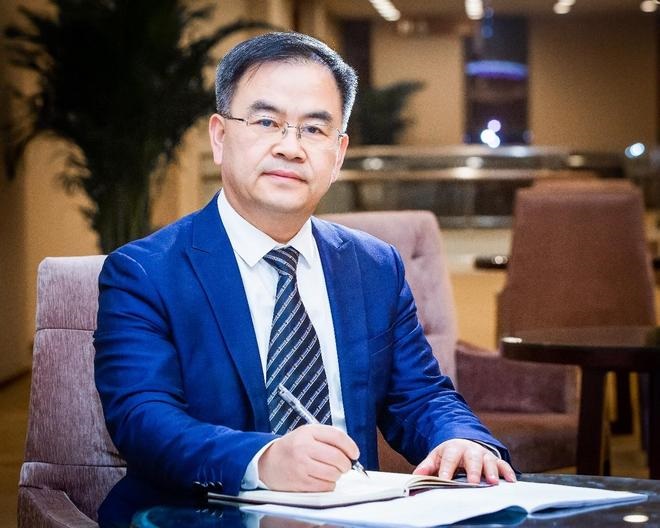
中国疾病预防控制中心(CDC)病媒生物首席专家刘起勇 受访者供图
近日刘起勇接受了澎湃新闻(www.thepaper.cn)《临界点》月刊专访,以下为对话全文:
气候变化对人类健康的影响是全方位的
澎湃新闻:是什么契机让你进入到气候变化与健康这一研究领域的?
刘起勇:大学毕业到CDC工作以后我就一直从事媒介生物传染病监测与控制工作,我们在监测中发现,尽管公共卫生投入越来越大,但不少媒介生物传染病的分布范围越来越广、流行频率越来越高,甚至流行规模越来越大,这是什么原因呢?经过进一步研究发现气候变化是非常重要的驱动因素,因为媒介生物和媒介生物传播的病原和他们造成的传染病流行,对气候非常敏感。从那时开始我们就确认气候变化对传染病特别是对媒介生物传染病的影响非常大,也是这个原因我开始逐渐增加对气候变化与健康影响的认识。
澎湃新闻:气候变化对健康有哪些影响?
刘起勇:气候变化具有累积性、长期性与复杂性,气候变化对人类健康的影响是全方位的,除了直接影响,还有间接影响,系统性的影响。直接影响比如寒潮、热浪、洪水等极端天气气候事件造成的伤害死亡;间接影响是指气候变化通过改变环境、生物因子和生态系统,从而造成疾病流行范围、模式、频率、规模的改变;系统性影响主要是指气候变化通过影响自然生态和社会经济、特别是公共卫生服务,对人群健康造成的复杂结局。随着研究的逐渐深入,我们发现传染病、慢性非传染病有不少都跟气候有关系,另外还有心理健康的影响,所以说气候对健康的影响特别广泛。
澎湃新闻:哪些算是气候敏感疾病?
刘起勇:顾名思义,从整体来讲,对于气候变化和气候因素比较敏感的疾病都属于气候敏感疾病。经过科学研究和筛选发现,很多的疾病都有可能跟气候变化有关系,包括传染病、慢性非传染疾病、伤害和死亡,以及心理卫生和健康。
其中,媒介生物传染病是典型的气候敏感疾病。媒介生物本身对气候很敏感,它携带的病原对气候也是比较敏感的,所以我们一直在关注气候变化会不会造成媒介生物传染病的流行风险增加,流行强度上升。实际上有的疾病风险有可能随着气候变化会下降,这也是我们所关注的。
总体来讲,经过研究发现在气候变化背景下风险上升的疾病远多于风险下降的疾病数量。
各种极端天气对老年人的影响首当其冲
澎湃新闻:作为“气候变化对人类健康的影响与适应机制研究”(国家973计划项目)首席科学家,在研究中你们得到了哪些认识?
刘起勇:我们第一个要回答的科学问题是气候变化对中国人群健康有没有影响?通过973计划项目,我们初步确定中国气候敏感疾病谱,当时首次筛选确定了12个气候敏感传染病,7个是媒介生物传染病,另外有肠道传染病、呼吸道传染病等5个。气候敏感慢性非传染疾病,当时研究确定了心血管疾病,还有呼吸系统疾病、代谢性疾病等。
然后是气候脆弱人群特征,针对高温、热浪、台风、寒潮、水灾、旱灾、沙尘暴等极端天气事件,我们做了脆弱人群特征分析,发现在各种极端天气下,对老年人群的影响都是首当其冲的,还有孕产妇和儿童,以及患有慢性疾病或残障的人群。不过,不同极端天气事件也有些区别。我们也对职业性暴露进行了分析,比如户外工作者受热浪的影响肯定是最大的。
另外,气候变化对人群健康的影响也会造成额外的疾病负担,我们当时选了典型的疾病,比如对气候敏感慢性病中的心血管疾病,气候敏感传染病中的登革热、手足口病做了比较系统、全面的研究分析,还针对不同气候带、不同地理地貌做了比较分析,比如针对登革热,我们做了高中低风险地区的划分,建立了预警阈值、应对策略和机制。
以登革热为代表的气候敏感媒介生物传染病已向高纬度地区扩散
澎湃新闻:近年来气候变化对健康的影响有怎样的变化趋势?
刘起勇:气候变化的影响是逐渐地迁移和扩大,但它的影响速度比我们想象的要快很多。比如我们当时在山东做现场调查,当地人问山东没有登革热为什么要选这里做研究,我说我们是做前瞻性研究的,并不是有什么我们才做什么。我们当时的研究结论认为,山东肯定具备登革热暴发风险,结果我们的项目2016年结题,2017年山东就发生了登革热本地暴发。随着气候变化的发展和影响,登革热流行区已从我国东南部热带地区向内陆快速扩展,跨过了长江流域,蔓延到了黄河流域。登革热流行省份从每年1到2个,扩展到每年最多可达13个流行省份,而且还有进一步扩大的趋势,造成了前所未有的公共卫生风险和压力。
我们针对沿海、内陆、高原不同的典型地理单元做了研究之后发现,不同地方的气候健康影响差别很大,影响强度不同。以媒介生物传染病为例,媒介生物种类非常丰富,仅蚊虫就可以分三大类,有传播登革热的伊蚊,还有传播乙脑的库蚊和传播疟疾的按蚊。我们曾在拉萨做过研究,因为高原地区海拔高、温度低,实际上一直就没有库蚊,但随着降水、温度、湿度条件的变化,我们发现拉萨已经有尖音库蚊种团,不断入侵、定植、扩散,形成了稳定的本地种群。因为它是西尼罗病毒的重要传播媒介,随着这种库蚊的到来,西尼罗病毒的传播风险范围也发生了变化。为了有效应对和适应气候变化,我们必须针对气候敏感疾病提前做好风险研判和预测预警,否则就会非常被动,甚至可能造成一些较大的公共卫生风险或事件。
澎湃新闻:我们对气候健康影响的认知水平如何?怎样提高大家在这方面的认知?
刘起勇:我们曾在北京、宁波、广州等不同纬度地区做了一些调研,发现公众对气候变化健康风险的认知程度相对以前确实提高了很多,但理解的深度和行动还是有一定差距。
从气候变化带来的健康风险来看,近年来极端天气事件超出我们想象,越来越频发,强度不断刷新历史纪录,影响越来越大。
所以,一方面我们从认知上比以前有提高了,但还没能跟得上气候变化的速度和强度。科学界的研究本身也还存在较大差距,所以还是需要抓紧做基础研究,否则面对新的变化我们就很难理解、认知和适应。比如我们当时在做研究时预测,登革热会继续向高纬度、高海拔地区扩展,结果2019年就一下报告了十多个省份发生本地传播暴发,气候驱动登革热的传播流行是非常快速的,我们科学家自己都感到吃惊,更何况部门决策者和公众。
公共卫生领域的研究只盯着眼下的东西是不行的,我们必须要有前瞻性,带着非功利的心去钻研,否则就会一直处在疲于奔命的被动应急状态。
保护人类健康是应对全球气候变化的核心任务和终极目标
澎湃新闻:气候健康属于交叉学科,目前不同学科之间的交叉研究是否顺畅?还需要哪方面去加强?
刘起勇:总体来看大家对这种交叉融合的研究逐渐有了更多的共识,特别是近年来无论是地球科学、环境领域的还是气象领域的学者,都对气候健康研究非常感兴趣,也做了一些探索性研究,越来越多的人参与进来,这是很大的进步。
从国家适应气候变化战略来看,有关气候与健康,从最早的几行字到后来大半页,再到2022年发布的《国家适应气候变化战略2035》有了一个专门的章节,这是前所未有的进步。这本身就说明从各部门到各学科,大家的共识逐渐形成,即保护人类健康是应对全球气候变化的核心任务和终极目标,健康是全球气候行动的一个重要抓手。
从IPCC第五次全球评估以来的报告到去年COP28把健康提升到气候行动的核心地位,健康既是我们应对气候变化的目的,又是一种手段,为了人类自身的共同健康,我们要减缓气候变化,让它降下速度,让我们能够跟得上,能够健康适应气候变化。
现在已经是一个非常好的时机,我们需要进一步凝聚共识,增强我们的行动力度,加强卫生医疗系统的气候韧性建设,实现可持续保护人类健康和公共卫生安全。我们也是按照生态环境部、国家卫健委、国家疾控局的统一部署,进一步推动国家战略气候变化健康适应行动的落地。
澎湃新闻:世界卫生组织去年发布报告称,2023年全球登革热病例激增,接近历史峰值,这对中国有什么影响?
刘起勇:2023年,中国也受到了全球登革热暴发流行的影响,得益于国家疾控局和中国疾控中心的精准预警预判,提前部署,主动、有效应对,尽管输入病例显著增加导致了本地的多点小规模传播流行,避免了类似其他国家的大暴发、大流行,登革热防控非常成功。
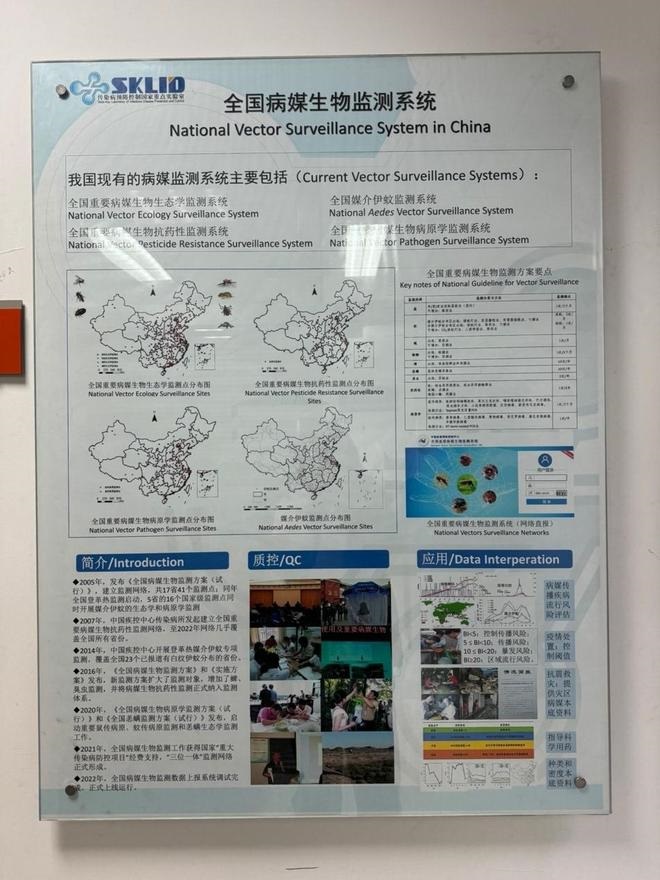
传染病预防控制国家重点实验(现更名为传染病溯源预警与智能决策全国重点实验室)全国病媒生物监测系统简介 澎湃新闻记者 刁凡超 摄
随着全球化、气候变化、城市化的发展,登革热输入病例快速增加,中国适合登革热传播流行范围越来越大,登革热防控压力越来越大。我国有10亿人生活在登革热风险区域,约2亿人处于登革热高风险区域,但得益于国家建立的生态学、病原学和抗药性“三位一体”的全国媒介生物监测预警系统和媒介生物可持续控制策略和技术体系,我们一直在加强媒介生物预测预警、主动精准控制媒介伊蚊,切断传播途径,控制输入引起的登革热暴发流行规模,避免引起大暴发、大流行。
气候与健康的基础性和应用性研究还需加强
澎湃新闻:针对气候健康风险,什么样的预警你认为是比较有效的?
刘起勇:中国疾控中心曾做过一个高温热浪的健康风险预警系统,选了典型区域试点推广。可提前一两周针对特定人群发布预警信息。有了预警,还要依靠地方疾控中心和社区卫生服务中心,因为社区卫生服务中心对辖区内的老年人、孕产妇、有基础病人等气候脆弱人群的信息掌握比较全面,可以通过社区直接对应到个人落实提示和帮扶行动。例如,我们之前在济南市历城区通过社区发布高温热浪的健康预警,通过当地疾控中心传达到社区卫生服务中心,再到居民小区、楼栋去逐层落实。如果社区提前掌握这些重点人群的信息,能够对应到人、落实到人,那么这种预警才是有效的。
也可以通过单位,比如济南的公交系统,他们除了做告知提醒高温热浪天要多饮水之类的,还会提供绿豆汤让司机随身带上,另外也会检查维护公交车上的空调系统正常等等,这些手段也是比较细致和有效的。
当然,对于提高气候健康预警的系统性、精准性,还需依靠气象、卫生等多部门协同、合作,及跨学科研究。
澎湃新闻:对气候与健康风险应对你有何建议?
刘起勇:应对和消除气候变化健康危害和健康风险,还需要政府、学术界、社会各界的通力合作,共同应对气候变化带来的健康挑战。总体上我们要坚决落实《国家适应气候变化战略2035》的整体安排和国家疾控局气候健康行动的具体部署,提升应对气候变化健康适应能力,保障健康中国建设国家战略实施。在监测预警方面,要更好地发挥气候、健康监测预警系统的作用,特别是要对原来监测预警系统进行及时的修订、完善和更新,让这些在运行的监测系统更容易捕捉到气候敏感疾病的趋势变化和风险变化。
在气候与健康行动方面,按照统一部署,做好试点、示范和推广。我们要把气候变化健康适应行动落地到社区,落地到不同的单位,创建一些更好的示范项目,让大家都来学习,如何更有效地应对气候变化的健康风险,保护人群健康,保障公共卫生安全。
继续加强气候变化对人群健康影响的机制机理研究。目前我们都知道气候变化会带来健康风险,但是这种理解的深度、广度还不够,特别是不同极端天气事件都有自己的特征,需要我们进一步提高认识,进一步做好基础研究。尽管我们现在在这方面有一些投入,但是基础性的调研和研究还是很缺乏。
另外一方面的研究是应用性的研究,怎么在操作层面上更好地做好气候变化健康适应,包括针对气候脆弱人群,如何避免更大的公共卫生风险,还是有很多的应用性研究需要去做。比如我们的预警系统具体怎么来布置,运营系统怎么来发布信息,才能更有效地传达和被公众接受,公众接受后再如何转化成行动获得一个好的效果。这需要交叉学科来做,也需要借助人工智能等现代技术来发挥作用。
另外,国际合作也非常重要,因为气候变化是一个全球性的问题,需要不同国家不同地区共同行动,构建应对气候变化的人类卫生健康共同体。加强国际交流,互相地学习、借鉴,互相促进、提高,甚至联合研究和创新。全球气候变化是我们人类共同面临的挑战,共同行动非常必要。
我们现在提倡“同一健康”(One Health),谈到健康不再只是做疾病控制和健康部门的事,现在大家越来越认识到,其实它涉及各个层面,各个领域,不管是农业、生态还是其他领域,都跟健康密切相关,都在健康里面发挥很重要的作用,都能找到自己的切入点和行动的发力点,加强部门协调联动和资源共享,形成气候变化健康适应的合力。所以全球、全社会为了人类共同健康利益,促进我们共同的行动,我想还是有很大的提升空间。2024年将是一个新的契机,新的起点,我想气候与健康肯定是一个新的热点。
来源: 澎湃新闻
在奉献和追求中绽放光彩——刘起勇

刘起勇长期从事媒介生物控制学、气候变化与健康研究。针对我国媒介生物控制、气候变化与健康领域的一些重大科学难题,取得了系列原创性研究成果,并在疾病防控工作中进行转化和应用。他因材施教,带领科室取得了多项荣誉。
推动我国媒介生物检测工作和学科建设
针对传统媒介生物控制策略及技术在解决当前媒介生物及相关传染病防控中的短板,刘起勇经过多年系统研究,以健康、生态及社会经济综合效益为切入点,创建了一套“媒介生物可持续控制”策略和理论体系,并进行转化和应用。
牵头制定了全国病媒生物监测项目规划, 并于2005年建立全国病媒生物监测系统,形成了覆盖全国31省(区、市)的全国病媒生物生态学、病原学和抗药性“三位一体”的监测预警网络,推动了我国病媒生物监测工作的发展。
牵头创建了中国实验动物学会媒介实验动物专业委员会、全国公共卫生与预防医学名词审定委员会媒介生物控制学分委会、山东大学公共卫生学院媒介生物控制学系,推动了我国媒介生物控制学的学科建设,为我国媒介生物控制学科建设和创新发展做出了突出贡献。
牵头创建了“山东大学气候变化与健康研究中心”,作为973首席科学家,带领团队完成气候变化健康领域首个国家重大科学研究计划项目。
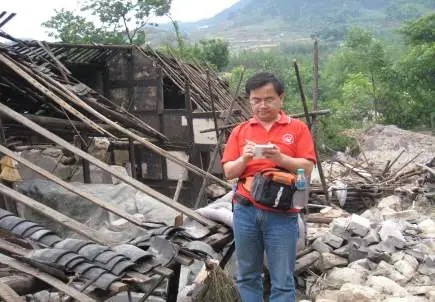
2008年,刘起勇在汶川地震现场工作
攻坚克难为我国消除疟疾提供技术支持
作为全国消除疟疾专家指导组委员,刘起勇积极开展疟疾消除媒介按蚊监测与控制研究、技术支持和指导工作。他牵头组建消除疟疾媒介按蚊控制组,带领团队攻坚克难,开展我国消除疟疾媒介按蚊控制关键技术研究,厘清了我国间日疟流行区疟疾媒介生态习性,评价并优化了疫点处置媒介按蚊控制药械和流程。系统研究和总结了建国以来不同阶段、不同情景下疟疾媒介控制策略和技术,形成了基于爱国卫生除害防病组织基础的、中国特色的“疟疾媒介按蚊分层、可持续控制策略”及技术体系,为我国消除疟疾提供了技术支持。
针对我国登革热暴发流行控制策略和公共卫生干预关键技术难题,他与广州市疾病预防控制中心联合攻关,研究构建预测预警模型、控制暴发流行媒介伊蚊控制阈值、社区动员干预等关键技术,并在现场应用推广,获得显著社会经济效益。
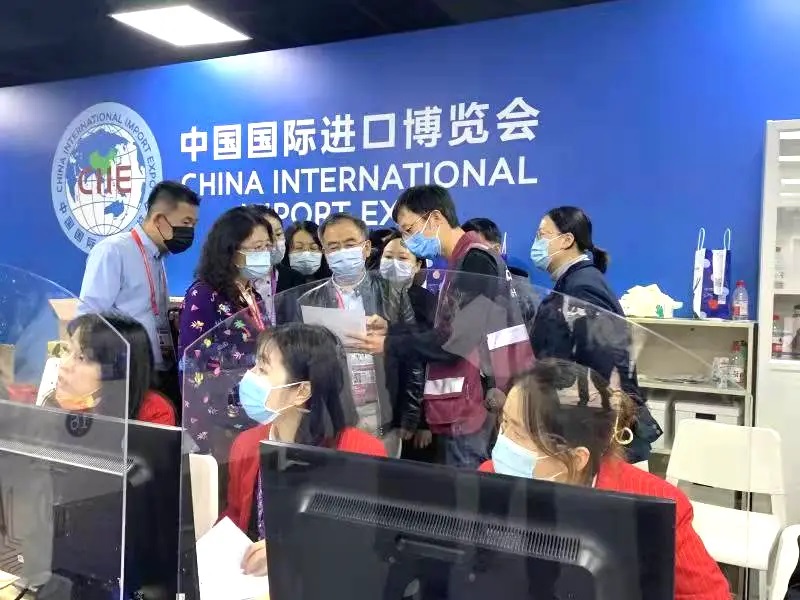
刘起勇参与中国国际进口博览会保障工作
促进学术交流 提升国际影响力
2006年起,刘起勇在促进国际学术交流,国际救援、人才培养、标准制定等方面做了大量工作,显著提升了我国媒介生物控制的国际影响力。
他于2006年发起 “媒介生物可持续控制国际论坛”并已连续举办9届。2012年建成 “世界卫生组织媒介生物监测与管理合作中心”。参与完成十余次疟疾、登革热、基孔肯雅热、黄热病、鼠疫等媒介生物传染病暴发应急和地震、海啸、泥石流等的公共卫生国际救援工作。作为世界卫生组织媒介生物监测与管理合作中心主任,刘起勇积极向全球宣传推广中国抗疟经验,为实现“无疟疾世界”愿景提供了媒介按蚊控制中国模式。为世界卫生组织非洲区、东南亚区、西太区培养了疟疾媒介按蚊控制技术骨干超200余人。他还牵头研究编制《国家适应气候变化战略2035》健康与公共卫生章节,参与完成世界卫生组织多项疟疾控制技术指南编制等。
他所带领的团队在援助塞拉利昂疟疾防控中,建立了蚊媒监测网络,助力当地公共卫生体系建设。建成了我国首个公共卫生杀虫产品评价国际GLP认证实验室(2021年),推动了疟疾控制公共卫生杀虫产品评价的国际互认,为构建人类卫生健康共同体做出了贡献。
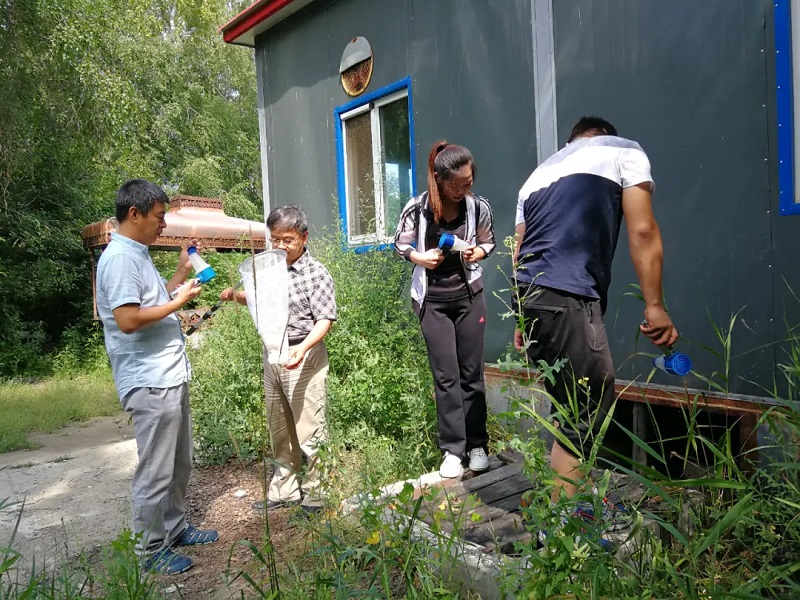
刘起勇在援疆现场指导灭蚊工作
利用每个人特长 指导科研工作和课题研究
刘起勇在学术研究上孜孜不倦,他不仅要指导硕士生、博士生科研课题,还针对病媒生物的学科布局,给科室每个新入职的青年职工,结合自己的专业特长和个人兴趣,都确立了一个专业方向,指导科研工作和课题研究。从这个角度讲,科室的每个青年员工,都可以算是刘起勇研究员的学生。工作中他平易近人,在科室管理上也有自己独到的方法。他在安排工作时,大都是按照每个人的专业特长和工作能力去安排,因此,媒介生物控制室员工之间非常和谐,很少有攀比心理或心理不平衡。
在刘起勇的带领下,媒介生物控制室连续多年都被评为传染病所的优秀科室。他经常说:“一个人走的快,一群人走的远,当今社会,科研工作不是靠单打独斗能做好的,需要团体的合作。”他是这样说的,也是这样做的。2022年,刘起勇入选“全球顶尖前10万科学家”,这是他的荣誉,也是科室的荣誉。在一个蓬勃向上发展的科室,每个人都得到了成长。
刘起勇曾说:“用10年的时间,把我国建设成世界卫生组织的合作中心,在世界上要有话语权;要建立全国的病媒生物监测网络,实现病媒生物监测的网络直报;病媒生物的监控控制工作要走出国门,走向世界……”经过他的不懈努力,当时的设想如今都已实现,我国病媒生物的路越走越宽。
中国科技创新人物云平台暨“互联网+”科技创新人物开放共享平台(简称:中国科技创新人物云平台)免责声明:
1、中国科技创新人物云平台是:“互联网+科技创新人物”的大型云平台,平台主要发挥互联网在生产要素配置中的优化和集成作用,将互联网与科技创新人物的创新成果深度融合于经济社会各领域之中,提升实体经济的创新力和生产力,形成更广泛的以互联网为基础设施和实现工具的经济发展新形态,实现融合创新,为大众创业,万众创新提供智力支持,为产业智能化提供支撑,加快形成经济发展新动能,促进国民经济提质增效升级。
2、中国科技创新人物云平台暨“互联网+”科技创新人物开放共享平台内容来源于互联网,信息都是采用计算机手段与相关数据库信息自动匹配提取数据生成,并不意味着赞同其观点或证实其内容的真实性,如果发现信息存在错误或者偏差,欢迎随时与我们联系,以便进行更新完善。
3、如果您认为本词条还有待完善,请编辑词条。
4、如果发现中国科技创新人物云平台提供的内容有误或转载稿涉及版权等问题,请及时向本站反馈,网站编辑部邮箱:kjcxac@126.com。
5、中国科技创新人物云平台建设中尽最大努力保证数据的真实可靠,但由于一些信息难于确认不可避免产生错误。因此,平台信息仅供参考,对于使用平台信息而引起的任何争议,平台概不承担任何责任。



 点击图片查看原图